
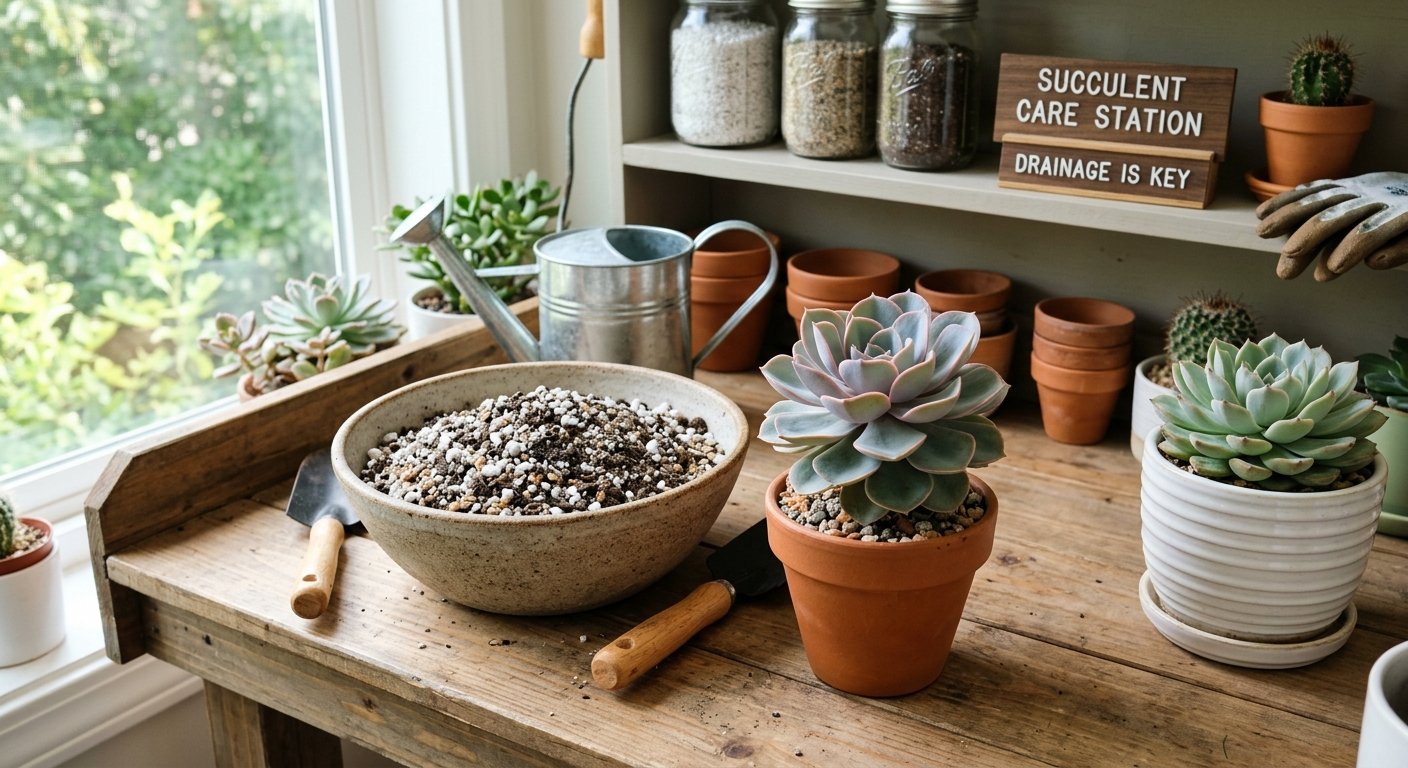
Best Soil for Succulents: 7 Amazing Essential Mixing Tips
Best soil for succulents is the foundational secret every US plant owner must master to prevent fatal root rot and keep their indoor botanical collection flourishing. Standard garden dirt or heavy indoor potting soil retains too much moisture, suffocating delicate succulent roots and inviting destructive fungal diseases.
Mastering the selection and creation of the best soil for succulents allows you to mimic natural arid desert conditions inside climate-controlled US homes. By combining organic compost with inorganic drainage amendments like perlite, pumice, and coarse sand, you ensure water drains away rapidly within seconds.
Implementing expert guidelines to find the best soil for succulents guarantees your indoor garden avoids soggy root zones and weak, etiolated growth. Let us explore core drainage requirements, custom recipe ratios, and a foolproof 7-step soil preparation framework tailored for modern households.
Table of Contents
- Key Takeaways
- Why Standard Potting Soil Fails Desert Plants
- Essential Inorganic Amendments for Rapid Drainage
- Custom DIY Soil Recipes Versus Commercial Mixes
- Succulent Soil Comparison Matrix
- 7 Amazing Essential Mixing Tips for the Best Soil for Succulents
- Testing Your Potting Medium Drainage Rate
- Conclusion
- Frequently Asked Questions
Key Takeaways
- Prioritize Rapid Drainage: Water must flow through your container within seconds to prevent root suffocation and stem rot.
- Avoid Heavy Garden Soil: Never use thick topsoil or standard indoor potting mixes that hold moisture for days.
- Incorporate Inorganic Grit: Blend organic compost with 50% inorganic amendments like coarse perlite, pumice, or expanded shale.
- Match Pot Materials: Combine porous soil with breathable terra-cotta pots for the ultimate moisture-management system.
- Sterilize Used Soil: Always bake or treat reused potting media to eliminate hidden fungal spores and pest larvae.
Why Standard Potting Soil Fails Desert Plants
Understanding what makes the best soil for succulents starts with recognizing why ordinary houseplant dirt destroys desert species.
Standard indoor potting soils are engineered to retain water for tropical ferns and monsteras, packing tightly around roots.
Succulents possess sensitive root systems that require heavy oxygen exchange; dense, wet soil suffocates roots and triggers rapid bacterial rot.
Essential Inorganic Amendments for Rapid Drainage
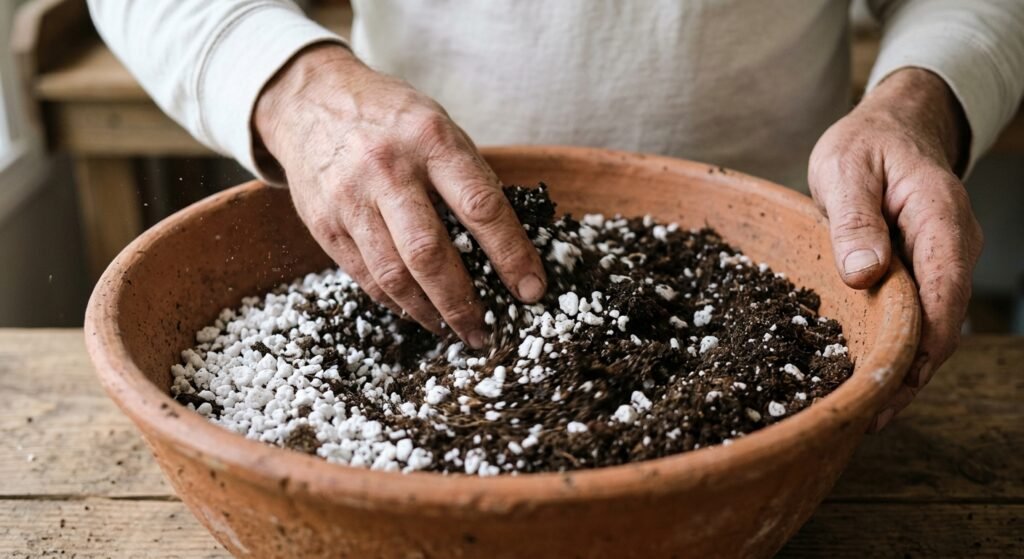
Creating the best soil for succulents requires adding coarse inorganic materials that create microscopic air channels inside the pot.
Perlite is lightweight and inexpensive, while volcanic pumice provides heavier structural stability and excellent moisture regulation.
Coarse horticultural sand and chicken grit add weight to anchor tall plants while keeping the potting medium exceptionally loose.
Custom DIY Soil Recipes Versus Commercial Mixes
Evaluating commercial options versus homemade blends helps you secure the best soil for succulents for your specific indoor collection.
Many store-bought cactus mixes still contain too much peat moss, requiring you to amend them with extra perlite before planting.
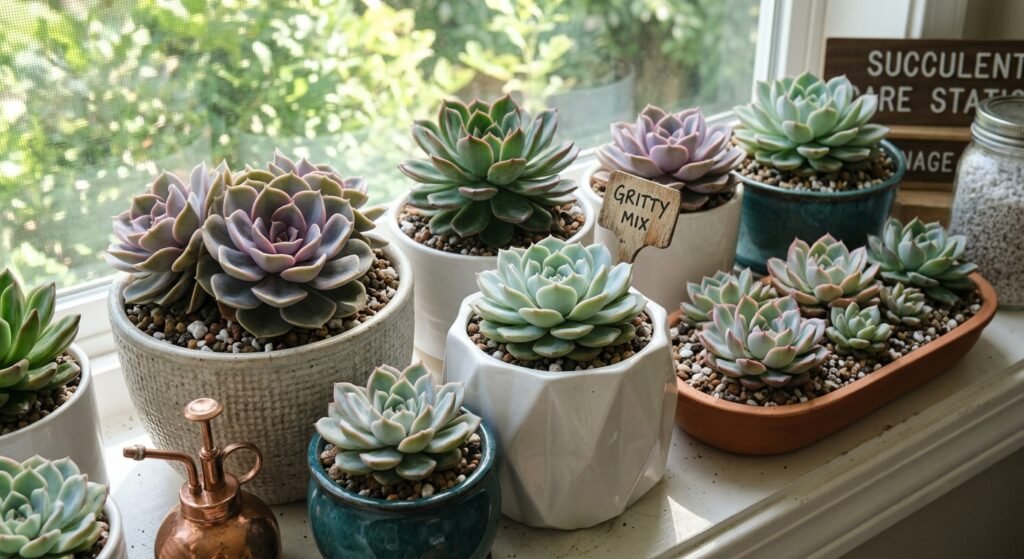
Mixing your own batch using equal parts organic potting soil, coarse sand, and pumice gives you 100% control over drainage speed.
Succulent Soil Comparison Matrix
The comparison table below outlines amendment ratios, drainage speeds, and suitability for popular succulent potting media:
| Potting Medium Type | Organic Matter | Inorganic Grit Ratio | Drainage Speed | Best Suited For |
| Standard Houseplant Soil | 80% to 90% | 10% to 20% | Very Slow (Soggy) | Tropical Ferns Only |
| Commercial Cactus Mix | 50% to 60% | 40% to 50% | Moderate | General Succulents |
| Custom Gritty DIY Mix | 30% to 40% | 60% to 70% | Instant / Rapid | Echeveria & Lithops |
| Pure Pumice & Perlite | 0% | 100% | Maximum Flow | Root Propagation |
7 Amazing Essential Mixing Tips for the Best Soil for Succulents
Follow this comprehensive framework to formulate and utilize the best soil for succulents in your home indoor garden:
               [Select Base Organic Potting Soil]
                             |
         +-------------------+-------------------+
         |                                       |
[Add 50% Inorganic Perlite/Pumice]       [Incorporate Coarse Horticultural Sand]
         |                                       |
(Create air channels for roots)          (Add pot weight and structural grit)
         |                                       |
         v                                       v
Test drainage flow speed,                Plant echeveria securely in mix,
enjoy zero root rot and vigorous growth  water using soak-and-dry method
1. Aim for a 50-50 Organic-Inorganic Split
Blend equal parts organic compost with inorganic grit to achieve the ideal balance of nutrition and rapid drainage.
2. Choose Pumice Over Fine Perlite
Opt for dense volcanic pumice when possible, as lightweight perlite tends to float to the top over time during watering.
3. Avoid Fine Beach or Play Sand
Never use fine seaside sand, as microscopic particles pack tightly together like cement and ruin pot drainage.
4. Sift Out Fine Dust Particles
Screen your custom soil mix through a wire mesh sieve to remove powdery dust that clogs bottom drainage holes.
5. Match Soil to Container Porosity
Pair gritty, fast-drying soil with breathable terra-cotta pots to maximize moisture evaporation in indoor rooms.
6. Refresh Potting Media Every Two Years
Replace old degraded soil every 24 months to restore depleted mineral nutrients and maintain optimal soil porosity.
7. Sterilize Reused Garden Soil
Bake used potting mix in your oven at 180°F for 30 minutes to kill harmful fungus gnats and bacterial spores.
Testing Your Potting Medium Drainage Rate
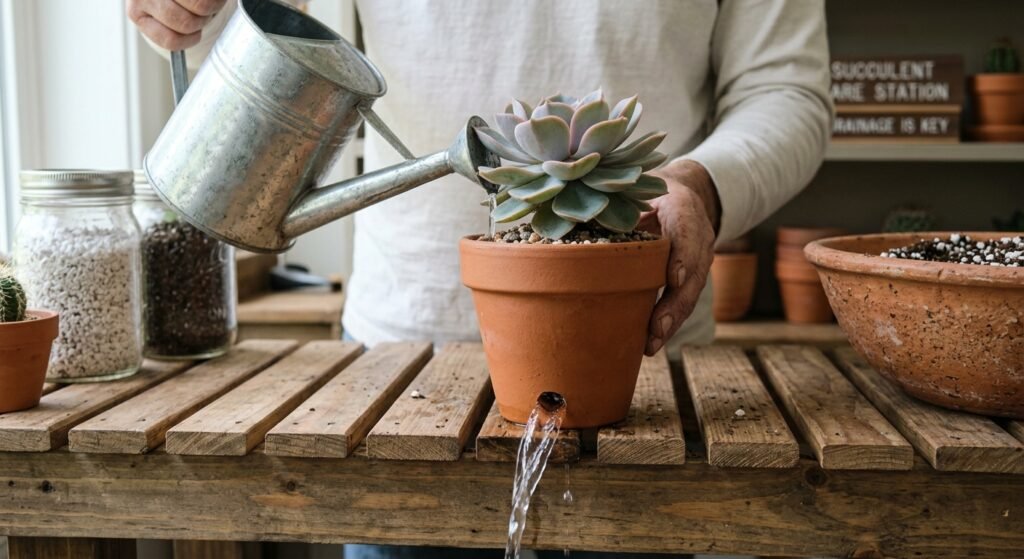
Before finalizing your planting setup with the best soil for succulents, perform a quick drainage test to verify performance.
Pour a cup of water over your freshly filled pot; water should begin streaming out the bottom drainage hole within five to ten seconds.
If water pools on the surface for more than a minute, mix in additional perlite or pumice immediately.
Conclusion
Mastering the selection and formulation of the best soil for succulents empowers you to maintain a gorgeous, thriving indoor botanical collection with absolute confidence. By prioritizing rapid drainage, incorporating inorganic grit, and avoiding heavy garden dirt, you can eliminate overwatering root rot forever.
Review your indoor plant setup today, apply these 7 amazing essential mixing tips, and enjoy your flourishing succulent garden!
Frequently Asked Questions
Can I use regular potting soil for indoor succulents?
No, regular indoor potting soil holds too much moisture and packs tightly around roots, which quickly causes fatal root rot in succulents.
What is the best inorganic amendment to add to succulent soil?
Volcanic pumice and coarse horticultural perlite are widely considered the best amendments because they create air pockets and ensure instant drainage.
How often should I change the soil in my succulent pots?
You should refresh and replace the potting soil in your succulent containers every 1 to 2 years to replenish nutrients and prevent soil compaction.


One Comment