

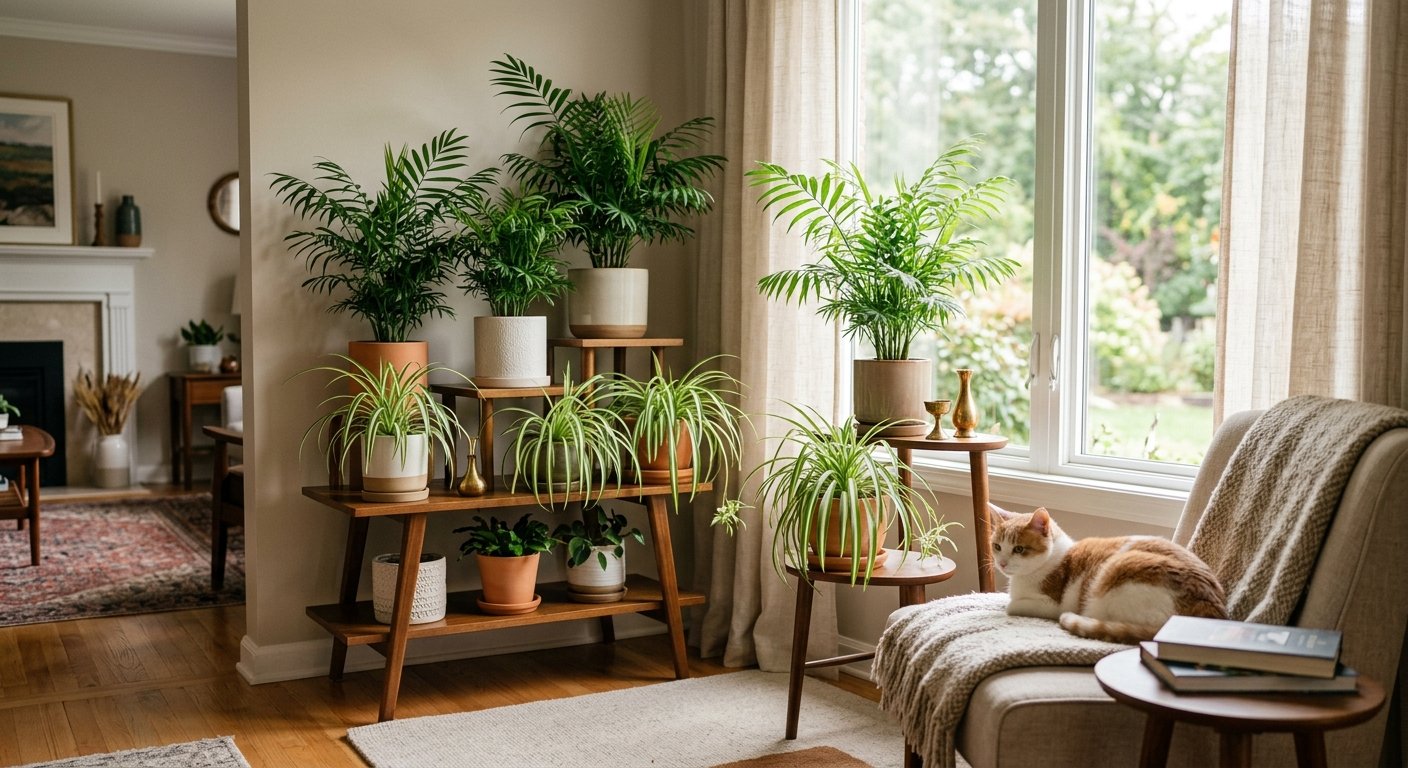
Bringing greenery into your home breathes life into every room, but if you share your living space with curious cats or dogs, safety is a top priority. Many popular indoor greens pose severe toxicity risks to animals. Choosing verified Pet-Safe Houseplants ensures your home stays vibrant while keeping your furry family members completely out of harm’s way.
Key Takeaways
- Animal Protection: Pet-safe houseplants eliminate the risk of accidental poisoning for cats and dogs.
- Peace of Mind: Non-toxic varieties allow you to decorate freely without constant worry.
- Aesthetic Appeal: Safe choices offer stunning foliage, trailing vines, and vibrant textures.
- Easy Maintenance: Many animal-friendly options thrive with minimal care and standard indoor watering routines.
Why Non-Toxic Indoor Varieties Matter
Curious pets naturally love to explore leaves, chew on vines, or dig into potted soil. Toxic species like lilies, pothos, or dieffenbachia can cause severe illness if ingested. Transitioning to non-toxic greenery protects your pets from emergency veterinary visits while fulfilling your desire for a lush indoor garden. [Internal Link: Insert relevant internal URL here with anchor text about safe indoor gardening]
Top Pet-Safe Houseplants for Your Home
1. Spider Plant (Chlorophytum comosum)
The spider plant is legendary for its resilience and safety around animals. It features long, arching green-and-white striped leaves that naturally produce cute baby spiderettes.
- Lighting: Thrives in bright, indirect sunlight.
- Watering: Keep the soil lightly moist and water when the top inch dries out.
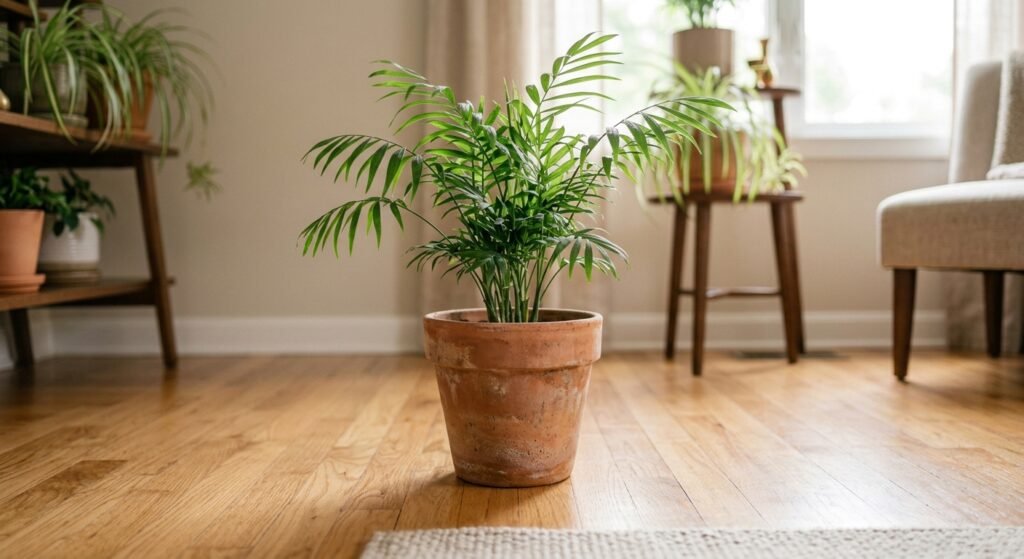
2. Parlor Palm (Chamaedorea elegans)
Known for its elegant, feathery fronds, the parlor palm brings a classic tropical aesthetic indoors without any hazardous chemical compounds for pets.
3. Boston Fern (Nephrolepis exaltata)
With its dense, cascading fronds, the Boston fern is a breathtaking addition to hanging baskets or high shelves, offering 100% safety for cats and dogs. [External Link: Insert high-authority external URL here with anchor text about ASPCA toxic and non-toxic plant lists]
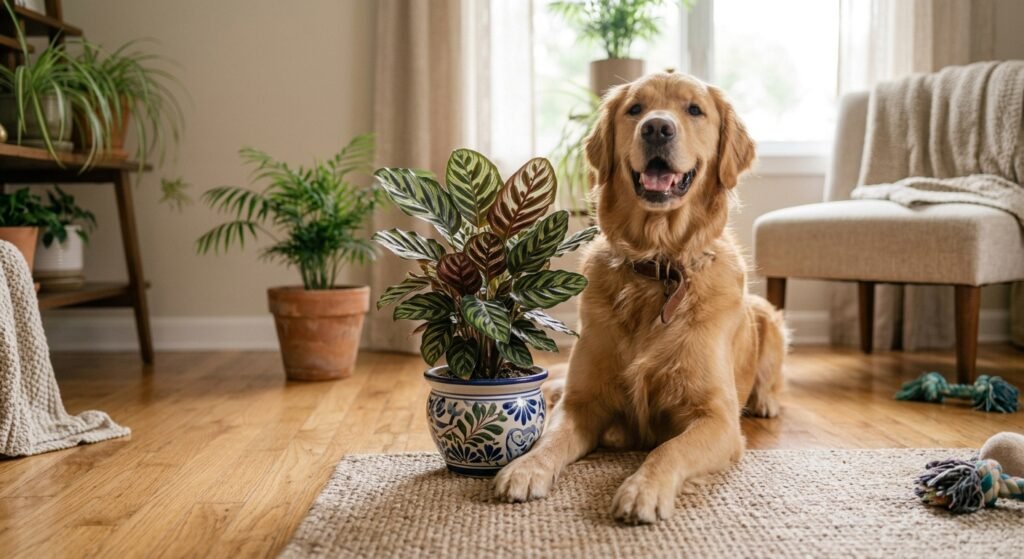
4. Calathea (Calathea species)
Famous for their striking, patterned foliage that folds up at night, Calatheas are completely non-toxic and add a touch of artistic flair to any room.
Essential Care Tips for Animal-Friendly Greenery
Maintaining non-toxic flora requires mindful placement and proper maintenance routines:
- Elevate Hanging Plants: Use macramé plant hangers or high shelves to keep trailing varieties out of immediate, overly tempting paw’s reach.
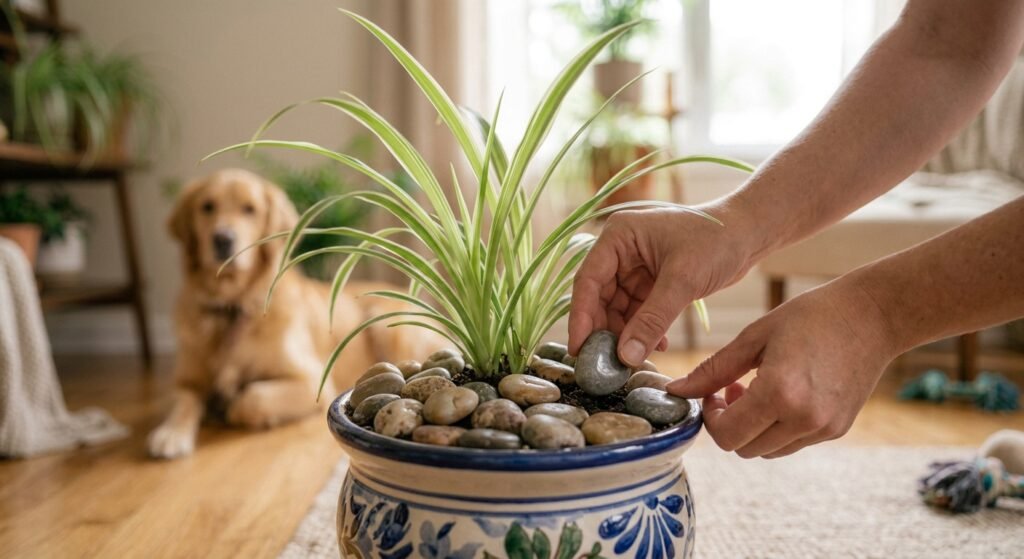
- Secure Potting Soil: Cover exposed soil with decorative river stones to prevent pets from digging or tracking dirt across your floors.
- Monitor Water Levels: Consistent moisture management keeps your safe varieties lush and resistant to drooping foliage.
Conclusion
Decorating your living space should never come at the expense of your animal companion’s health. By choosing verified Pet-Safe Houseplants like spider plants, parlor palms, and Boston ferns, you can cultivate a stunning indoor jungle with absolute peace of mind.
Frequently Asked Questions
Which common houseplants are toxic to cats and dogs?
Popular plants like lilies, pothos, philodendrons, snake plants, and dieffenbachia contain harmful crystals or toxins that can cause severe illness in pets.
Are spider plants completely safe for cats?
Yes, spider plants are non-toxic to both cats and dogs. In fact, cats are often attracted to them because they can have a mild, safe hallucinogenic effect similar to catnip.
How can I stop my pets from digging in plant pots?
Placing decorative large stones, mesh grids, or pinecones over the surface soil effectively deters cats and dogs from digging or disturbing your indoor pots.
1 thought on “Pet-Safe Houseplants: Complete Non-Toxic Guide”