
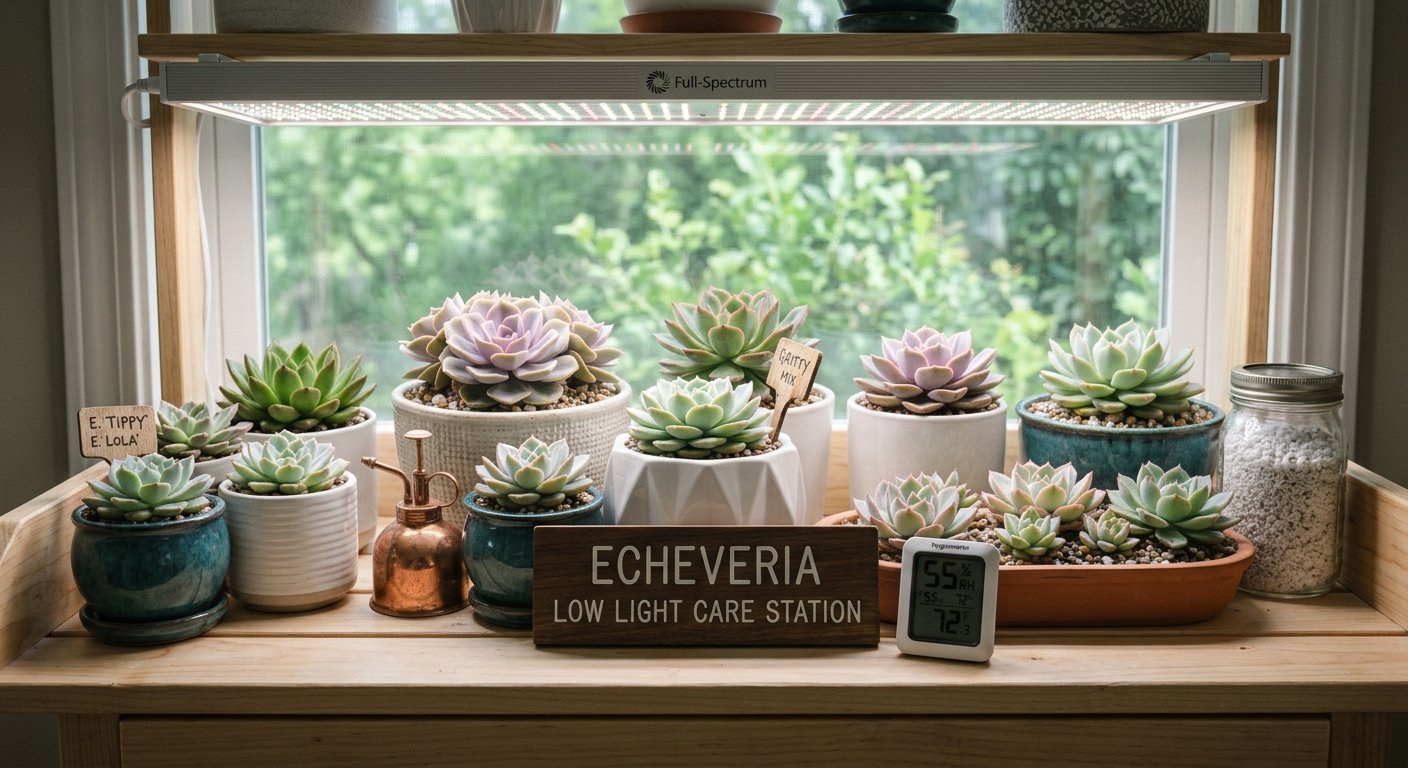
Echeveria Low Light: 7 Amazing Essential Care Secrets
Echeveria low light challenges are something every US plant enthusiast faces when trying to grow these stunning rosette succulents inside apartments or offices lacking bright windows. Native to the sun-drenched rocky slopes of Central and South America, echeverias naturally crave intense, direct sunlight to maintain their vibrant pastel colors and tight geometric forms.
Mastering how to manage echeveria low light conditions allows you to cultivate these gorgeous geometric plants indoors by implementing smart supplemental lighting and watering adjustments. Without proper artificial illumination, echeverias quickly stretch out, lose their compact shape, and fade into weak, pale green foliage.
Implementing expert guidelines for echeveria low light environments ensures your indoor succulent garden stays vibrant, compact, and remarkably healthy. Let us explore the core science of etiolation prevention, grow light setups, and a foolproof 7-step indoor care framework tailored for modern US households.
Table of Contents
- Key Takeaways
- The Science of Echeveria Light Requirements
- Using Full-Spectrum LED Grow Lights Indoors
- Adjusting Watering Schedules in Dim Spaces
- Echeveria Low Light Comparison Matrix
- 7 Amazing Essential Care Secrets for Echeveria Low Light Rooms
- Preventing Root Rot and Fungal Decay
- Conclusion
- Frequently Asked Questions
Key Takeaways
- Embrace Grow Lights: Echeverias naturally demand intense sunshine; low-light rooms require 12 hours of daily full-spectrum LED lighting.
- Prevent Etiolation: Watch for stretching stems and pale leaves, which indicate your plant is starving for photons.
- Reduce Watering Frequency: Plants in dim indoor spaces consume moisture much slower, increasing the risk of fatal root rot.
- Use Gritty Soil Mixes: Plant in fast-draining cactus soil blended with perlite to compensate for slower indoor evaporation rates.
- Rotate Pots Weekly: Turn your containers 90 degrees every week to ensure balanced, even growth across all rosette leaves.
The Science of Echeveria Light Requirements
Understanding the fundamentals of echeveria low light management starts with examining why these desert natives struggle in dark rooms.
In nature, echeverias bask in unshaded sun for up to 10 hours a day, developing thick cuticles and brilliant red or blue leaf stress colors.
When placed in dim indoor corners, plants cannot photosynthesize efficiently, triggering rapid, weak stem elongation known as etiolation.
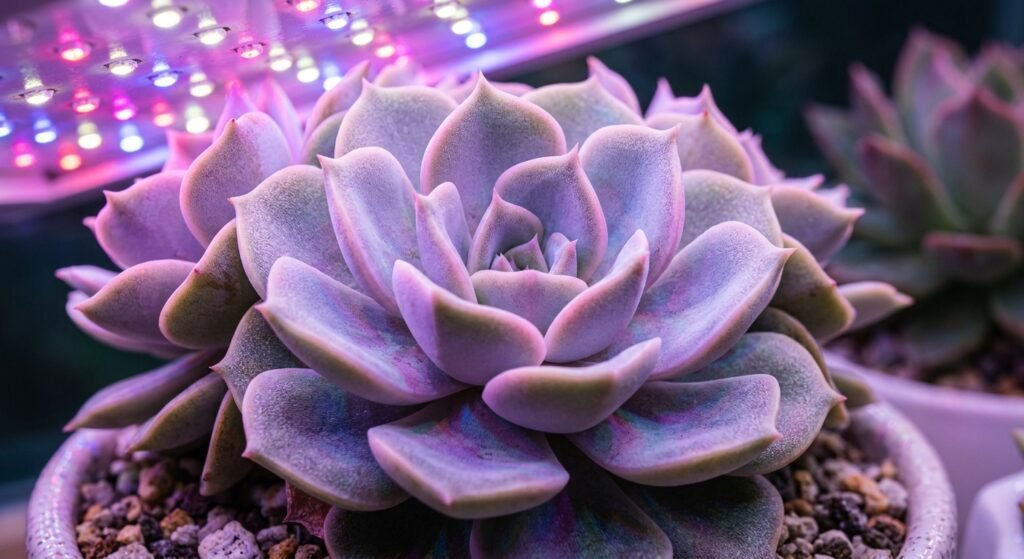
Using Full-Spectrum LED Grow Lights Indoors
Successfully overcoming echeveria low light limitations requires investing in quality full-spectrum LED grow light panels or desk lamps.
Position your grow lights 6 to 12 inches directly above the top of the succulent rosettes for 12 to 14 hours daily using automated timers.
This artificial photon intensity replicates natural desert noon sunlight, keeping leaf rosettes tightly packed and brilliantly colored.
Adjusting Watering Schedules in Dim Spaces
Managing echeveria low light environments also means drastically cutting back your standard watering frequency to prevent root decay.
Because dim rooms experience minimal airflow and slower evaporation, potting soil retains moisture twice as long as it would on a sunny patio.
Always let the soil dry out 100% down to the bottom of the pot before administering your next soak-and-dry watering session.
Echeveria Low Light Comparison Matrix
The comparison table below outlines lighting setups, watering intervals, and survival success rates for echeverias in different indoor environments:
| Environment Type | Daily Light Source | Daily Light Hours | Watering Interval | Long-Term Plant Health |
| South-Facing Window | Direct Sun Rays | 6 to 8 Hours | Every 10 to 14 Days | Excellent (Vibrant & Compact) |
| North-Facing Window | Indirect Ambient | 2 to 4 Hours | Every 20 to 25 Days | Poor (Stretched & Pale) |
| LED Grow Light Setup | Full-Spectrum LED | 12 to 14 Hours | Every 14 to 18 Days | Outstanding (Tight Rosettes) |
| Dark Office Corner | Fluorescent Office Bulbs | 8 Hours (Artificial) | Every 3 to 4 Weeks | Failing (Rapid Rot) |
7 Amazing Essential Care Secrets for Echeveria Low Light Rooms
Follow this comprehensive framework to master echeveria low light care and keep your indoor succulent collection flourishing:
               [Assess Indoor Room Lighting Level]
                             |
         +-------------------+-------------------+
         |                                       |
[Install LED Grow Light Panels]          [Use Gritty Cactus Soil Mix]
         |                                       |
(Provide 12 hours of daily photons)      (Prevent slow indoor root rot)
         |                                       |
         v                                       v
Water using strict soak-and-dry method,  Rotate pots weekly for even light exposure,
avoid dark corners completely             enjoy compact colorful rosettes
1. Install Full-Spectrum LED Fixtures
Supplement dim indoor spaces by mounting adjustable LED grow light panels directly over your plants.
2. Set Automated 12-Hour Timers
Plug your grow lamps into automatic digital timers to ensure your echeverias receive consistent daily light exposure.
3. Keep Grow Lights Close to Plants
Position the light source within 6 to 12 inches of the leaf tips to maximize photon absorption and prevent stretching.
4. Extend Your Watering Intervals
Wait significantly longer between waterings because dim indoor spaces slow down soil evaporation and plant metabolism.
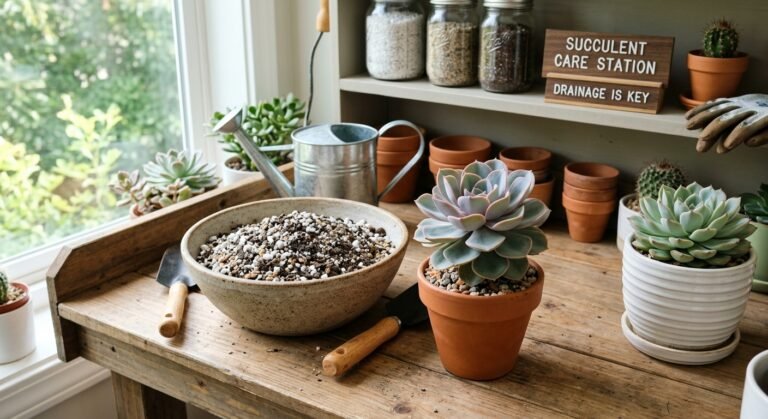
5. Use Extremely Porous Soil Mixes
Plant your echeverias in custom soil containing 60% inorganic pumice and perlite to protect against stagnant moisture.
6. Rotate Containers Weekly
Turn your pots 90 degrees every week to prevent rosettes from leaning sideways toward the light source.
7. Avoid Pure North-Facing Windowsills
Never rely solely on dark north-facing windows for echeverias unless paired with powerful overhead grow lights.
Preventing Root Rot and Fungal Decay
Navigating echeveria low light conditions increases susceptibility to overwatering mishaps and fungal root infections.
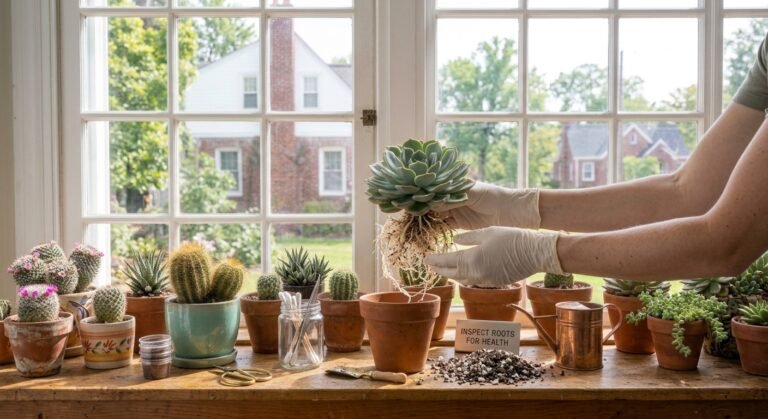
Inspect lower leaves regularly; yellow, translucent, or mushy leaves signal that the soil is holding too much stagnant moisture.
If rot appears, behead the healthy top rosette immediately and propagate it fresh in dry soil to save the plant.
Conclusion
Mastering echeveria low light care empowers you to cultivate stunning desert succulents indoors without sacrificing their health or compact shape. By utilizing full-spectrum LED grow lights, adjusting watering schedules, and using porous soil, your plants will thrive year-round.
Review your indoor plant setup today, apply these 7 amazing essential care secrets, and enjoy your flourishing succulent garden!
Frequently Asked Questions
Can echeveria succulents survive in a dark room without windows?
No, echeverias cannot survive in windowless rooms without dedicated full-spectrum LED grow lights providing at least 12 hours of daily illumination.
How do I know if my echeveria is not getting enough light?
The primary sign of light starvation is etiolation, where the stem stretches out vertically and leaves space far apart, turning pale green.
How often should I water echeverias grown under indoor grow lights?
Water every 14 to 18 days, ensuring the potting soil is 100% dry down to the bottom before your next thorough soaking.


One Comment