
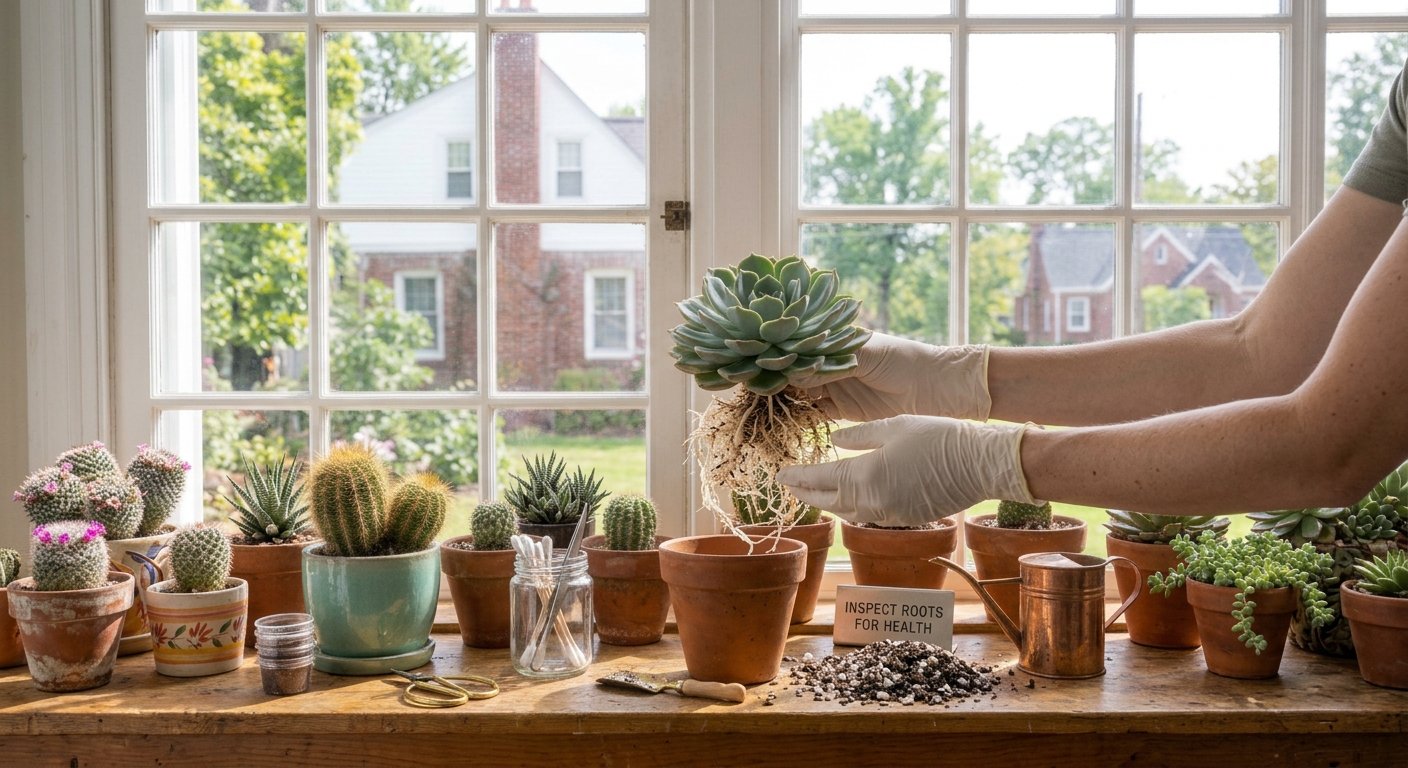
Treat Root Rot In Succulents: 7 Best Steps
Treat root rot is the ultimate survival guide every US plant owner needs to protect their indoor succulent collection from fatal moisture damage. Root rot is a devastating fungal condition triggered by overwatering, dense potting soil, and poor container drainage that attacks and destroys underground root networks.
Mastering how to treat root rot allows you to identify early warning signs, perform sterile surgical pruning, and rescue dying houseplants before decay spreads to the stem. Instead of watching your prized rosettes turn mushy and collapse, understanding modern horticultural intervention saves distressed specimens.
Implementing expert guidelines to treat root rot ensures your indoor botanical collection stays vibrant, pest-free, and remarkably resilient. Let us explore the core pathology of fungal pathogens, sterile propagation steps, and a foolproof 7-step recovery framework tailored for modern US households.
Table of Contents
- Key Takeaways
- Understanding the Causes of Fungal Root Decay
- Identifying Symptoms of Underground Rot
- Sterile Pruning and Beheading Techniques
- Root Rot Prevention Comparison Matrix
- 7 Best Steps to Treat Root Rot Effectively
- Choosing Gritty Soil to Stop Future Infections
- Conclusion
- Frequently Asked Questions
Key Takeaways
- Identify Symptoms Early: Catch yellowing leaves, translucent stems, and foul soil odors before rot reaches the main rosette.
- Remove All Mushy Roots: Use sterilized shears to cut away every trace of black, decaying, or slimy root tissue.
- Let Cuts Callus Over: Allow pruned stems to dry in indirect air for 2 to 3 days before replanting in fresh dry mix.
- Upgrade Pot Drainage: Always use containers with functional bottom drainage holes and porous terra-cotta walls.
- Strict Soak-and-Dry Rules: Never water succulents until the entire potting medium is 100% dry down to the bottom.
Understanding the Causes of Fungal Root Decay
Learning how to treat root rot begins with examining the aggressive soil-borne water molds (Pythium and Phytophthora) that thrive in soggy earth.
When pots remain wet for days, roots are starved of oxygen, causing cellular collapse that allows opportunistic fungi to invade plant tissue.
Dense commercial peat soils and saucers filled with standing water accelerate this destructive decay process within indoor rooms.
Identifying Symptoms of Underground Rot
Successfully practicing plans to treat root rot requires recognizing subtle distress signals long before the plant collapses.
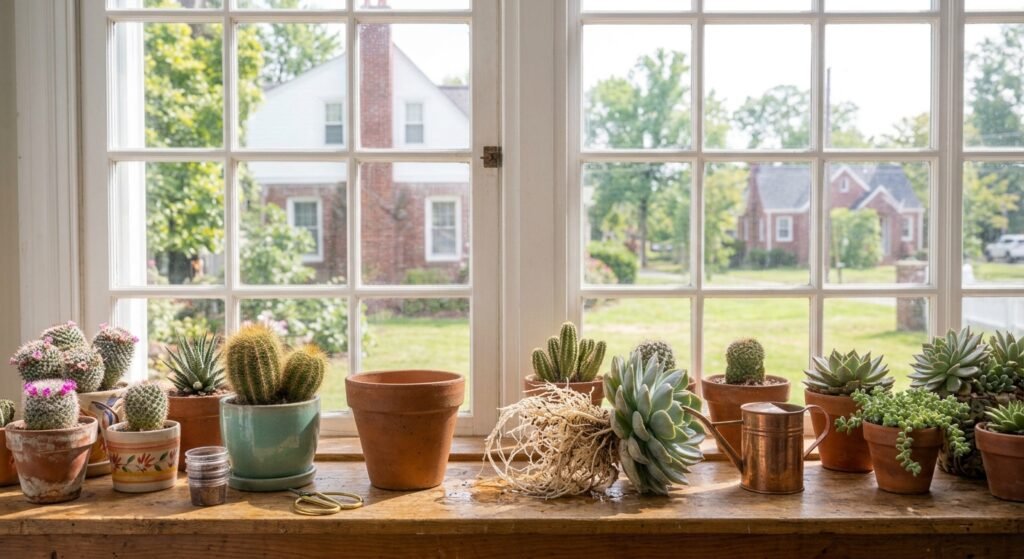
Above ground, symptoms include sudden leaf drop, translucent yellowing lower foliage, and a stem that wobbles loosely in the soil.
Beneath the surface, roots lose their firm white structure, turning dark brown, hollow, or emitting a foul sour smell.
Sterile Pruning and Beheading Techniques
When active decay strikes, knowing how to treat root rot requires aggressive surgical intervention to save the upper plant.
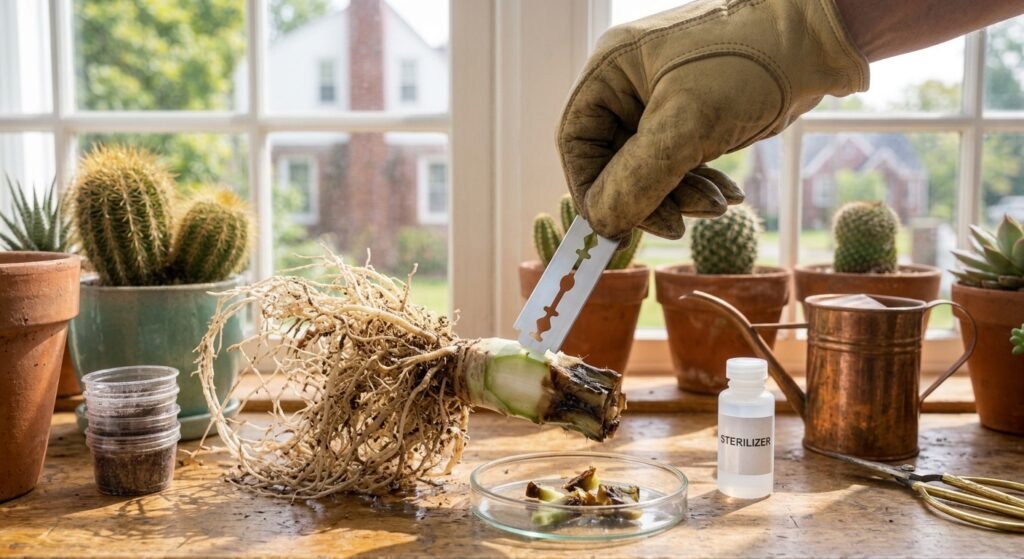
Slice off all infected roots and lower stem tissue using razor blades or shears wiped clean with isopropyl alcohol.
If rot has reached the main stalk, cut above the infection to harvest a clean rosette top for fresh water propagation.
Root Rot Prevention Comparison Matrix
The comparison table below outlines infection stages, treatment protocols, and recovery success rates for indoor succulents:
| Infection Severity | Visible Symptoms | Treatment Protocol | Recovery Success Rate |
| Early Stage | Mild leaf yellowing | Withhold water, improve airflow | 95% – 99% |
| Moderate Stage | Mushy lower stem | Root pruning & re-rooting | 80% – 90% |
| Severe Stage | Complete collapse | Rosette beheading / propagation | 70% – 80% |
| Total Decay | Black translucent mush | Compost plant (Irrecoverable) | 0% (Fatal) |
7 Best Steps to Treat Root Rot Effectively
Follow this comprehensive framework to successfully treat root rot and restore your distressed indoor succulent collection:
               [Unpot and Inspect Damaged Roots]
                             |
         +-------------------+-------------------+
         |                                       |
[Wash Away Soggy Old Soil]               [Prune All Black Mushy Roots]
         |                                       |
(Expose root structure clearly)          (Cut back to clean white tissue)
         |                                       |
         v                                       v
Let pruned stems callus for 3 days,      Plant in fresh gritty cactus mix,
enjoy zero root rot and healthy growth    water using soak-and-dry method
1. Unpot and Inspect Root Systems
Gently slide your distressed succulent out of its container and brush away old soil to inspect root health.
2. Sanitize Pruning Equipment
Wipe your shears or razor blades thoroughly with rubbing alcohol to prevent transferring fungal spores between cuts.
3. Excise All Decayed Tissue
Slice away every trace of black, slimy, or hollow root and stem material until you expose clean, crisp tissue.
4. Wash Remaining Healthy Roots
Rinse surviving roots gently under lukewarm water to remove lingering fungus particles and old bacteria.
5. Allow Stems to Callus Over
Place your pruned plant flat on a dry paper towel in indirect light for 2 to 3 days to seal open wounds.
6. Repot in Fresh Gritty Soil
Plant your recovered succulent in a sterile, fast-draining potting mix containing 60% perlite and pumice.
7. Withhold Water Until New Roots Form
Keep newly replanted specimens dry for two to three weeks, allowing dormant roots to trigger fresh growth naturally.
Choosing Gritty Soil to Stop Future Infections
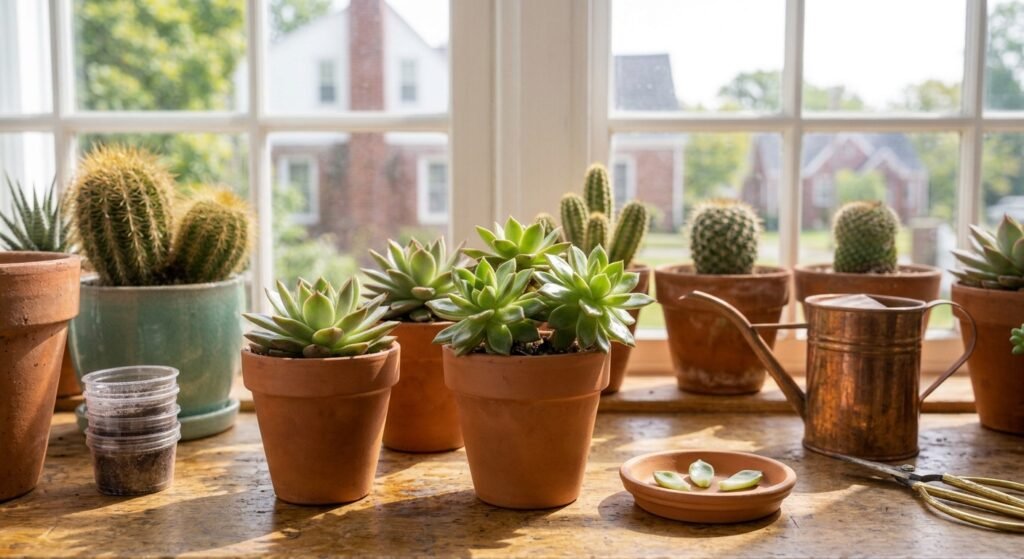
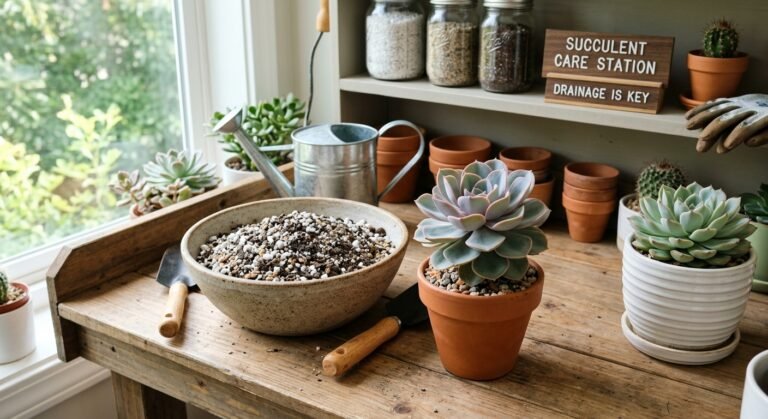
The cornerstone of any strategy to treat root rot is utilizing an exceptionally porous and fast-draining potting medium.
Replace dense garden topsoil with professional cactus mixes amended generously with volcanic pumice and coarse horticultural perlite.
This porous structure ensures water passes through the container instantly, eliminating standing moisture and protecting underground roots.
Conclusion
Mastering how to treat root rot empowers you to diagnose fungal decay, perform sterile surgery, and rescue valuable indoor succulents with confidence. By implementing proper watering habits, gritty soil mixes, and clean pruning techniques, you can protect your indoor garden for years.
Inspect your plant collection today, apply these 7 best steps, and enjoy your thriving, healthy indoor oasis!
Frequently Asked Questions
Can a succulent recover once it gets root rot?
Yes, mild to moderate root rot is entirely treatable by pruning infected roots, letting the plant callus, and replanting in fresh dry soil.
What causes root rot in indoor succulents?
Root rot is primarily caused by overwatering, dense moisture-retaining soil, and pots lacking functional bottom drainage holes.
How long should I wait before watering a treated succulent?
Wait two to three weeks after replanting before your first watering, giving damaged roots time to heal and form protective calluses.


One Comment