

DIY Organic Fertilizer: 7 Best Houseplant Recipes
DIY organic fertilizer is the ultimate sustainable solution every US plant enthusiast needs to nourish indoor greenery without relying on harsh synthetic chemicals. Houseplants confined to pots quickly deplete the limited nutrients in their soil, requiring regular feeding to maintain vibrant foliage, robust root systems, and active growth.
Mastering how to create and apply DIY organic fertilizer allows you to transform common kitchen scraps like banana peels, eggshells, and coffee grounds into rich, balanced plant superfood. Instead of purchasing expensive commercial chemical formulas, harnessing natural kitchen waste provides a safe, eco-friendly way to boost indoor plant vitality.
Implementing expert guidelines for DIY organic fertilizer ensures your indoor botanical collection stays lush, pest-free, and remarkably healthy. Let us explore the core science of macro-nutrients, kitchen scrap recipes, and a foolproof 7-step application framework tailored for modern US households.
Table of Contents
- Key Takeaways
- The Science of Houseplant Macro-Nutrients (NPK)
- Top Kitchen Scraps for Natural Plant Food
- Step-by-Step Banana Peel Tea Recipe
- DIY Organic Fertilizer Comparison Matrix
- 7 Best Recipes for DIY Organic Fertilizer Indoors
- Avoiding Over-Fertilization and Mold Growth
- Conclusion
- Frequently Asked Questions
Key Takeaways
- Understand NPK Needs: Houseplants require Nitrogen (N) for leaves, Phosphorus (P) for roots, and Potassium (K) for overall vigor.
- Dilute Properly: Always dilute organic liquid plant teas before applying them to indoor pots to prevent root burn.
- Feed Only in Spring and Summer: Restrict fertilizer applications to active growing seasons when plants consume nutrients rapidly.
- Avoid Spoiled Food Residues: Never place raw dairy, meat, or oily scraps into homemade fertilizers to prevent fungus gnats and odors.
- Test Soil pH Regularly: Ensure natural organic amendments maintain a balanced pH level suitable for your specific indoor plant species.
The Science of Houseplant Macro-Nutrients (NPK)
Understanding the formulation of DIY organic fertilizer begins with examining the primary chemical elements that plants require for survival.
Nitrogen drives lush green leaf development, making it essential for monsteras, pothos, and tropical foliage specimens.
Phosphorus strengthens root networks and encourages vibrant blooms, while Potassium regulates cellular water pressure and overall disease resistance.
Top Kitchen Scraps for Natural Plant Food
Creating an effective DIY organic fertilizer is remarkably simple when you repurpose nutrient-dense organic waste from everyday cooking.
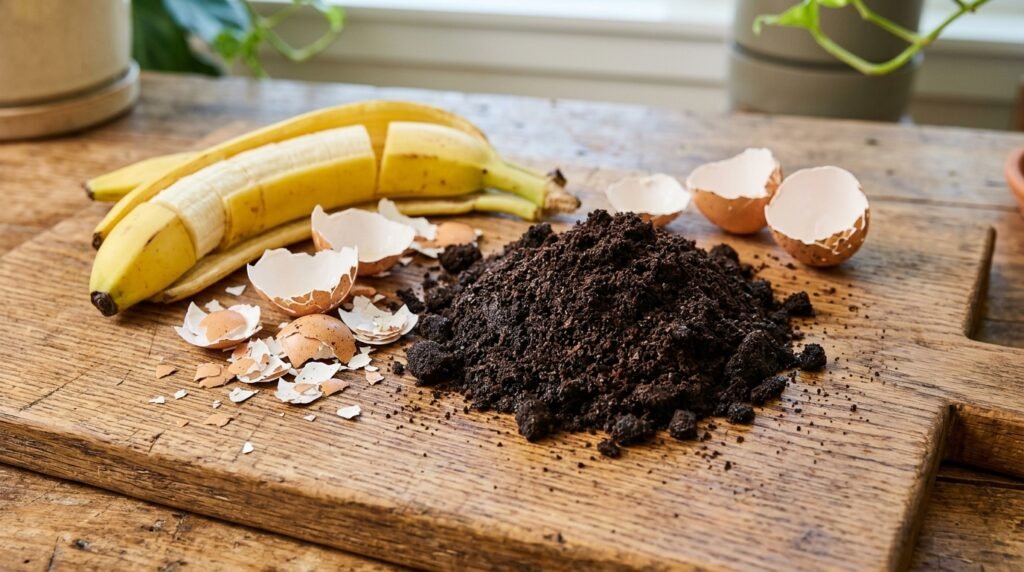
Banana peels are packed with potassium and phosphorus, while rinsed eggshells supply an abundance of slow-release calcium for cell walls.
Used coffee grounds contribute valuable organic nitrogen and improve soil micro-flora activity when mixed into top layers.
Step-by-Step Banana Peel Tea Recipe
Brewing liquid nutrient tonics is a cornerstone of advanced DIY organic fertilizer application for indoor plant owners across the United States.
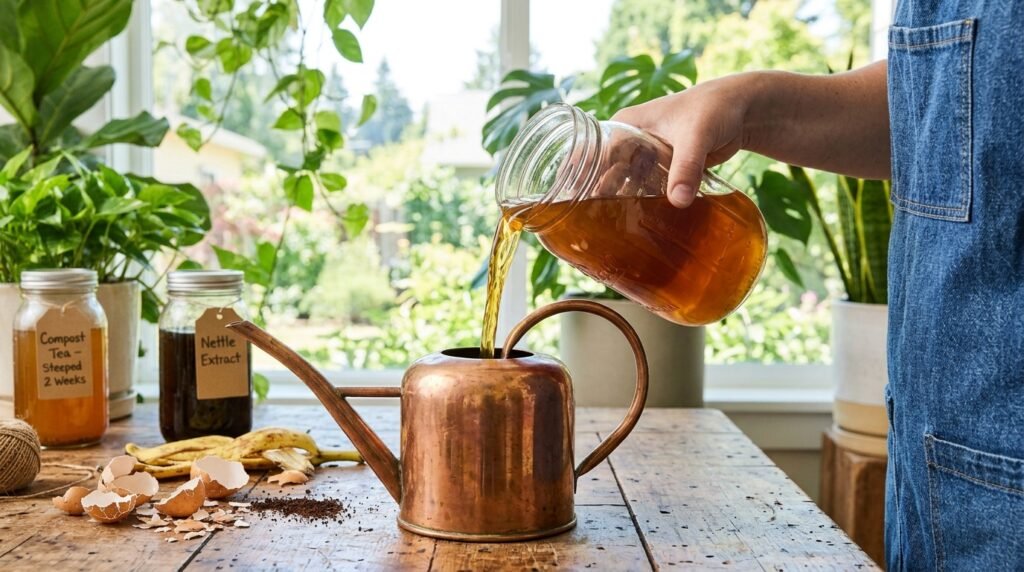
Chop organic banana peels into small pieces, place them inside a glass jar filled with filtered water, and let them steep for 48 hours.
Strain the resulting amber liquid, dilute it 1:4 with fresh water, and pour it directly into your houseplant soil during routine watering sessions.
DIY Organic Fertilizer Comparison Matrix
The comparison table below outlines key ingredients, dominant nutrients, and brewing methods for popular homemade plant foods:
| Recipe Type | Primary Kitchen Scraps | Dominant NPK Nutrient | Preparation Method | Best Suited For |
| Banana Peel Tea | Organic Banana Skins | Potassium & Phosphorus | 48-Hour Water Steeping | Flowering & Trailing Plants |
| Eggshell Powder | Washed Chicken Shells | Pure Calcium Carbonate | Oven Bake & Pulverize | Root Strength & Structure |
| Coffee Ground Mix | Spent Coffee Grinds | Organic Nitrogen | Dry Soil Top-Dressing | Foliage Monsteras & Ferns |
| Epsom Salt Tonic | Magnesium Sulfate | Magnesium & Sulfur | Dissolve in Warm Water | Yellowing Leaf Recovery |
7 Best Recipes for DIY Organic Fertilizer Indoors
Follow this comprehensive framework to formulate and apply DIY organic fertilizer recipes safely inside your home indoor garden:
               [Gather Organic Kitchen Scraps]
                             |
         +-------------------+-------------------+
         |                                       |
[Brew Banana Peel Liquid Tea]            [Pulverize Oven-Dried Eggshells]
         |                                       |
(Extract potassium and phosphorus)       (Provide slow-release calcium)
         |                                       |
         v                                       v
Dilute liquid tonics with fresh water,   Apply top-dressings during spring season,
enjoy zero chemical burn and lush growth  enjoy thriving natural houseplants
1. Brew Potent Banana Peel Tea
Steep chopped banana peels in water for two days to extract high concentrations of potassium for strong stems.
2. Pulverize Oven-Dried Eggshells
Bake discarded eggshells at 200°F for 20 minutes, grind them into fine powder, and mix into topsoil for calcium.
3. Apply Composed Coffee Grounds
Sprinkle a thin layer of dried coffee grounds onto soil surfaces to boost nitrogen levels for foliage plants.
4. Mix Epsom Salt Foliage Spray
Dissolve one tablespoon of magnesium sulfate in a gallon of water to cure yellowing leaves and boost chlorophyll.
5. Utilize Strained Aquarium Water
Reuse nutrient-rich water from freshwater fish tank cleanings as a mild organic nitrogen source for potted plants.
6. Dilute Liquid Tonics Thoroughly
Always dilute homemade organic plant teas with at least four parts water to prevent concentrated mineral shock.
7. Feed Only During Spring and Summer
Restrict fertilizer applications to active growing seasons, pausing completely during dormant winter months.
Avoiding Over-Fertilization and Mold Growth
Practicing proper application of DIY organic fertilizer requires vigilance against pest infestations and fungal mold accumulation.
Never leave raw kitchen scraps directly on top of moist soil, as decomposing food attracts fungus gnats and fruit flies.
Always remove unused liquid tonics after a few days and clean saucers regularly to maintain a pristine indoor environment.
Conclusion
Mastering how to create and apply DIY organic fertilizer empowers you to nourish your indoor plant collection sustainably using everyday kitchen waste. By harnessing natural potassium, calcium, and nitrogen sources, you can eliminate synthetic chemicals and achieve stunning botanical growth.
Review your plant care routine today, apply these 7 best recipes, and enjoy your flourishing organic indoor garden!
Frequently Asked Questions
Can I put raw banana peels directly into houseplant soil?
No, placing raw banana peels directly on soil attracts fungus gnats and molds; you should always brew them into a strained liquid tea or compost them first.
How often should I fertilize my indoor houseplants organically?
Apply diluted organic fertilizers once a month during spring and summer growing seasons, and stop feeding completely during winter dormancy.
Is coffee ground fertilizer safe for all indoor plants?
Coffee grounds are acidic and work wonderfully for acid-loving tropical plants, but should be used sparingly on plants that prefer neutral or alkaline soil.

One Comment