
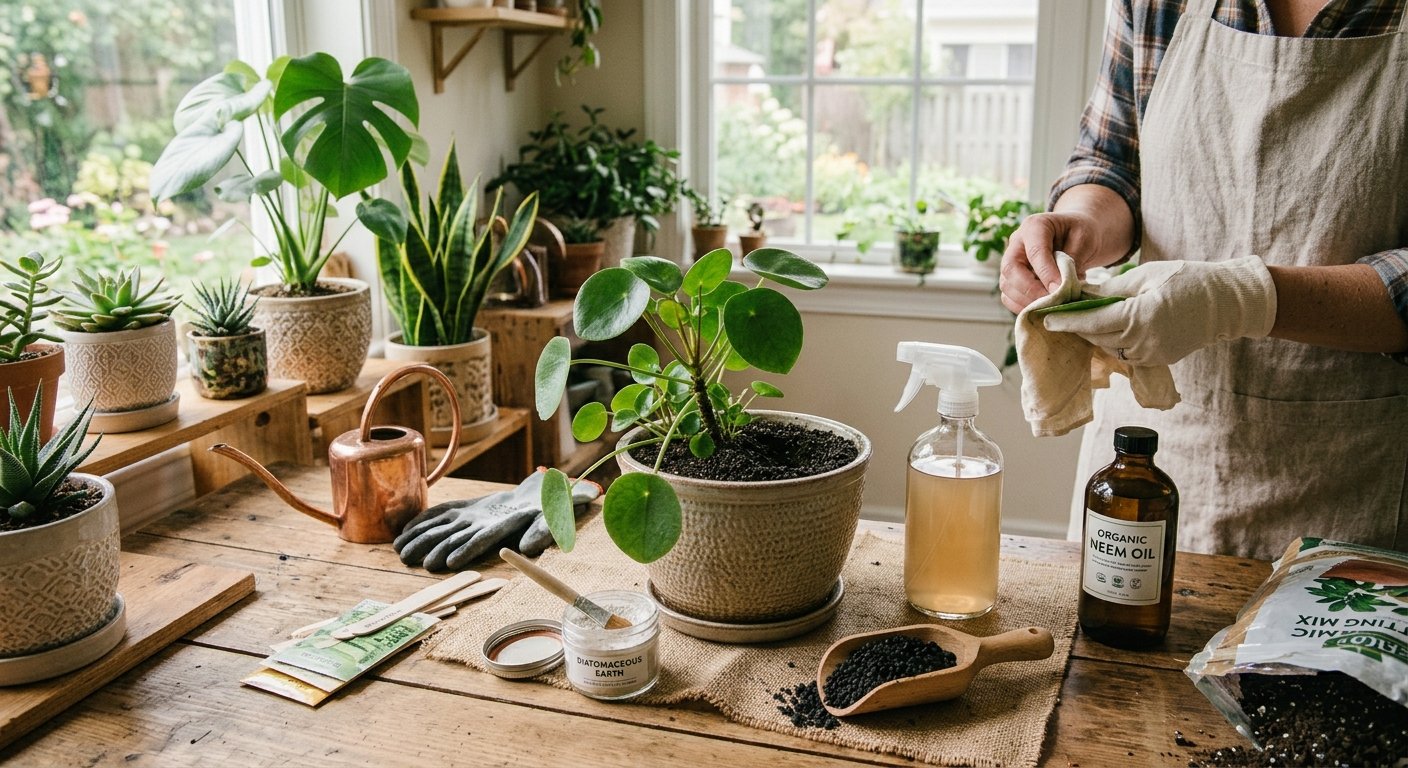
Eco-Friendly Pest Control: 7 Best Indoor Plant Ways
Eco-friendly pest control is the ultimate sustainable strategy every US plant enthusiast needs to protect indoor greenery without exposing living spaces to toxic synthetic chemicals. Houseplants grown indoors can occasionally attract stubborn sap-sucking insects like spider mites, fungus gnats, and mealybugs that threaten plant health.
Mastering how to apply eco-friendly pest control allows you to eliminate destructive bugs safely using natural botanical oils, beneficial insects, and organic washes. Instead of relying on harsh commercial pesticides that pollute indoor air, harnessing green gardening solutions protects your family, pets, and houseplants simultaneously.
Implementing expert guidelines for eco-friendly pest control ensures your indoor botanical collection stays vibrant, pest-free, and remarkably resilient. Let us explore the core science of organic defense, top natural remedies, and a foolproof 7-step application framework tailored for modern US households.
Table of Contents
- Key Takeaways
- The Science of Natural Plant Defense Mechanisms
- Top Organic Ingredients for Indoor Bug Management
- Step-by-Step Castile Soap Spray Recipe
- Eco-Friendly Pest Control Comparison Matrix
- 7 Best Ways to Practice Eco-Friendly Pest Control Indoors
- Preventing Future Infestations Through Plant Hygiene
- Conclusion
- Frequently Asked Questions
Key Takeaways
- Prioritize Prevention: Inspect new plant purchases thoroughly and maintain proper watering habits to discourage common indoor pests.
- Harness Botanical Oils: Use cold-pressed neem oil and horticultural soaps to smother soft-bodied insects safely without chemical residues.
- Target Leaf Undersides: Pests like spider mites and mealybugs hide on hidden leaf surfaces and stem joints where sprays must reach.
- Isolate Infected Plants: Move struggling houseplants away from your main collection immediately upon discovering any active insect infestation.
- Maintain Good Airflow: Use oscillating fans in indoor plant rooms to reduce humidity stagnation and prevent fungal spore development.
The Science of Natural Plant Defense Mechanisms
Understanding the mechanics of eco-friendly pest control starts with examining how organic botanical compounds disrupt insect life cycles naturally.
Natural oils and insecticidal soaps work by suffocating soft-bodied pests and breaking down their protective waxy outer cuticles.
Because insects cannot build chemical resistance against mechanical smothering agents, natural treatments remain effective over years of repeated use.
Top Organic Ingredients for Indoor Bug Management
Selecting the right ingredients for eco-friendly pest control is essential for indoor gardeners looking to protect sensitive houseplants.
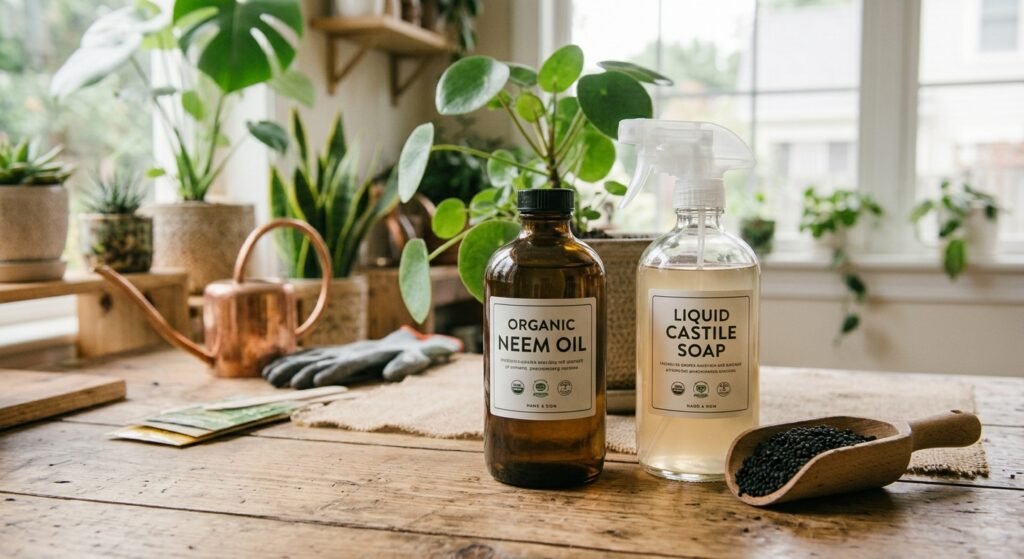
Pure cold-pressed neem oil delivers powerful azadirachtin compounds that stop insect feeding and reproduction immediately.
Liquid castile soap acts as a safe surfactant, emulsifying oils with water while stripping away insect protective coatings.
Step-by-Step Castile Soap Spray Recipe
Preparing organic formulas for eco-friendly pest control is remarkably straightforward and requires only basic household items.
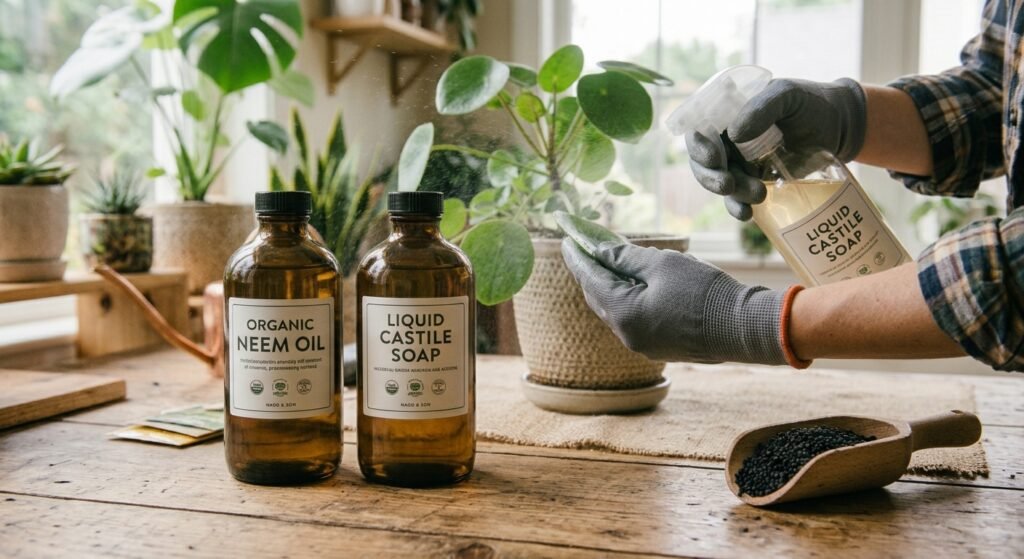
Mix one teaspoon of liquid castile soap and one teaspoon of organic vegetable oil into one quart of warm water.
Shake the spray bottle vigorously to form a uniform milky solution, then mist all affected plant stems and leaves thoroughly.
Eco-Friendly Pest Control Comparison Matrix
The comparison table below outlines natural treatment types, target insect pests, and application frequencies for indoor plant care:
| Treatment Method | Primary Active Agent | Target Insect Pests | Application Frequency | Safety Precautions |
| Neem Oil Spray | Azadirachtin Extract | Spider Mites & Mealybugs | Every 7 Days for 3 Weeks | Avoid Direct Sun Exposure |
| Castile Soap Wash | Potassium Salts | Aphids & Whiteflies | Twice Weekly Until Gone | Rinse Leaves After Treatment |
| Rubbing Alcohol | Isopropyl Alcohol (70%) | Scale Insects & Mealybugs | Spot Treatment As Needed | Test Single Leaf First |
| Yellow Sticky Traps | Mechanical Adhesive | Flying Fungus Gnats | Continuous Monitoring | Place Near Soil Surface |
7 Best Ways to Practice Eco-Friendly Pest Control Indoors
Follow this comprehensive framework to successfully execute eco-friendly pest control across your entire indoor plant collection:
               [Inspect All Indoor Houseplants Regularly]
                             |
         +-------------------+-------------------+
         |                                       |
[Isolate Any Infested Specimens]         [Mix Organic Neem & Soap Spray]
         |                                       |
(Prevent spread to healthy plants)       (Emulsify safe botanical ingredients)
         |                                       |
         v                                       v
Apply natural spray at sunset,           Monitor recovery weekly,
enjoy zero toxic chemical residues       enjoy thriving pest-free houseplants
1. Isolate Infested Houseplants Immediately
Move any struggling plant showing signs of pests away from your main collection to stop cross-contamination.
2. Wipe Leaves With Diluted Alcohol
Dab stubborn scale insects or mealybugs directly with a cotton swab soaked in 70% isopropyl alcohol.
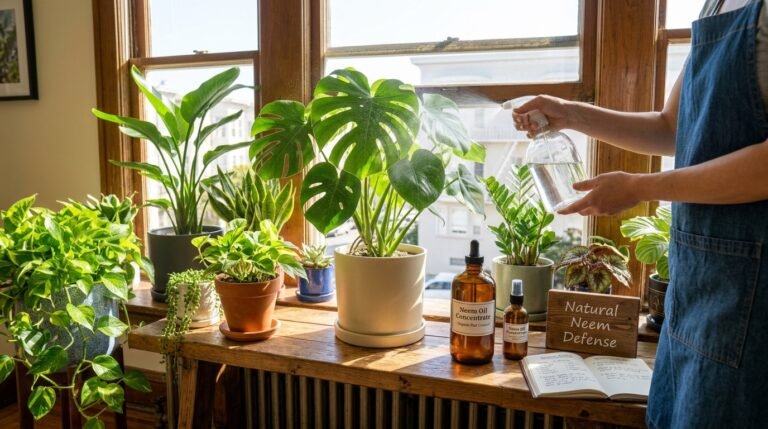
3. Apply Cold-Pressed Neem Oil Sprays
Mist plant foliage with an emulsified neem oil solution to disrupt sap-sucking insect reproduction cycles.
4. Deploy Yellow Sticky Traps for Gnats
Place yellow adhesive cards near potting soil surfaces to capture adult fungus gnats before they lay eggs.
5. Introduce Beneficial Predatory Mites
Release microscopic beneficial insects into your indoor greenhouse cabinet to hunt down spider mites naturally.
6. Wash Foliage Regularly Under Showers
Take potted plants into the bathroom monthly to rinse dust and microscopic pests off leaves with lukewarm water.
7. Avoid Overwatering to Deter Gnats
Let potting soil dry completely between watering sessions to eliminate the wet habitat where fungus gnat larvae thrive.
Preventing Future Infestations Through Plant Hygiene
Maintaining long-term success with eco-friendly pest control relies heavily on consistent preventative indoor plant hygiene.
Inspect the undersides of leaves and stem joints routinely every time you water your indoor botanical collection.
Quarantine any newly acquired plant specimens for at least two weeks before introducing them near your existing houseplants.
Conclusion
Mastering effective methods for eco-friendly pest control empowers you to protect your indoor botanical collection safely without resorting to toxic synthetic chemicals. By utilizing neem oil sprays, insecticidal soaps, and strict plant hygiene, you can maintain a thriving indoor oasis.
Review your plant care routine today, apply these 7 best ways, and enjoy your flourishing pest-free indoor garden!
Frequently Asked Questions
What is the safest eco-friendly spray for indoor houseplant pests?
A diluted mixture of organic cold-pressed neem oil, mild liquid castile soap, and warm water is widely considered the safest and most effective spray.
How do I get rid of fungus gnats naturally without chemicals?
Allow potting soil to dry out completely between waterings, use yellow sticky traps, and apply a mild organic mosquito dunks tea to the soil.
Will homemade insecticidal soap burn my houseplant leaves?
Soap sprays can cause leaf burn if applied under intense direct sunlight or grow lamps, so always treat plants during evening hours.


One Comment