
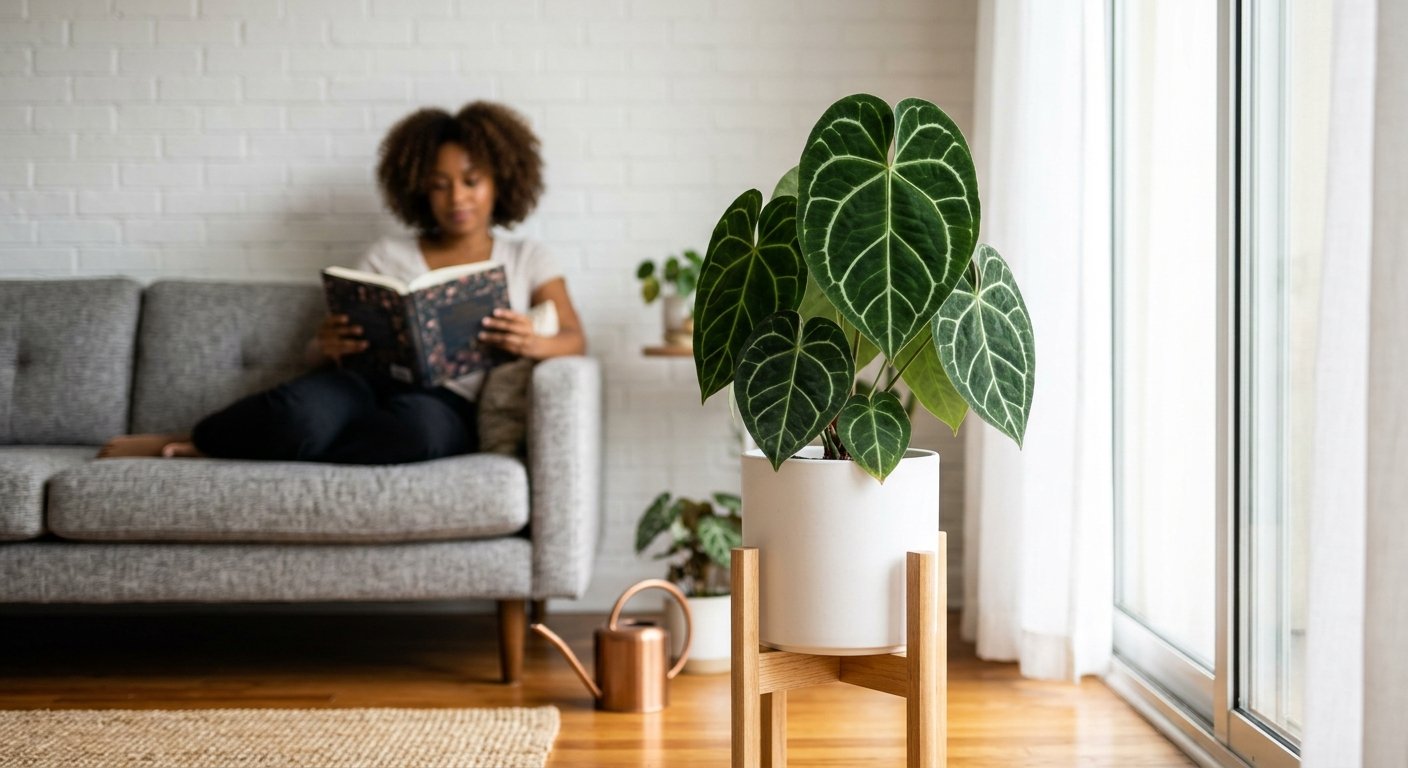
7 Best & Easy Ways: Anthurium Clarinervium Care Guide
An Anthurium Clarinervium care guide provides essential strategies for houseplant enthusiasts aiming to grow exotic velvet foliage across US homes. Botanically known as Anthurium clarinervium, this Mexican epiphytic plant is beloved for its thick, heart-shaped dark leaves accented by bright white veins.
Following a proper Anthurium Clarinervium care guide prevents common problems such as crispy leaf margins, yellowing foliage, and root decay. Because this cardboard-textured aroid naturally grows on rocky outcrops and trees, it requires high ambient humidity, bright indirect sunlight, and rapid soil drainage to flourish indoors.
Mastering an Anthurium Clarinervium care guide protects delicate root structures while accelerating growth during active spring and summer months. By managing indoor humidity levels, selecting chunky aroid potting mixes, and balancing water frequency, you can maintain pristine leaves year-round. Let us walk through actionable, step-by-step instructions to keep your plant healthy.
Table of Contents
- Key Takeaways
- Humidity and Temperature Requirements
- Watering Rules for Epiphytic Aroids
- Creating the Ultimate Chunky Aroid Mix
- Light Intensity and Placement Tips
- Anthurium Clarinervium Growth & Health Matrix
- 7 Best & Easy Ways: Anthurium Clarinervium Care Guide
- Conclusion
- Frequently Asked Questions
Key Takeaways
- Maintain High Humidity: Keep indoor humidity levels between 60% and 80% to stop leaf edges from turning crisp and brown.
- Use Chunky Soil Mixes: Combine orchid bark, coarse perlite, peat moss, and charcoal for maximum root aeration.
- Avoid Waterlogged Soil: Allow the top 2 inches of soil to dry completely before watering again to prevent root rot.
- Deliver Bright Indirect Sun: Place pots near eastern or curtain-filtered southern windows to protect velvet leaf surfaces.
- Protect from Thermal Shock: Keep tropical plants away from cold winter window drafts and HVAC air vents.
Humidity and Temperature Requirements
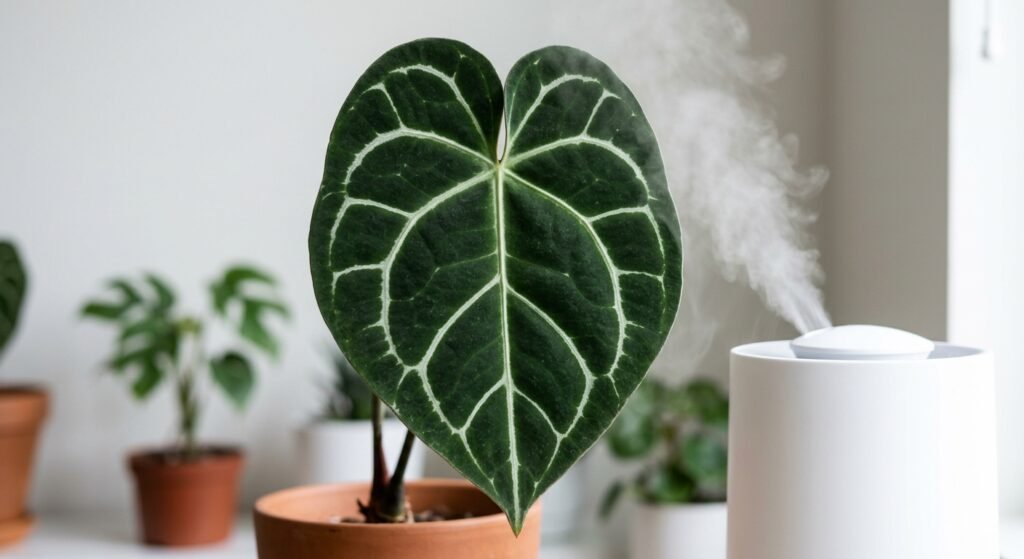
Elevated air moisture represents the core focus of any Anthurium Clarinervium care guide.
Because this species originates from humid cloud forests, dry indoor air causes immediate leaf stress.
Maintain relative humidity above 60% using a cool-mist room humidifier or pebble tray setups.
Keep room temperatures consistently between 65°F and 85°F, avoiding sudden drops below 60°F.
Watering Rules for Epiphytic Aroids
Proper hydration balance forms a vital section in this Anthurium Clarinervium care guide.
As an epiphyte, its thick roots require oxygen as much as they require moisture.
Overwatering Risk
Excess water smothers roots in dense soil, leading to soft brown patches and fungal decay.
Underwatering Symptoms
Extended dry periods cause lower leaves to droop, curl inward, and develop dry crispy brown tips.
Always verify soil dryness 2 inches deep before adding water to the pot.
Creating the Ultimate Chunky Aroid Mix
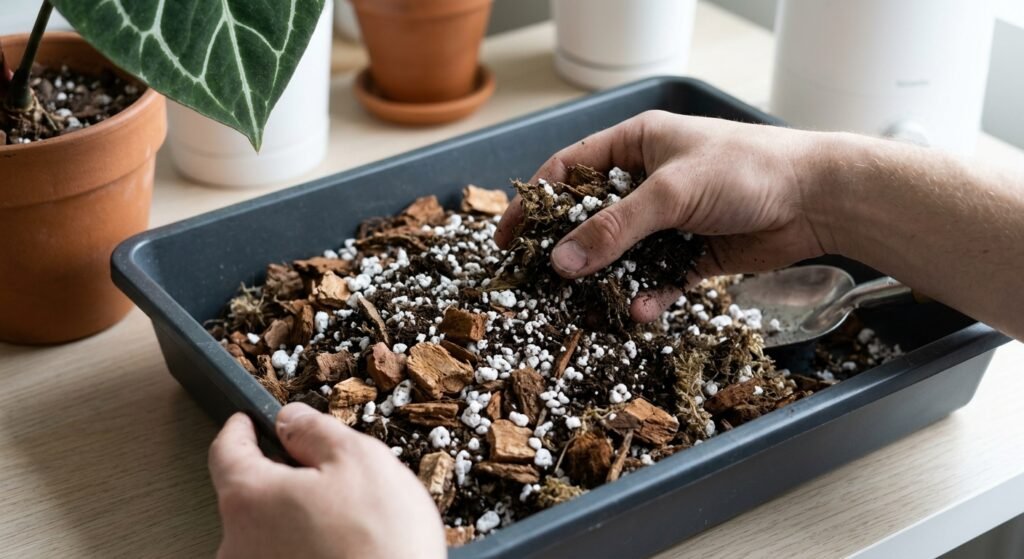
Soil structure selection plays a massive role in every Anthurium Clarinervium care guide.
Standard dense potting soil traps water, increasing the likelihood of root suffocation.
Mix 40% orchid bark, 30% peat moss or coco coir, 20% coarse perlite, and 10% horticultural charcoal.
This gritty, porous blend allows water to drain freely while providing stability for climbing roots.
Light Intensity and Placement Tips
Lighting placement is critical to execute a successful Anthurium Clarinervium care guide strategy.
Low light causes slow, leggy growth with small leaves that lack dark coloration.
Conversely, harsh direct afternoon sunlight bleaches velvety pigments and scorches dark leaf surfaces.
Position your plant 2 to 4 feet away from east or south-facing windows with sheer curtain filtration.
Anthurium Clarinervium Growth & Health Matrix
The diagnostic table below outlines environmental targets for maintaining vibrant velvet foliage:
| Environmental Factor | Target Range | Common Care Mistake | Corrective Action |
| Humidity Level | 60% – 80% Humidity | Dry Winter HVAC Air | Use cool-mist humidifier or pebble tray |
| Water Frequency | Every 7–10 Days | Overwatering Heavy Soil | Water only when top 2 inches dry |
| Soil Mixture | Chunky Aroid Blend | Dense Topsoil Mix | Repot in bark, perlite & peat blend |
| Light Exposure | Bright Indirect (6–8 Hours) | Direct Sun / Deep Shade | Move 3 feet from curtain-filtered window |
| Temperature | 65°F – 85°F Range | Cold Window Drafts | Relocate away from exterior doors & vents |
7 Best & Easy Ways: Anthurium Clarinervium Care Guide
Follow this step-by-step diagnostic flowchart to sustain velvet foliage year-round:
               [Test Soil Top 2 Inches]
                          |
      +-------------------+-------------------+
      |                                       |
[Top 2 Inches Dry]                    [Soil Still Damp]
      |                                       |
(Provide Deep Water)                  (Delay Watering)
      |                                       |
      v                                       v
Pour water until pot drains,          Recheck soil dryness
empty saucer tray liquid              in 3 to 4 days
1. Water Based on Soil Dryness
Insert your finger 2 inches into the potting mix; water thoroughly only when soil feels completely dry.
2. Boost Room Humidity Above 60%
Run a cool-mist humidifier near your plant to prevent leaf margins from turning brown and crispy.
3. Use Pots with Drainage Holes
Select terracotta or plastic pots with functioning bottom drainage holes to allow excess water to escape.
4. Provide Bright, Indirect Light
Place pots near bright windows filtered by sheer curtains to maximize light without burning foliage.
5. Wipe Velvet Leaves Gently
Dust leaf surfaces monthly using a damp microfiber cloth to enhance photosynthesis efficiency.
6. Feed Monthly During Spring and Summer
Apply diluted 10-10-10 liquid houseplant fertilizer monthly during active growth cycles.
7. Repot Every 2 Years
Refresh compacted potting soil every 24 months using a fresh, airy aroid mix blend.
Conclusion
Following a dedicated Anthurium Clarinervium care guide relies on supplying bright indirect sunlight, high ambient humidity, and airy, fast-draining soil. By avoiding overwatering and protecting leaves from dry indoor air, your plant will reward you with dark, velvety heart-shaped foliage for years to come.
Inspect your Anthurium today, apply these 7 easy steps, and enjoy growing a rare tropical houseplant!
Frequently Asked Questions
Why are the leaf tips on my Anthurium Clarinervium turning brown?
Brown, crispy leaf tips usually indicate low indoor air humidity or tap water mineral buildup. Maintain humidity above 60% and switch to distilled or filtered water.
How often should I water my Anthurium Clarinervium?
Watering frequency depends on home temperature and light levels, but generally once every 7 to 10 days. Always check that the top 2 inches of soil feel dry before adding water.
Is Anthurium Clarinervium difficult to grow indoors?
While slightly more demanding than common pothos due to its high humidity needs, it is easy to maintain once placed near a humidifier in chunky, well-draining soil.



One Comment