

7 Best & Awesome Rare Variegated Houseplants to Buy
Rare variegated houseplants bring striking visual beauty, vivid colors, and unique aesthetic charm to homes across the US. Known for their distinct marbled, striped, or spotted foliage patterns, these tropical varieties have quickly transformed from niche collector items into accessible indoor showpieces for plant enthusiasts.
Investing in rare variegated houseplants allows plant lovers to build a visually dynamic indoor garden without sacrificing plant health. While variegated foliage lacks green chlorophyll in white, cream, or yellow leaf patches, choosing stable and resilient cultivars ensures your indoor plants thrive even if you are relatively new to houseplant collecting.
Growing rare variegated houseplants successfully depends on providing adequate bright indirect sunlight, proper soil drainage, and controlled humidity. By learning how chimeric and tissue-culture mutations behave, you can keep foliage vibrant while preventing reversion. Let us walk through the top beginner-friendly varieties and essential care strategies to elevate your plant collection.
Table of Contents
- Key Takeaways
- What Makes Variegated Plants Unique?
- Top Beginner-Friendly Variegated Varieties
- Lighting and Soil Mix Requirements
- Preventing Reversion and Brown Leaf Tips
- Rare Variegated Houseplants Buyer’s Matrix
- 7 Essential Care Steps for Rare Variegated Houseplants
- Conclusion
- Frequently Asked Questions
Key Takeaways
- Prioritize Light Exposure: Variegated leaves require more indirect light than solid green plants to fuel photosynthesis.
- Select Stable Mutations: Monstera Thai Constellation and Variegated ZZ Plants offer stable genetic patterns that never revert.
- Use Airy Soil Mixtures: Combine chunky orchid bark, coarse perlite, and peat moss to safeguard fine roots from decay.
- Prune Solid Stems Promptly: Cut back solid green or pure white stems to maintain balanced leaf color distribution.
- Avoid Over-Fertilization: Feed with diluted, balanced liquid fertilizer to protect fragile white tissues from chemical fertilizer burn.
What Makes Variegated Plants Unique?
Understanding plant cellular biology makes cultivating rare variegated houseplants far easier.
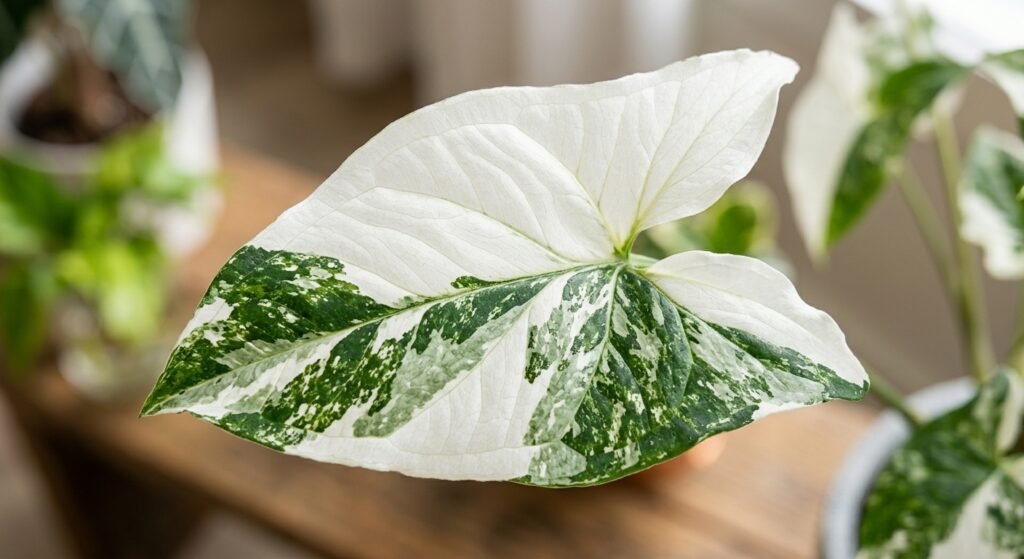
Variegation occurs when plant cell mutations prevent certain sections of a leaf from producing green chlorophyll.
This creates contrasting streaks of white, cream, soft yellow, or bubblegum pink across foliage.
Because non-green leaf zones cannot convert sunlight into energy, these plants grow slightly slower than their solid green counterparts.
Top Beginner-Friendly Variegated Varieties
Selecting resilient species guarantees success when buying rare variegated houseplants.
1. Monstera Thai Constellation
A tissue-culture marvel featuring creamy yellow spatters across large fenestrated leaves. Its stable genetic pattern ensures it never reverts to solid green.
2. Syngonium Albo (Syngonium podophyllum)
A fast-growing arrow-shaped vine offering dramatic white patches that roots effortlessly in water or chunky soil mixes.
3. Variegated Snake Plant (Sansevieria trifasciata)
Extremely tough and forgiving, featuring bright golden-yellow borders that handle dim room corners and infrequent waterings.
Lighting and Soil Mix Requirements
Proper lighting placement forms the foundation when caring for rare variegated houseplants.
Without sufficient light, plants increase green chlorophyll production, leading to total color reversion.
Position plants 2 to 4 feet away from east or south-facing windows with sheer curtain filtration.
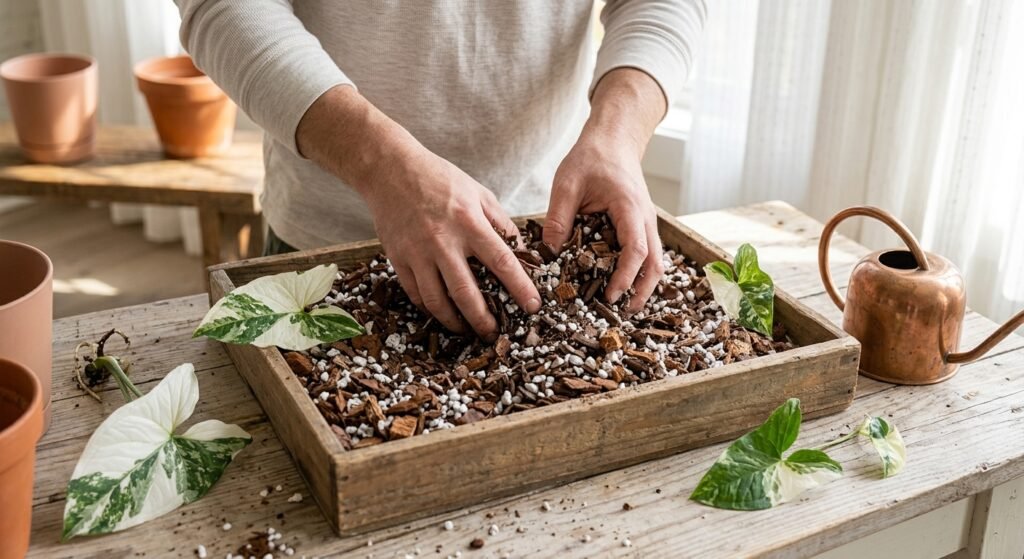
Pair strong lighting with chunky soil containing 40% orchid bark, 30% peat moss, 20% coarse perlite, and 10% horticultural charcoal.
Preventing Reversion and Brown Leaf Tips
Careful maintenance preserves pattern contrast on rare variegated houseplants.
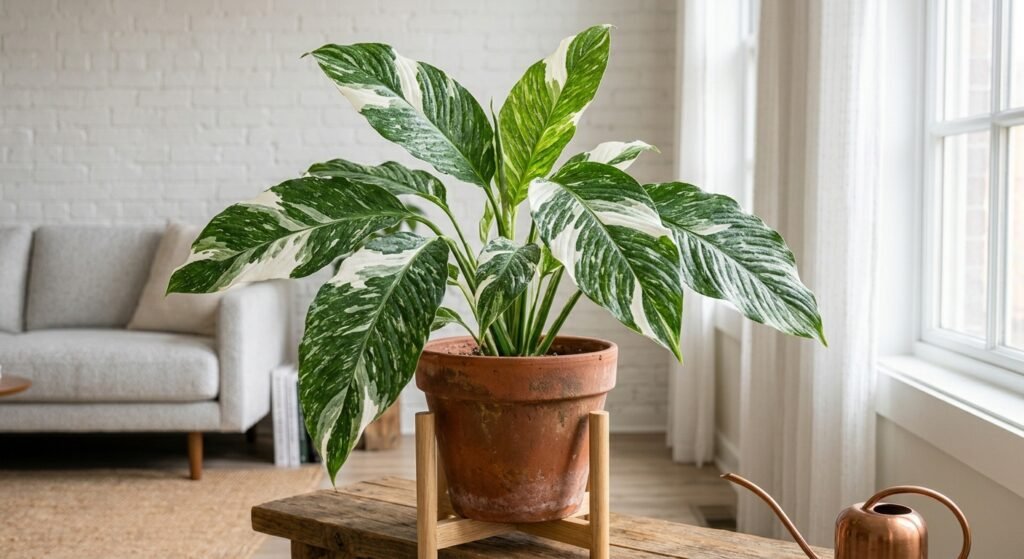
When stems produce two or three consecutive solid green leaves, prune the stem back to a node with visible color marbling.
White leaf patches lack protective pigments, making them prone to crisping under low air humidity or direct afternoon sun.
Maintain relative air humidity above 50% using cool-mist humidifiers to protect white leaf margins.
Rare Variegated Houseplants Buyer’s Matrix
The comparison table below details key parameters across top variegated cultivars:
| Cultivar Variety | Variegation Type | Growth Rate | Light Requirement | Reversion Risk |
| Monstera Thai Constellation | Lab-Created (Stable) | Moderate | Bright Indirect | Zero Risk |
| Syngonium Albo | Chimeric (Natural) | Fast | Bright Indirect | Moderate Risk |
| Variegated Snake Plant | Natural Mutation | Slow | Low to Bright Light | Low Risk |
| Variegated ZZ Plant | Stable Cultivar | Slow | Low to Moderate Light | Zero Risk |
| Philodendron Pink Princess | Chimeric (Natural) | Moderate | Bright Indirect | High Risk |
7 Essential Care Steps for Rare Variegated Houseplants
Follow this step-by-step diagnostic flowchart to sustain vibrant color patterns:
              [Inspect Emerging Foliage]
                          |
      +-------------------+-------------------+
      |                                       |
[Solid Green Leaves]                   [100% White Leaves]
      |                                       |
(Reversion Trigger)                     (Energy Starvation)
      |                                       |
      v                                       v
Increase light intensity,              Prune stem back to node
prune to variegated node               containing green cells
1. Provide Bright, Indirect Sunlight
Place plants near bright windows where filtered sunlight fuels energy production without burning tender leaf tissue.
2. Water Only When Topsoil Dries
Check soil moisture weekly and water thoroughly only when the top 2 inches feel completely dry.
3. Use Well-Draining Chunky Soil
Mix orchid bark, perlite, and peat moss to allow excess water to escape while supplying root oxygen.
4. Prune Reverting Stems Early
Trim stems displaying solid green leaves back to a node with visible color stripes to encourage variegated shoots.
5. Remove Pure White Leaves
Prune leaves that emerge 100% white, as they lack chlorophyll and consume plant energy without contributing food.
6. Boost Room Humidity Levels
Keep ambient humidity near 50% or higher so white leaf edges unfurl smoothly without crisping.
7. Feed with Diluted Fertilizer
Apply 50% strength balanced liquid houseplant fertilizer monthly during spring and summer growth cycles.
Conclusion
Growing rare variegated houseplants is a rewarding experience when you combine bright indirect lighting, airy soil mixes, and routine pruning. By choosing genetically stable varieties like Monstera Thai Constellation or Variegated Snake Plants, beginners can enjoy dynamic, high-contrast foliage with minimal stress.
Explore rare plant varieties today, apply these 7 essential care steps, and build a flourishing indoor garden!
Frequently Asked Questions
What is the easiest rare variegated houseplant for beginners?
The Variegated Snake Plant and Variegated ZZ Plant are the easiest options. Both tolerate low light, require minimal watering, and feature stable color patterns that never revert.
Why are the white parts of my variegated leaves turning brown?
White leaf areas lack chlorophyll, making them fragile. Browning occurs from low indoor humidity, overwatering, or direct sunlight scorching delicate unpigmented leaf cells.
Can a reverted variegated plant turn colorful again?
Yes, if a plant begins producing solid green leaves, prune the stem back to a node that still shows variegated tissue and relocate the pot to a brighter location.



One Comment