

Best Herbs To Grow Indoors: 7 Top Balcony Selections
Best herbs to grow indoors is the ultimate culinary gardening guide every US plant enthusiast needs to harvest fresh, organic seasonings right from their kitchen windowsill or apartment balcony. Growing herbs in small spaces allows urban cooks to enjoy aromatic basil, mint, and rosemary without needing a traditional outdoor garden plot.
Mastering the best herbs to grow indoors enables you to maximize limited natural light, optimize watering habits, and maintain a continuous supply of fresh culinary leaves year-round. Instead of buying expensive plastic-wrapped herbs from grocery stores, cultivating your own pots provides a sustainable, cost-effective way to elevate home cooking.
Implementing expert guidelines for the best herbs to grow indoors ensures your indoor botanical collection stays vibrant, pest-free, and remarkably productive. Let us explore the core science of indoor sunlight hours, soil drainage rules, and a foolproof 7-step growing framework tailored for modern US households.
Table of Contents
- Key Takeaways
- The Science of Indoor Sunlight and Plant Photosynthesis
- Top Containers and Drainage Setups for Small Spaces
- Step-by-Step Soil Mixing and Planting Guide
- Herb Cultivation Comparison Matrix
- 7 Best Herbs to Grow Indoors and on Small Balconies Successfully
- Avoiding Overwatering and Powdery Mildew
- Conclusion
- Frequently Asked Questions
Key Takeaways
- Prioritize Natural Sunlight: Position your culinary herb containers near south or west-facing windows to provide at least 6 hours of daily sunshine.
- Ensure Functional Drainage: Always plant herbs in containers with open bottom drainage holes to prevent fatal root rot from standing water.
- Use Fast-Draining Soil: Blend standard potting mix with perlite or coarse sand to create an airy, well-draining medium for root health.
- Harvest Frequently: Pinching back stem tips regularly encourages bushier plant growth and prevents premature flowering.
- Water Only When Dry: Check soil moisture depth with your finger, watering thoroughly only when the top inch of mix feels completely dry.
The Science of Indoor Sunlight and Plant Photosynthesis
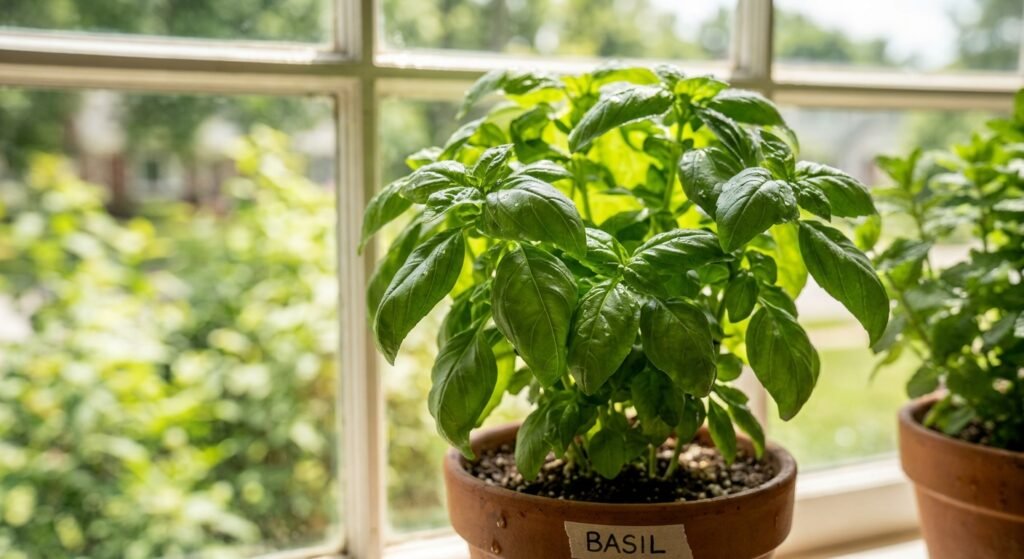
Selecting the best herbs to grow indoors starts with evaluating your home’s natural light exposure to support healthy cellular photosynthesis.
Most culinary herbs originate from the Mediterranean region and require intense, direct sunlight to develop rich essential oils and robust flavors.
South-facing windowsills provide optimal solar energy, while dimmer north-facing rooms may require supplemental LED grow lights to prevent weak stems.
Top Containers and Drainage Setups for Small Spaces
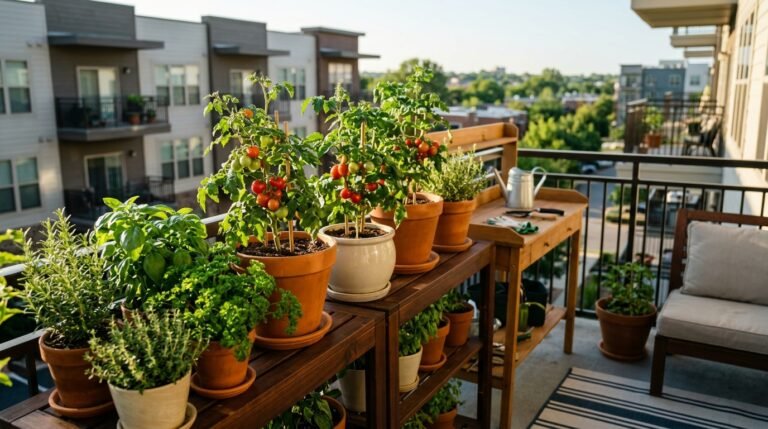
Finding the best herbs to grow indoors also involves choosing compact containers that fit comfortably on kitchen counters, shelves, and small balconies.
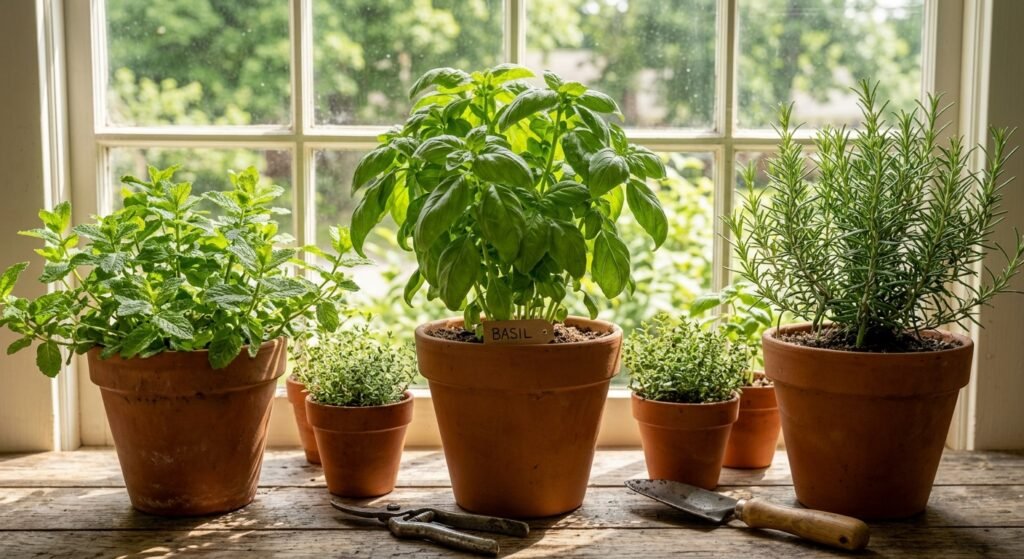
Terra-cotta pots provide excellent breathability for Mediterranean herbs like rosemary and thyme, while self-watering pots suit thirsty plants like mint.
Always pair your herb containers with matching saucers or trays to catch excess irrigation water and protect indoor surfaces.
Step-by-Step Soil Mixing and Planting Guide
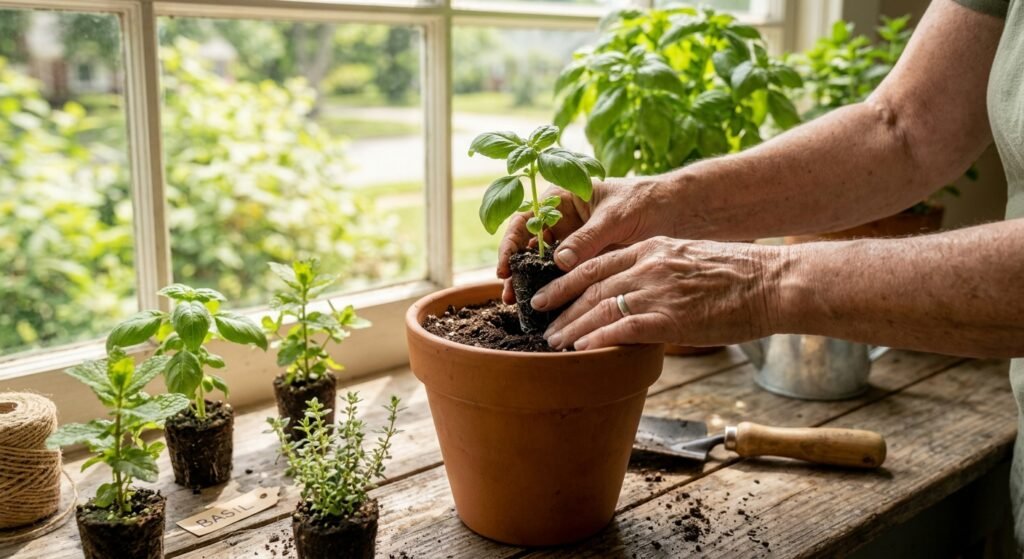
Mastering the best herbs to grow indoors requires using a lightweight, nutrient-balanced potting mix rather than heavy native garden soil.
Because culinary herbs detest sitting in soggy earth, blend coarse perlite or pumice into your potting media to enhance root aeration.
Top-dress containers seasonally with organic worm castings to maintain steady nutrient levels without burning delicate roots.
Herb Cultivation Comparison Matrix
The comparison table below outlines sunlight requirements, watering intervals, and container sizes for popular indoor culinary herbs:
| Herb Species | Sunlight Requirement | Soil Moisture Preference | Ideal Pot Size | Flavor Profile / Use |
| Sweet Basil | 6-8 Hours Direct Sun | Evenly Moist, Never Soggy | 8-Inch Pot | Sweet, Peppery (Pesto) |
| Common Mint | 4-6 Hours Partial Sun | Consistently Moist | 10-Inch Pot (Isolated) | Refreshing, Cool (Teas) |
| Mediterranean Rosemary | 6+ Hours Direct Sun | Dries Out Between Watering | 10-Inch Terra-Cotta | Woody, Earthy (Roasts) |
| English Thyme | 6 Hours Direct Sun | Fast-Draining Dry Mix | 6-Inch Pot | Subtler Minty Lemon |
7 Best Herbs to Grow Indoors and on Small Balconies Successfully
Follow this comprehensive framework to successfully cultivate the best herbs to grow indoors across your apartment kitchen or balcony:
               [Select Sunny Window Exposure]
                             |
         +-------------------+-------------------+
         |                                       |
[Choose Containers With Drainage]        [Blend Fast-Draining Potting Mix]
         |                                       |
(Prevent standing water root rot)        (Ensure optimal root zone aeration)
         |                                       |
         v                                       v
Plant herb seeds or starter plugs,       Water when topsoil is dry and harvest often,
enjoy fresh organic seasonings at home   enjoy lush productive indoor herbs
1. Position Plants Near Sunny Windows
Place your herb containers next to south or west-facing windows where they can absorb maximum daily sunlight.
2. Choose Containers With Drainage Holes
Ensure every pot features open bottom drainage apertures to allow surplus irrigation water to escape freely.
3. Use Porous, Fast-Draining Soil
Mix standard organic potting soil with perlite or coarse horticultural sand to create an airy root environment.
4. Water Based on Soil Moisture
Test soil dryness with your finger, watering thoroughly only when the top inch of mix feels dry to the touch.
5. Harvest and Pinch Stems Regularly
Trim leaf stems frequently from the top down to encourage lateral branching and prevent plants from bolting.
6. Provide Adequate Air Circulation
Keep indoor spaces well-ventilated using open windows or small oscillating fans to prevent fungal leaf diseases.
7. Rotate Pots Weekly for Even Growth
Turn your containers 90 degrees every week to ensure all sides receive balanced light exposure and grow upright.
Avoiding Overwatering and Powdery Mildew
Cultivating the best herbs to grow indoors requires careful attention to indoor humidity levels and watering frequency to prevent powdery mildew.
Overcrowded pots and stagnant indoor air trap moisture on leaves, creating an ideal breeding ground for white fungal mold spores.
Space your containers properly and water at the base of the plants to keep foliage dry and disease-free.
Conclusion
Mastering the best herbs to grow indoors empowers you to harvest fresh, aromatic culinary seasonings right from your kitchen windowsill or balcony. By providing adequate sunlight, porous soil, and consistent harvesting habits, you can achieve exceptional gardening success in small urban spaces.
Review your kitchen window space today, apply these 7 top growing selections, and enjoy your flourishing indoor herb garden!
Frequently Asked Questions
What are the easiest herbs to grow indoors for beginners?
Basil, mint, chives, and parsley are widely considered the easiest and most resilient herbs for indoor beginner gardeners.
Do indoor herbs need direct sunlight to survive?
Yes, most culinary herbs require at least 4 to 6 hours of direct daily sunlight; otherwise, they become stretched, weak, and lose flavor.
Why is my indoor basil plant turning yellow and dropping leaves?
Yellow leaves on indoor basil are typically caused by overwatering, poor soil drainage, or a lack of sufficient direct sunlight.


One Comment