
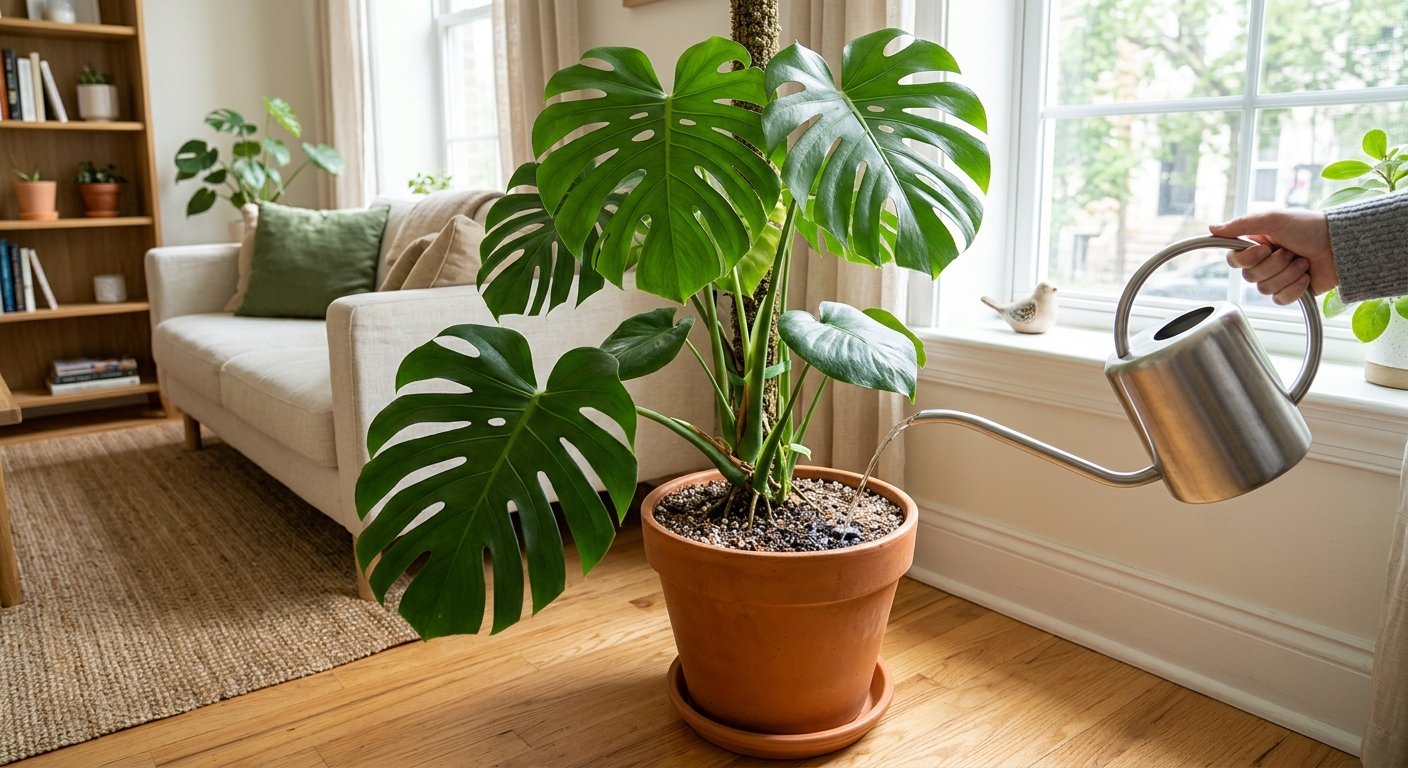
7 Tips: Watering Monstera Deliciosa Indoors
Watering Monstera Deliciosa indoors requires an understanding of seasonal soil moisture and indoor light levels across US homes. The Monstera deliciosa, commonly known as the Swiss cheese plant, is a stunning tropical houseplant praised for its broad fenestrated leaves. However, finding the right hydration schedule is often the most challenging part of keeping this popular houseplant thriving.
Mastering watering Monstera Deliciosa indoors keeps your plant green, erect, and full of vibrant foliage throughout the year. When you balance soil moisture with adequate pot drainage, you protect the root system from common tropical plant issues. This complete guide outlines actionable steps to ensure your plant receives the exact hydration it needs to grow strong.
Knowing how to properly manage watering Monstera Deliciosa indoors prevents early leaf yellowing and structural leaf collapse. Whether you live in a dry climate or an area with humid summers, adjusting your care routine makes a dramatic difference. Let us dive into the essential hydration techniques that every houseplant owner needs to know.
Table of Contents
- Key Takeaways
- How Often Should You Water Monstera Deliciosa Indoors?
- Key Environmental Factors Affecting Water Frequency
- How to Check Soil Moisture Correctly
- Signs of Overwatering vs. Underwatering
- Seasonal Watering Schedule Matrix
- 7 Quick Fixes for Watering Monstera Deliciosa Indoors
- Conclusion
- Frequently Asked Questions
Key Takeaways
- Test Before You Pour: Always check that the top 2 to 3 inches of potting soil feel completely dry before adding water.
- Observe Seasonal Shifts: Water every 1 to 2 weeks during warm spring and summer months, reducing to every 2 to 3 weeks during winter dormancy.
- Prioritize Drainage: Pots must feature functional drainage holes to let excess water escape and protect roots.
- Use Room Temperature Water: Cold tap water shocks tropical root systems; filtered or distilled water at room temperature works best.
- Watch Leaf Signals: Drooping, yellow leaves signal overwatering, while crispy brown edges indicate underwatering.
How Often Should You Water Monstera Deliciosa Indoors?
Watering Monstera Deliciosa indoors generally follows a 7 to 14 day cycle during active growth periods.
In most US households, indoor temperatures and ambient humidity dictate how quickly the soil mix dries out.
Rather than following a rigid calendar routine, base your moisture testing on actual soil dryness to avoid root decay.
Key Environmental Factors Affecting Water Frequency
Several room conditions impact how fast water evaporates from your plant pot.
Light Exposure Intensity
Plants placed in bright indirect sunlight perform active photosynthesis and drink water much faster than those in low-light spots.
Indoor Air Humidity and HVAC
Central heating in US winters dries out indoor air fast, while air conditioning units create cooler temperatures that slow down soil evaporation.
Pot Material and Size
Uncoated terracotta pots absorb moisture and dry out quickly, whereas plastic or ceramic pots trap soil moisture longer.
How to Check Soil Moisture Correctly
Accurate soil assessment is the foundation of successful watering Monstera Deliciosa indoors.
The Finger Test Method
Insert your index finger 2 to 3 inches deep into the soil mix.
If the soil feels dry and crumbles easily, it is time to give your plant a thorough soak.
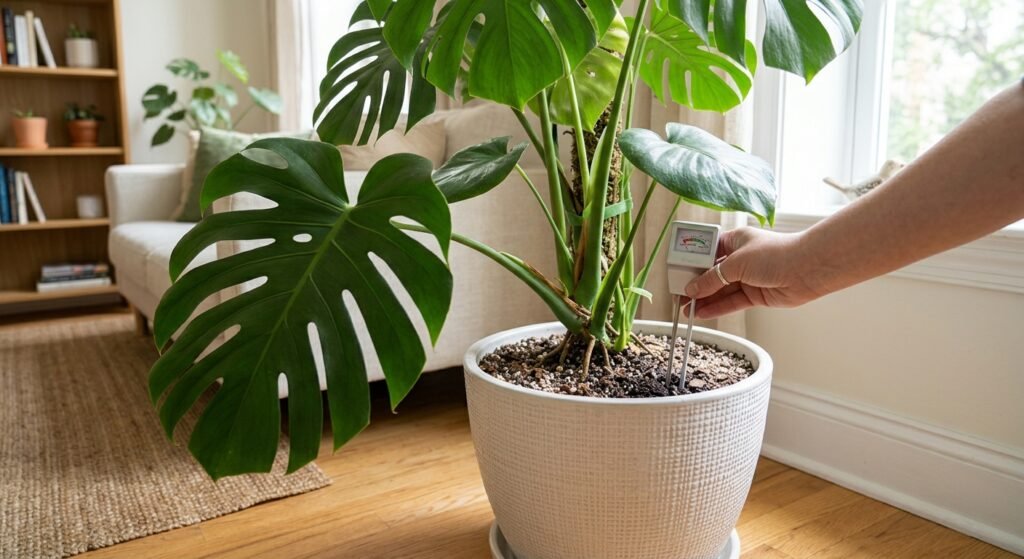
Using a Moisture Meter
A digital or analog moisture meter provides an instant reading of root zone hydration.
Aim for a moisture reading in the lower “Moist” zone (around level 3 or 4 out of 10) before watering again.
Signs of Overwatering vs. Underwatering
Recognizing stress symptoms early helps you correct mistakes before permanent root loss occurs.
Overwatering Symptoms
- Yellowing lower leaves with soft, mushy dark brown patches.
- Musty or damp odor rising from the pot soil.
- Stems losing firmness despite dark, wet potting soil.
Underwatering Symptoms
- Crispy, dry brown edges along mature leaf margins.
- Drooping foliage that recovers quickly after deep hydration.
- Soil pulling away from the inside edges of the pot.
Seasonal Watering Schedule Matrix
The matrix below shows typical hydration frequencies across different seasonal conditions:
| Season / Growth Phase | Average Frequency | Target Soil Dryness | Recommended Water Type |
| Spring (Active Growth) | Every 7 to 10 Days | Top 2 inches dry | Room Temp Filtered / Tap |
| Summer (Peak Growth) | Every 5 to 8 Days | Top 2 inches dry | Rainwater / Filtered Water |
| Fall (Slowing Growth) | Every 10 to 14 Days | Top 3 inches dry | Room Temp Tap Water |
| Winter (Dormancy) | Every 14 to 21 Days | Top 3 to 4 inches dry | Room Temp Filtered Water |
7 Quick Fixes for Watering Monstera Deliciosa Indoors
Follow this clear diagnostic flowchart to resolve moisture issues effectively:
             [Check Leaf Condition]
                       |
     +-----------------+-----------------+
     |                                   |
[Yellow / Mushy Leaves]          [Crispy Brown Edges]
     |                                   |
(Overwatering Risk)               (Underwatering Risk)
     |                                   |
     v                                   v
Stop watering immediately,      Give a thorough bottom soak,
allow soil to dry 100%          increase room humidity
1. Adopt the “Soak and Drain” Method
Pour room-temperature water evenly over the soil surface until it flows freely out of the bottom drainage holes.
2. Always Empty Standing Saucer Water
Never leave your plant sitting in stagnant drainage tray water for more than 15 minutes to prevent root rot.
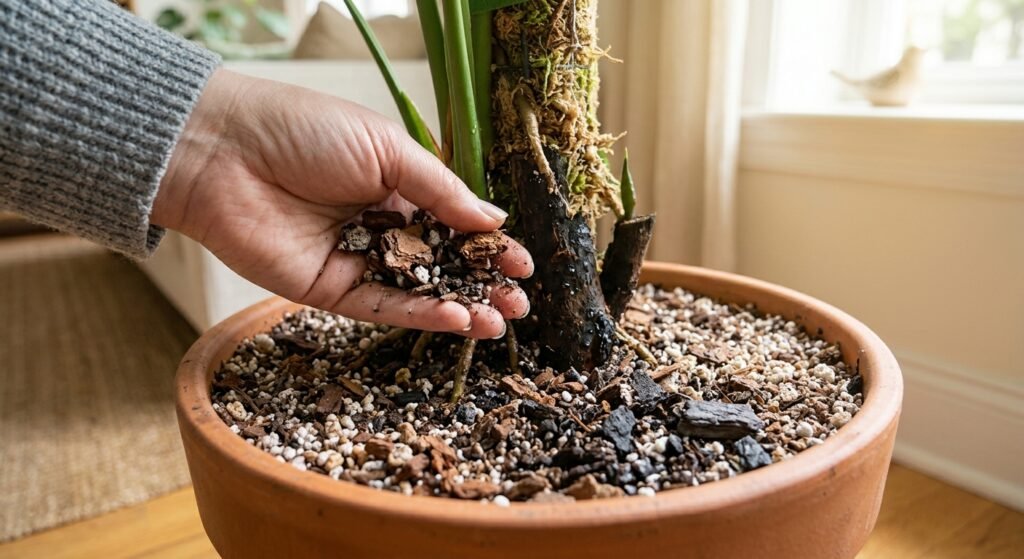
3. Switch to a Chunky Aroid Soil Blend
Mix 50% potting soil with 30% orchid bark and 20% perlite to ensure fast drainage and root aeration.
4. Adjust Seasonal Schedules
Reduce watering frequencies by half during late fall and winter when houseplant growth naturally slows down.
5. Aerate Compacted Soil
Gently poke wooden chopsticks into dense potting soil before watering to improve oxygen circulation around roots.
6. Filter Harsh Tap Water
Let city tap water sit in an open container overnight so chlorine gases evaporate before applying it to sensitive roots.
7. Maintain Consistent Indoor Temperatures
Keep your plant in rooms between 65°F and 85°F, avoiding cold window drafts or hot furnace air vents.
Conclusion
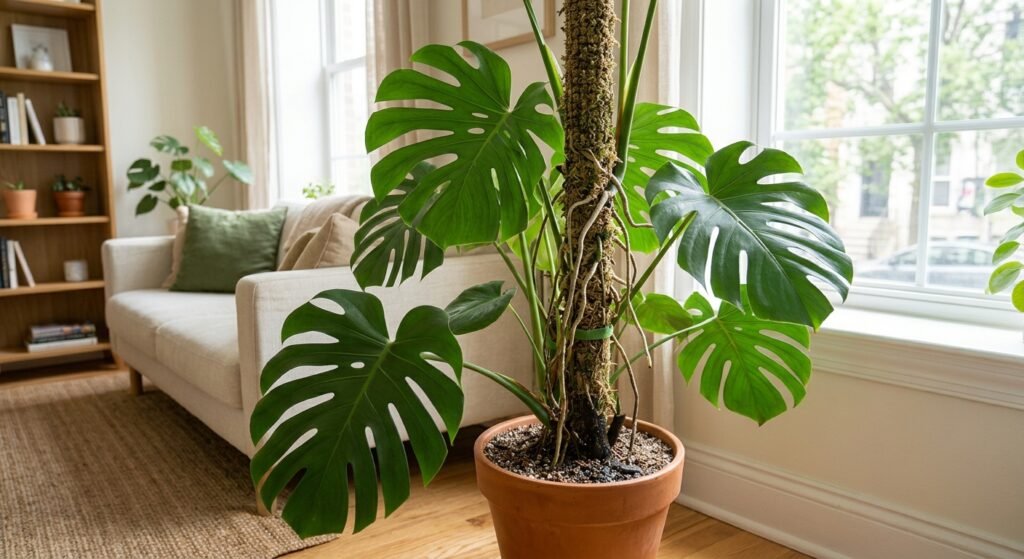
Mastering watering Monstera Deliciosa indoors relies on matching hydration with environmental light, ambient room temperature, and soil drainage. By testing soil moisture before watering and adjusting your care routine with the seasons, you protect your plant’s roots and promote lush, fenestrated foliage.
Check your plant’s soil today, apply these 7 quick fixes, and watch your indoor tropical paradise thrive!
Frequently Asked Questions
How do I know if my Monstera deliciosa needs water?
Check the top 2 to 3 inches of soil with your finger or a moisture meter. If it feels completely dry and the leaves look slightly soft or droopy, your plant needs a deep watering.
Is tap water safe for watering Monstera deliciosa indoors?
Most municipal tap water is fine, but letting it sit out overnight helps dissipate chlorine. If your local water contains heavy minerals, switch to filtered water or rainwater to avoid tip burn.
Should I mist my Monstera deliciosa leaves?
Misting offers brief humidity boosts but does not replace proper root watering. For long-term humidity control, use a room humidifier or place a pebble tray near the base of the pot.
Can overwatered Monstera deliciosa recover?
Yes, if caught early. Stop watering, relocate the plant to a spot with bright indirect light, remove any decaying mushy roots, and repot in fresh, well-draining aroid soil.




One Comment