
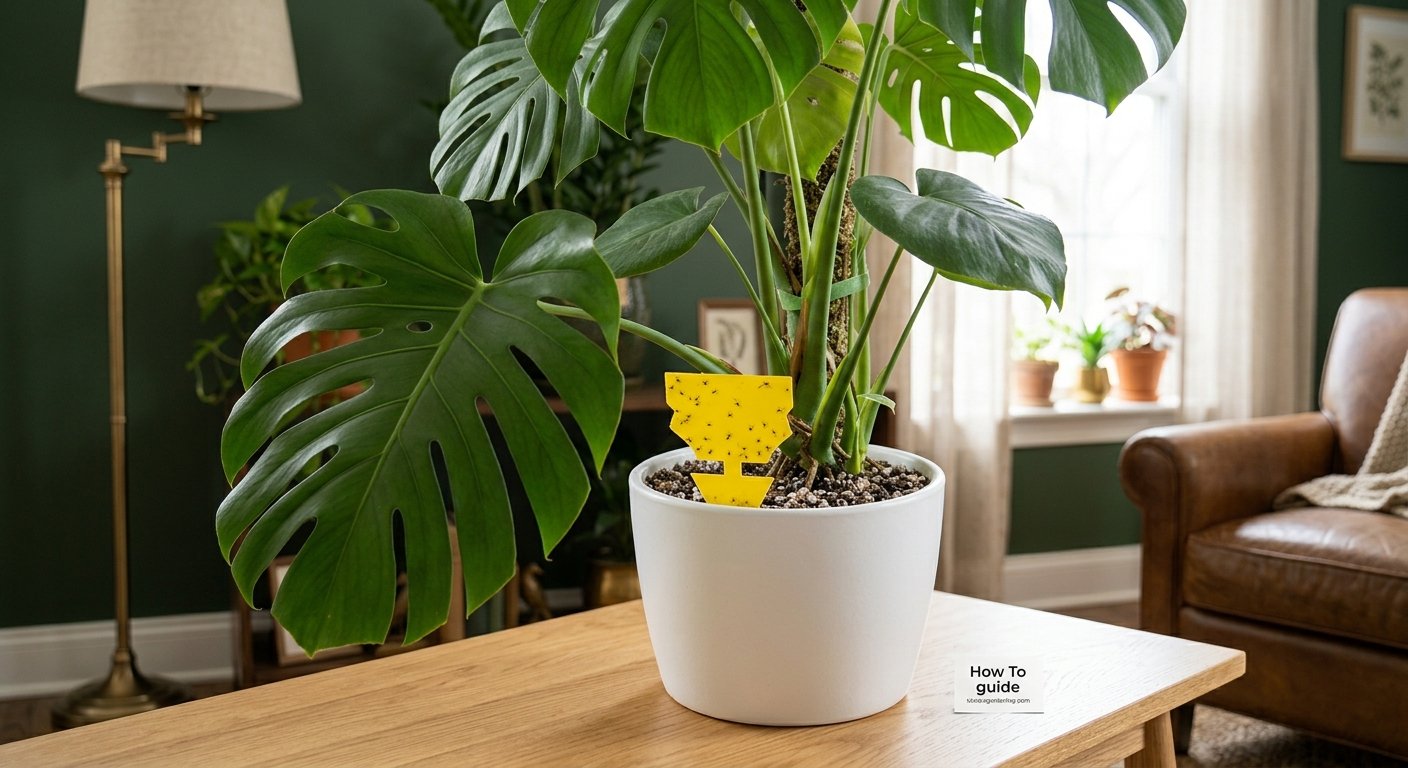
7 Easy Ways to Get Rid of Gnats in Indoor Plant Soil
To get rid of gnats in indoor plant soil, you must address soil moisture levels and target larvae deep in the root zone. Fungus gnats (Sciaridae) are tiny flying pests commonly found in US homes. They reproduce rapidly in moist potting mix, creating persistent infestations.
Learning to get rid of gnats in indoor plant soil protects delicate root structures from larval damage. While adult gnats are mainly a nuisance flying around living rooms and kitchens, their larvae feed on organic matter and tender plant roots. Taking immediate action stops their breeding cycle before root rot sets in.
When you get rid of gnats in indoor plant soil, you improve overall houseplant health and prevent pests from spreading across your indoor garden. Combining physical traps with biological treatments eradicates infestations quickly. Let us explore the most effective step-by-step methods to reclaim your houseplants.
Table of Contents
- Key Takeaways
- Understanding Fungus Gnat Life Cycles
- Top Home Remedies to Get Rid of Gnats in Indoor Plant Soil
- Biological and Chemical Treatment Options
- Soil Moisture Control and Prevention
- Gnat Treatment Efficacy Matrix
- 7 Quick Ways to Get Rid of Gnats in Indoor Plant Soil
- Conclusion
- Frequently Asked Questions
Key Takeaways
- Dry Out Soil: Allowing the top 2 to 3 inches of potting mix to dry completely kills gnat eggs and larvae.
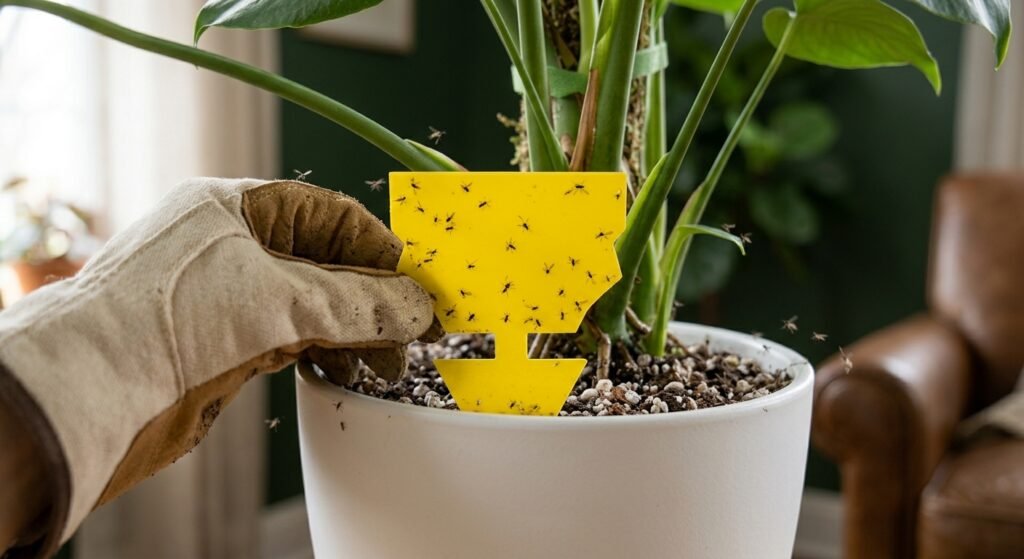
- Use Yellow Sticky Traps: Capture adult flying gnats to break the reproductive cycle immediately.
- Apply Bacillus thuringiensis israelensis (BTI): Use mosquito bits in watering cans to eliminate larvae naturally.
- Flush with Hydrogen Peroxide: A 3% hydrogen peroxide soil drench destroys larvae on contact.
- Add a Sand Barrier: Cover topsoil with a 1/2-inch layer of coarse sand to stop adults from laying eggs.
Understanding Fungus Gnat Life Cycles
Understanding the four-stage life cycle helps you get rid of gnats in indoor plant soil permanently.
Adult gnats lay up to 300 eggs in damp topsoil over a single week.
Eggs hatch into larvae within days, feeding on soil fungi and organic matter before emerging as flying adults.
Top Home Remedies to Get Rid of Gnats in Indoor Plant Soil
Natural solutions provide safe, non-toxic ways to eliminate pests around pets and children.
Hydrogen Peroxide Flush
Mix 1 part 3% hydrogen peroxide with 4 parts water and drench the soil completely.
The solution fizzes on contact, killing larvae instantly while aerating root systems without harming plants.
Apple Cider Vinegar Traps
Place shallow dishes filled with apple cider vinegar and a drop of dish soap near affected pots to drown adult gnats.
Biological and Chemical Treatment Options
Biological controls target larvae without disturbing beneficial soil organisms.
- Mosquito Bits (BTI): Steep BTI granules in warm water before watering plants to introduce natural bacteria that target larvae.
- Beneficial Nematodes: Microscopic organisms introduced to soil feed directly on gnat larvae.
- Neem Oil Drench: Cold-pressed neem oil applied as a soil drench disrupts insect growth cycles.
Soil Moisture Control and Prevention
Preventing soil moisture accumulation remains the ultimate long-term defense.
Overwatering creates ideal damp conditions for fungal growth and insect breeding.
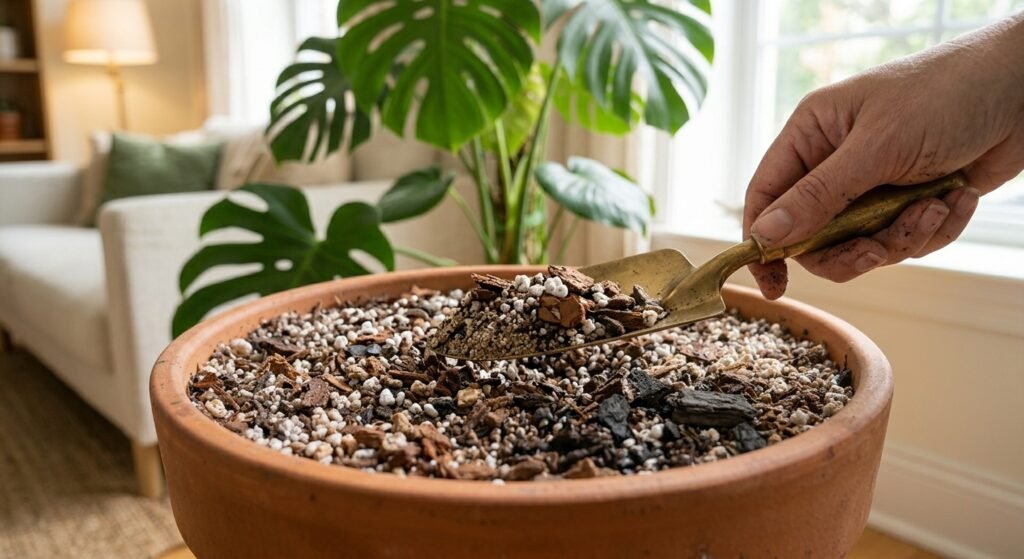
Always use pots with functional bottom drainage holes and well-aerated potting mixes.
Gnat Treatment Efficacy Matrix
The matrix below compares popular eradication methods across key criteria:
| Treatment Method | Target Stage | Speed of Results | Safety Rating | Reapplication Needed |
| Yellow Sticky Traps | Adults | 24–48 Hours | Safe (Non-Toxic) | Replace when full |
| BTI (Mosquito Bits) | Larvae | 3–7 Days | Safe (Organic) | Every 14 days |
| Hydrogen Peroxide (3%) | Larvae & Eggs | Immediate | Moderate | As needed |
| Diatomaceous Earth | Adults & Larvae | 2–4 Days | Safe (Wear Mask) | Reapply after watering |
| Coarse Sand Cover | Adults (Egg Laying) | 5–10 Days | Safe (Mechanical) | One-time application |
7 Quick Ways to Get Rid of Gnats in Indoor Plant Soil
Follow this diagnostic flowchart to execute the eradication process:
               [Identify Gnat Activity]
                          |
      +-------------------+-------------------+
      |                                       |
[Flying Adult Gnats]                 [Larvae in Soil]
      |                                       |
(Set Physical Traps)                 (Apply Soil Drench)
      |                                       |
      v                                       v
Deploy yellow sticky traps,          Drench with BTI / Peroxide,
catch breeding adults                let soil dry completely
1. Let the Topsoil Dry Out
Allow the top 2 to 3 inches of soil to dry completely to dehydrate eggs and larvae.
2. Set Up Yellow Sticky Traps
Place yellow traps near the soil line to catch adult gnats and break the egg-laying cycle.
3. Drench Soil with BTI Solution
Soak Mosquito Bits in water for 30 minutes, strain, and water your plant to kill larvae organically.
4. Flush with Hydrogen Peroxide
Use a 1:4 ratio of 3% hydrogen peroxide and water to kill larvae on contact.
5. Apply Food-Grade Diatomaceous Earth
Dust dry topsoil with diatomaceous earth to destroy soft-bodied insects mechanically.
6. Cover Topsoil with Coarse Sand
Add a 1/2-inch layer of horticultural sand over potting soil to block adults from laying eggs.
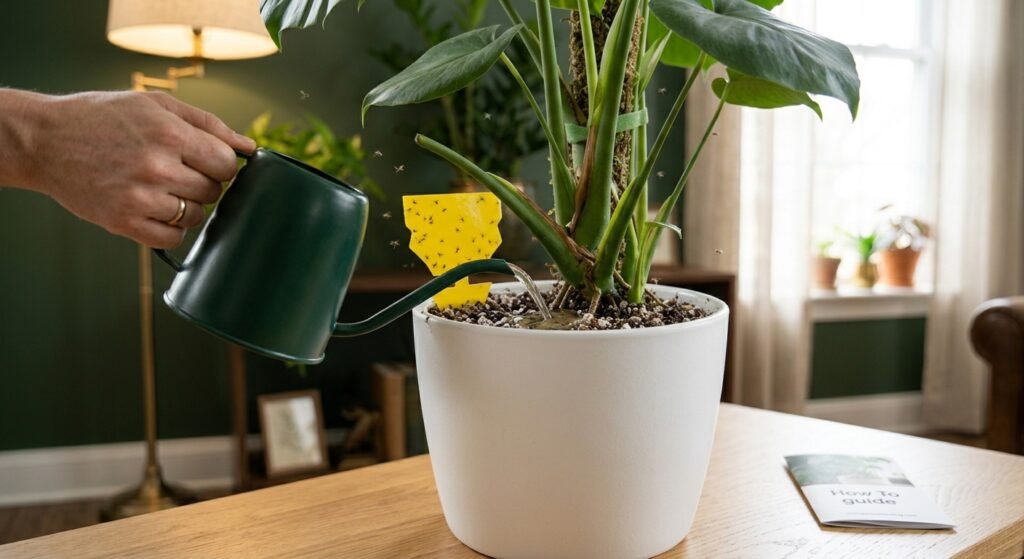
7. Bottom-Water Your Houseplants
Pour water into drainage trays so roots absorb moisture from below, keeping topsoil completely dry.
Conclusion
Learning how to get rid of gnats in indoor plant soil relies on combining targeted larvae treatments with dry soil management. By using sticky traps for adults, applying BTI soil drenches for larvae, and practicing bottom watering, you can eliminate infestations completely.
Inspect your houseplants today, apply these 7 quick remedies, and enjoy a gnat-free indoor garden!
Frequently Asked Questions
Will fungus gnats kill my houseplants?
Adult gnats do not harm plants directly, but heavy larval infestations feed on delicate root hairs, causing stunted growth, yellowing leaves, and increased risk of root decay.
How long does it take to get rid of gnats in indoor plant soil?
Complete eradication usually takes 2 to 3 weeks. Because treatments target specific life cycle stages, continuous care is required until all eggs and larvae hatch and are eliminated.
Can I use rubbing alcohol to get rid of gnats in indoor plant soil?
Rubbing alcohol can burn plant roots if poured directly into soil. Stick to diluted hydrogen peroxide (3%) or BTI solutions for safe larval control.



One Comment