
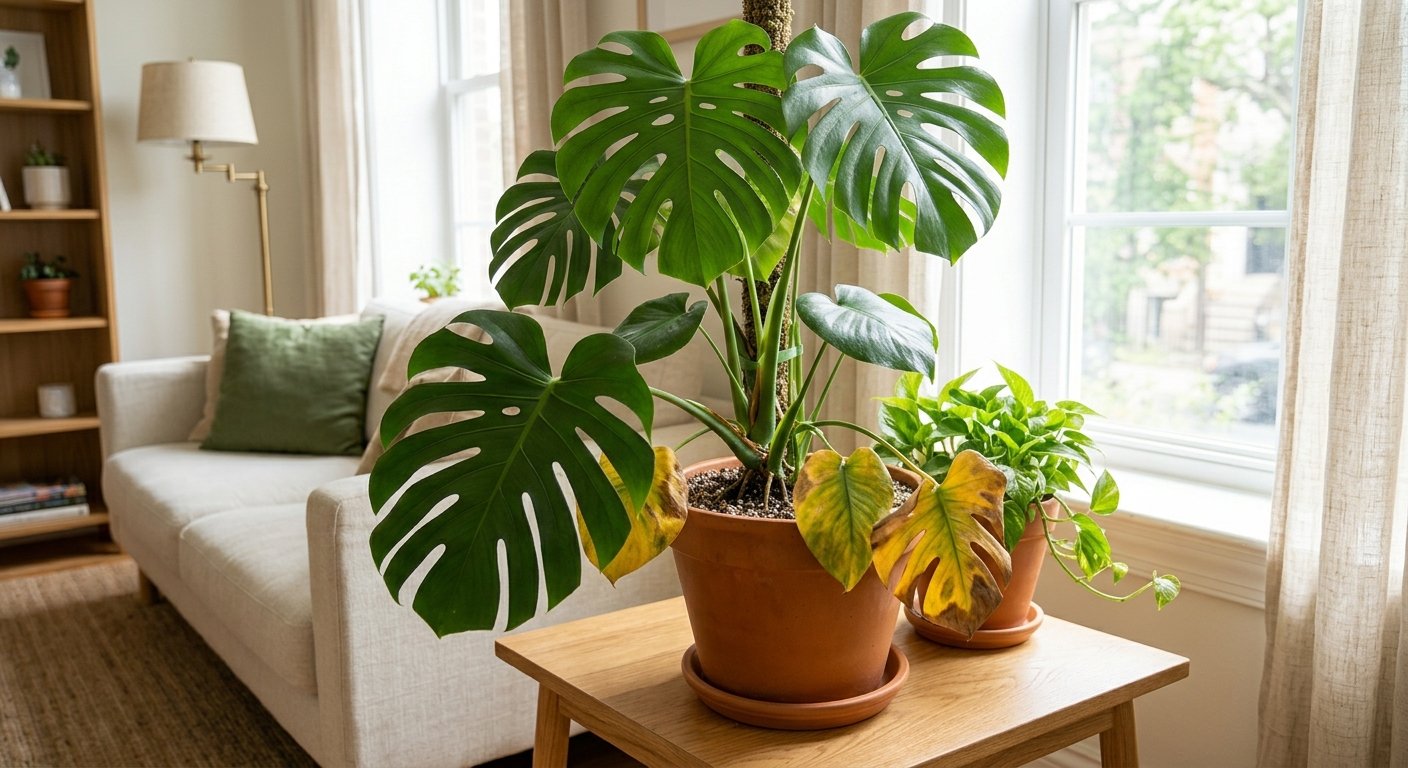
7 Easy Fixes for Yellow Leaves on Indoor Plants
Yellow leaves on indoor plants indicate underlying environmental stress that requires immediate attention from plant owners across US homes. When lush foliage loses its rich green hue, the plant is signaling an imbalance in moisture, lighting, nutrients, or root health.
Addressing yellow leaves on indoor plants promptly prevents permanent foliage loss and root damage. Discoloration, biologically known as chlorosis, occurs when a plant stops producing sufficient chlorophyll for photosynthesis. Identifying whether the issue stems from overwatering, poor drainage, or direct sun scorch allows you to take precise corrective measures.
Treating yellow leaves on indoor plants restores natural vitality and promotes robust new growth. By adjusting your watering schedule, evaluating soil aeration, and moving pots to bright indirect sunlight, you can reverse leaf yellowing effectively. Let us explore the primary root causes and actionable, step-by-step solutions to restore your houseplants.
Table of Contents
- Key Takeaways
- Primary Causes of Yellow Leaves on Indoor Plants
- Watering Imbalances: Overwatering vs. Underwatering
- Light Exposure and Temperature Extremes
- Nutrient Deficiencies and Soil Health
- Houseplant Yellowing Diagnostic Matrix
- 7 Easy Fixes for Yellow Leaves on Indoor Plants
- Conclusion
- Frequently Asked Questions
Key Takeaways
- Check Moisture First: Overwatering is the single most common cause of yellow lower leaves and root decay.
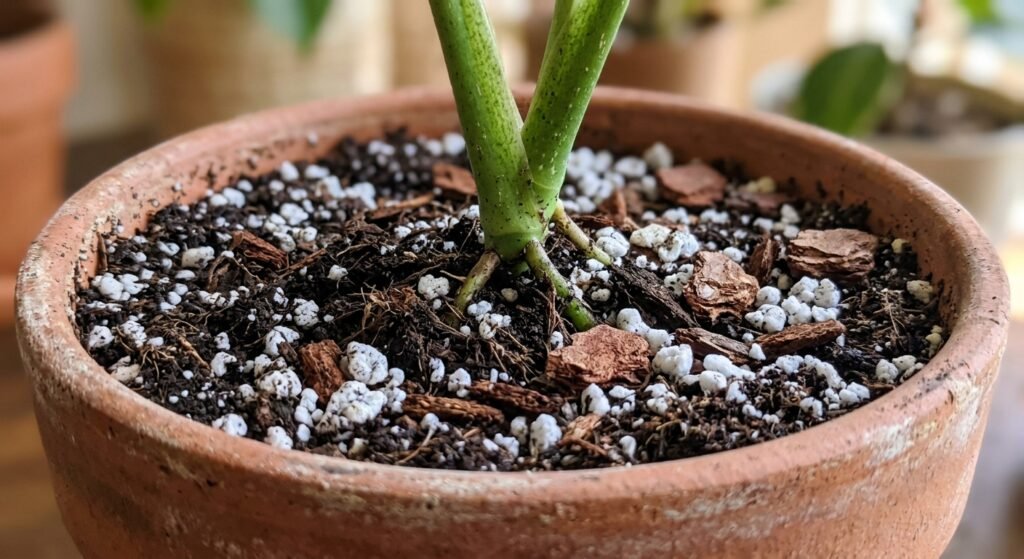
- Inspect Drainage: Ensure pots feature drainage holes and well-aerated soil containing perlite and bark.
- Adjust Sunlight Exposure: Move shade-loving plants away from harsh direct sun rays to avoid leaf scorch.
- Feed Balanced Nutrients: Nitrogen and iron deficiencies cause pale foliage that responds well to gentle fertilization.
- Prune Damaged Foliage: Trim severely yellowed leaves near the main stem so the plant conserves vital energy.
Primary Causes of Yellow Leaves on Indoor Plants
Understanding why yellow leaves on indoor plants occur helps you diagnose problems accurately before total leaf shedding occurs.
Natural aging causes older bottom leaves to turn yellow and drop off individually as the plant directs energy upward.
However, sudden yellowing across multiple stems indicates acute cultural stress from environmental factors.
Watering Imbalances: Overwatering vs. Underwatering
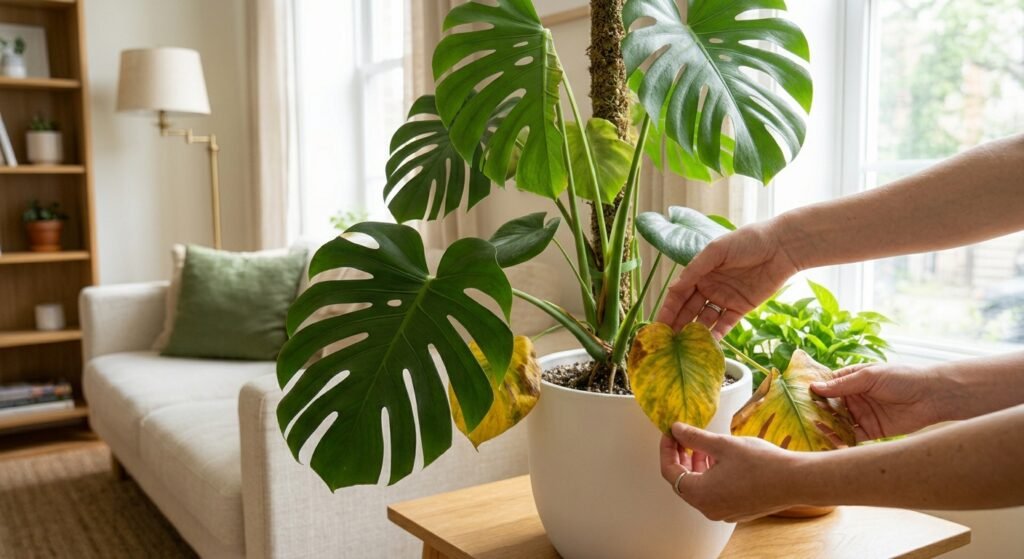
Watering mistakes remain the leading cause of yellow leaves on indoor plants in domestic environments.
Overwatering and Root Suffocation
Excess water fills soil air pockets, starving roots of oxygen and encouraging fungal root rot.
Overwatered foliage turns soft, limpid, and pale yellow, often accompanied by dark brown center spots.
Underwatering and Dehydration Stress
When potting soil dries completely for extended periods, plants shed leaves to reduce transpiration moisture loss.
Underwatered leaves turn pale yellow, feel dry or crispy along the edges, and curl inward before falling off.
Light Exposure and Temperature Extremes
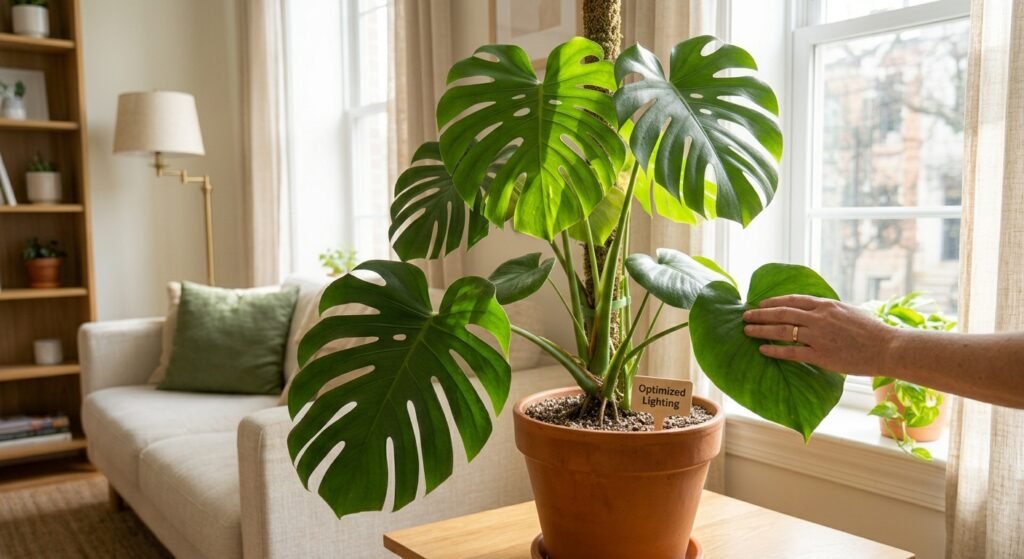
Inadequate lighting directly contributes to yellow leaves on indoor plants in low-light rooms.
Low Light Conditions
Without 4 to 6 hours of bright indirect sunlight daily, plants cannot maintain chlorophyll production, causing lower leaves to fade.
Cold Draft Shock
Placing tropical houseplants near drafty winter windows or air conditioning vents induces thermal shock, causing rapid leaf yellowing.
Nutrient Deficiencies and Soil Health
Nutrient depletion in aging soil mixes frequently causes yellow leaves on indoor plants.
Nitrogen Deficiency
Nitrogen fuels healthy foliage development; a lack of nitrogen causes overall yellowing starting on older, lower foliage.
Iron Chlorosis
Iron deficiency causes interveinal chlorosis, where leaf tissue turns yellow while main leaf veins remain bright green.
Houseplant Yellowing Diagnostic Matrix
The diagnostic table below matches leaf symptoms with exact corrective actions:
| Leaf Symptom | Primary Cause | Soil Condition | Corrective Action |
| Soft Yellow Lower Leaves | Overwatering / Root Rot | Waterlogged / Soggy | Reduce watering, improve pot drainage |
| Crispy Yellow Edges | Underwatering / Dry Air | Bone-Dry / Cracking | Perform deep soak, increase humidity |
| Pale Yellow Overall | Nitrogen Deficiency | Depleted / Old Soil | Apply balanced liquid houseplant fertilizer |
| Yellow Between Green Veins | Iron Chlorosis | High pH / Alkaline Soil | Apply chelated iron supplement |
| Dropping Firm Yellow Leaves | Cold Draft / Relocation | Normal Moisture | Relocate plant away from drafty areas |
7 Easy Fixes for Yellow Leaves on Indoor Plants
Follow this diagnostic flowchart to restore discolored foliage efficiently:
            [Check Soil Moisture Level]
                         |
      +------------------+------------------+
      |                                     |
[Soil Feels Wet / Soggy]             [Soil Feels Dry / Loose]
      |                                     |
(Overwatering Damage)                 (Underwatering Stress)
      |                                     |
      v                                     v
Allow soil to dry 100%,              Provide deep bottom soak,
prune mushy roots                     adjust weekly watering schedule
1. Adjust Your Watering Frequency
Water only when the top 2 to 3 inches of potting soil feel dry to the touch to prevent root suffocation.
2. Improve Pot Drainage Efficiency
Ensure containers have bottom drainage holes so excess water drains freely into saucer trays.
3. Relocate to Bright, Indirect Sunlight
Position houseplants within 3 to 5 feet of unobstructed east or south-facing windows for ideal illumination.
4. Feed with Balanced Liquid Fertilizer
Apply diluted 10-10-10 liquid fertilizer monthly during spring and summer to replenish depleted soil nitrogen.
5. Prune Severely Yellowed Leaves
Cut dead or completely yellowed foliage at the base using sterilized pruning shears to direct energy to new growth.
6. Protect from Temperature Extremes
Maintain room temperatures between 65°F and 80°F, keeping tropical foliage away from cold air drafts and heating vents.
7. Repot in Fresh Aroid Soil Mix
Refresh compacted soil every 18 to 24 months using a porous blend of potting soil, perlite, and orchid bark.
Conclusion
Addressing yellow leaves on indoor plants requires observing soil moisture levels, offering bright indirect sunlight, and supplying balanced plant nutrients. By eliminating overwatering and protecting foliage from thermal drafts, you can stop leaf discoloration and maintain vibrant green foliage year-round.
Inspect your houseplants today, apply these 7 easy fixes, and enjoy a thriving indoor garden!
Frequently Asked Questions
Will yellow leaves on indoor plants turn green again?
Severely yellowed leaves rarely turn green again because chlorophyll structure is permanently lost. It is best to prune fully yellow leaves so the plant can focus energy on producing healthy new foliage.
Should I remove yellow leaves from my indoor plant?
Yes, trim leaves that are more than 50% yellowed using clean, sharp shears. Removing dying foliage prevents potential pest attraction and improves aesthetic appearance.
How do I know if yellow leaves are caused by overwatering or underwatering?
Overwatered leaves feel soft, limp, and damp, often accompanied by wet soil. Underwatered leaves feel dry, brittle, or crispy along the edges, accompanied by bone-dry potting mix.




One Comment