
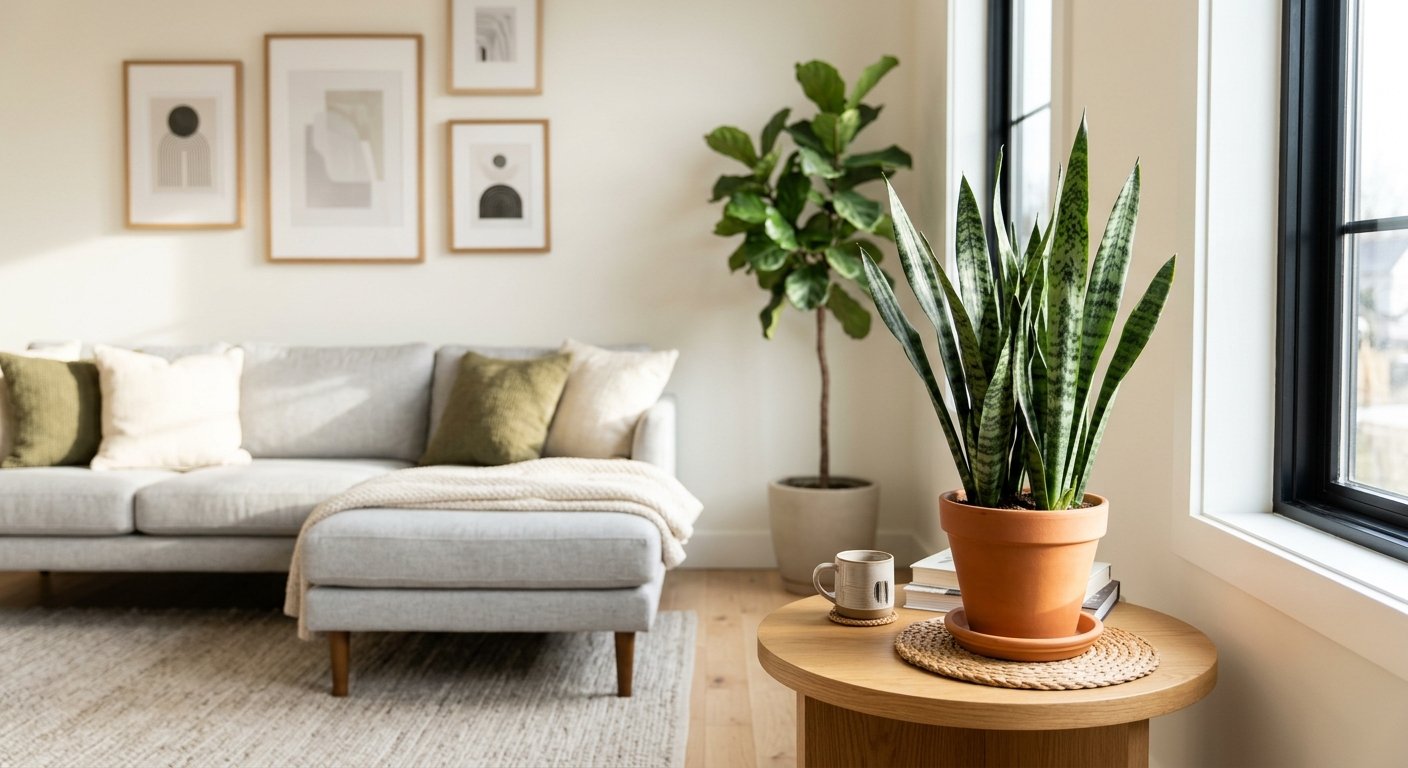
7 Easy Snake Plant Care Tips for Indoors
Snake Plant Care is essential for anyone who wants a resilient, attractive indoor houseplant. Known scientifically as Sansevieria (or recently reclassified under Dracaena), snake plants are famous for their bold, architectural sword-like leaves and low-maintenance lifestyle. Whether you are an experienced plant parent or a complete beginner, mastering Snake Plant Care will keep your green foliage vibrant and healthy year-round across US homes.
Indoor plant enthusiasts across the United States appreciate these hardy specimens because they adapt effortlessly to varying household conditions. They enhance your home decor while tolerating occasional forgotten waterings. By focusing on the fundamentals—light exposure, watering balance, and soil mix—you guarantee strong root structures, deep green leaf patterns, and long-lasting indoor beauty.
Table of Contents
- Key Takeaways
- Lighting Requirements for Snake Plants
- Watering Rules: How Much & How Often
- The Ideal Soil Mix & Potting Setup
- Optimal Temperature & Humidity
- Comprehensive Snake Plant Care Matrix
- Common Snake Plant Issues & Solutions
- Conclusion
- Frequently Asked Questions
Key Takeaways
- Light: Bright, indirect sunlight is best, but snake plants tolerate low light remarkably well.
- Water: Overwatering causes root rot. Allow soil to dry completely between waterings.
- Soil: Well-draining soil mixed with perlite or coarse sand prevents waterlogging.
- Pots: Use terracotta or unglazed clay pots with adequate drainage holes.
- Temperature: Keep room temperatures between 65°F and 85°F; shield from cold drafts.
Lighting Requirements for Snake Plants
Light directly affects growth speed and leaf coloration. Providing the right light setup ensures your plant maintains bold patterns.
Bright Indirect Light (The Sweet Spot)
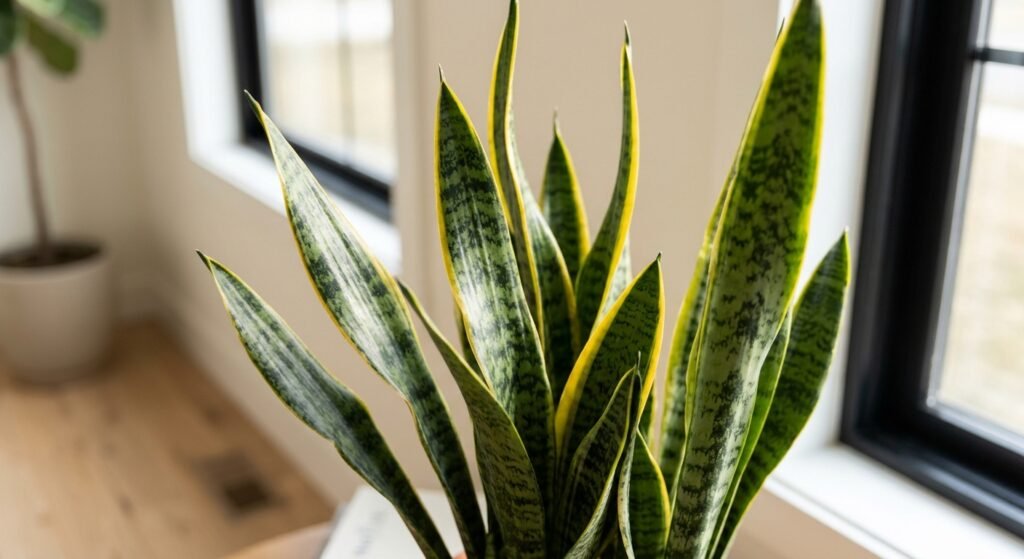
Snake plants thrive best in medium to bright indirect sunlight. Placing your plant near an east-facing window yields optimal growth.
Direct sunlight can scorch leaf tips during hot US summer afternoons. Filter intense rays using sheer curtains.
Low Light Tolerance
One major advantage of snake plants is low-light endurance. They survive well in dim bedrooms, offices, or hallways.
Keep in mind that growth slows down significantly in dim conditions. Variegated cultivars may also lose some bright pattern definition over time.
Watering Rules: How Much & How Often
Improper watering remains the primary reason indoor plants struggle. Understanding moisture balance is crucial for effective Snake Plant Care.
The “Soak and Dry” Method
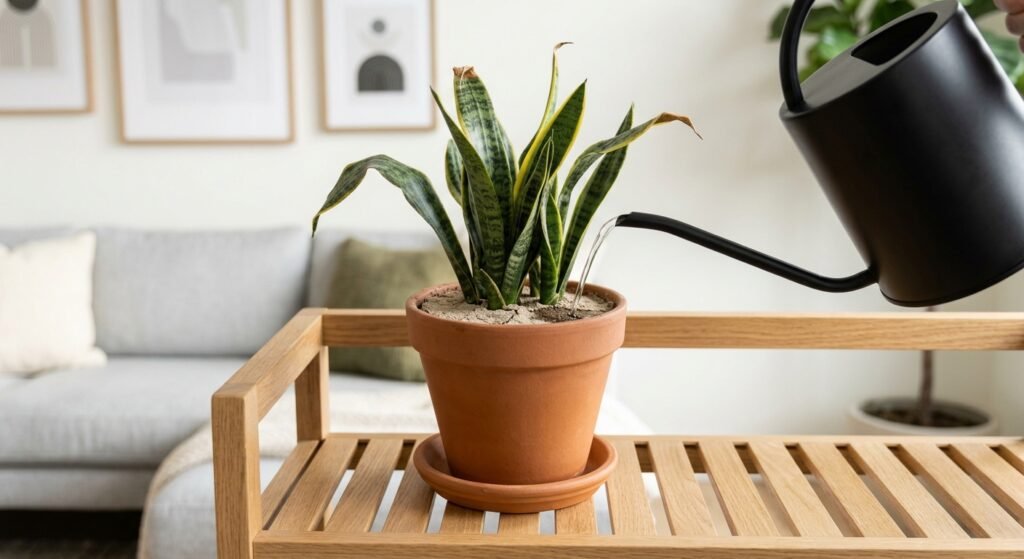
Always wait for the soil to dry out 100% before adding water. Stick your finger two to three inches into the potting mix to test moisture levels.
When you water, drench the soil until excess drains out the bottom. Always pour out standing water from the drainage saucer immediately.
- Spring & Summer: Water every 2 to 3 weeks during active growth.
- Fall & Winter: Water sparingly every 4 to 6 weeks while the plant is dormant.
The Ideal Soil Mix & Potting Setup
Soil composition directly dictates root health. Thick, fleshy snake plant roots retain moisture and require gritty media to prevent rot.
Fast-Draining Soil Recipe
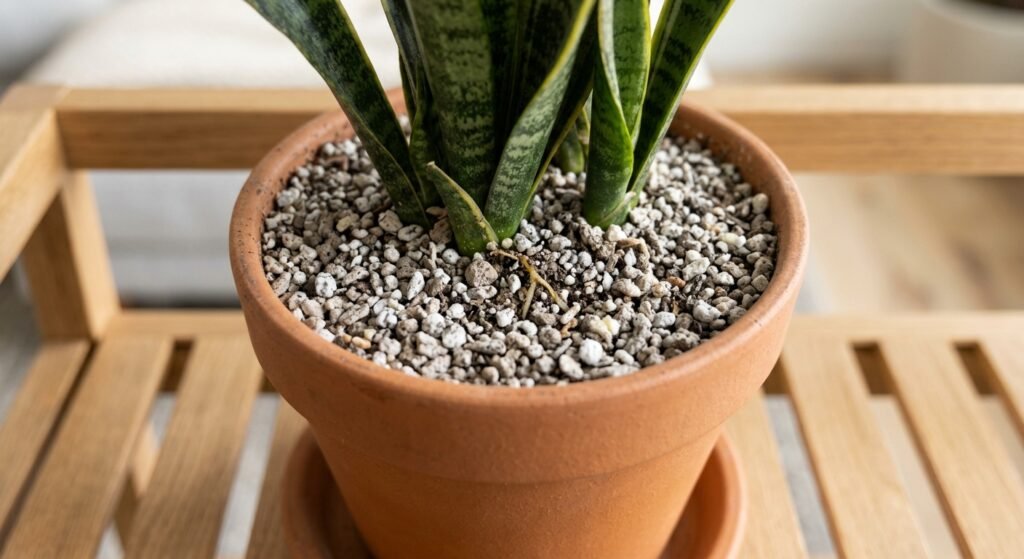
Never use standard dense potting soil alone. Instead, opt for a specialized succulent or cactus potting mix.
You can mix your own custom blend using standard household garden supplies:
- 50% Quality Potting Soil
- 30% Perlite or Pumice
- 20% Coarse Sand
Selecting the Right Pot
Always choose pots with dedicated drainage holes. Terracotta pots work exceptionally well because porous clay walls draw out lingering moisture.
To explore additional potting options, read our detailed guide on [Internal Link: Choosing the Best Pots for Succulents and Indoor Plants].
Optimal Temperature & Humidity
Snake plants originate from tropical environments, making standard domestic indoor climates ideal.
Temperature Range
Maintain ambient room temperatures between 65°F and 85°F (18°C to 29°C). Keep your plants away from cold drafty windows, air conditioning vents, and exterior doorways during severe winters. Temperatures below 50°F cause cold damage and leaf collapse.
Humidity Levels
Average household humidity (30% to 50%) works perfectly. You do not need to mist snake plant leaves or run humidifiers. High ambient humidity combined with low airflow encourages fungal leaf spots.
Comprehensive Snake Plant Care Matrix
The table below outlines seasonal environmental adjustments required for long-term health.
| Care Aspect | Spring & Summer (Growth Phase) | Fall & Winter (Dormant Phase) | Ideal Range / Target |
| Light | Bright, indirect sunlight | Maximum available natural light | 1,000–2,500 Foot-Candles |
| Water Frequency | Every 14–21 days | Every 30–45 days | 100% Dry Soil Test |
| Temperature | 70°F – 85°F | 65°F – 75°F | Avoid < 50°F |
| Soil Type | Fast-draining Cactus/Succulent mix | Fast-draining Cactus/Succulent mix | pH 5.5 to 7.5 |
| Fertilizer | Balanced liquid fertilizer (Monthly) | None required | Diluted 10-10-10 Mix |
Common Snake Plant Issues & Solutions
Even low-maintenance plants occasionally show signs of stress. Fast action helps resolve minor problems quickly.
       [Inspect Leaf Symptoms]
                  |
    +-------------+-------------+
    |                           |
[Yellow/Soggy]            [Wrinkled/Dry]
    |                           |
(Overwatering)             (Underwatering)
    |                           |
    v                           v
Stop watering,          Give a deep soak,
check for root rot      adjust frequency
Yellow, Mushy Leaves
- Cause: Overwatering and root decay.
- Solution: Cut off affected leaves at the base. Unpot the plant, inspect the roots, remove mushy sections, and repot in fresh, dry soil.
Wrinkled or Curving Leaves
- Cause: Severe underwatering or root dehydration.
- Solution: Give the plant a thorough soak. Ensure water absorbs completely into the soil root zone.
Brown Tip Burn
- Cause: Low indoor air humidity, tap water mineral buildup, or extreme sunburn.
- Solution: Flush soil with distilled water and trim brown tips carefully using sharp shears.
For authoritative guidelines on indoor environmental health and houseplant benefits, check the official resources from the [External Link: USDA National Agricultural Library on Indoor Plants].
Conclusion
Mastering Snake Plant Care comes down to understanding light preferences, practicing controlled watering habits, and providing gritty, well-draining soil. By avoiding overwatering and providing indirect sun, your snake plant will grow strong and healthy for decades.
Assess your plant’s environment today, adjust your routine, and enjoy long-lasting green decor!
Frequently Asked Questions
How often should I water my snake plant?
Water every 2 to 3 weeks during spring and summer. In winter, reduce watering to every 4 to 6 weeks or when the soil dries out completely.
Can snake plants live in windowless rooms?
Yes, snake plants can survive under fluorescent lighting or artificial grow lights, though their growth rate will slow down.
Why are my snake plant leaves falling over?
Leaves typically fall over due to overwatering, root rot, or lack of light. Ensure proper soil drainage and relocate the plant to a brighter spot.
What is the best pot size for a snake plant?
Choose a pot that is 1 to 2 inches wider than the root ball. Snake plants prefer slightly snug pot conditions to thrive.




One Comment