
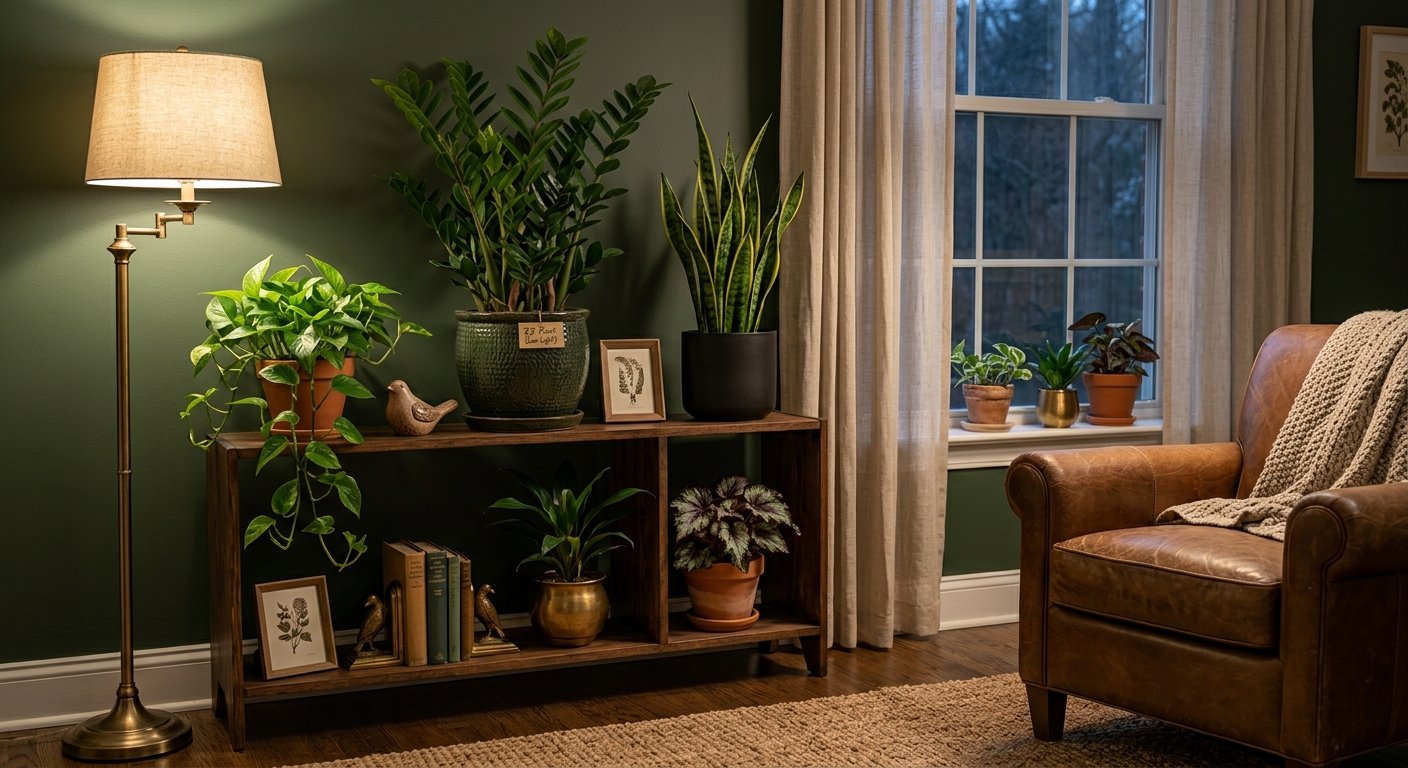
7 Best Low Light Houseplants for Dark Rooms
Low light houseplants for dark rooms make indoor gardening accessible for every apartment, office, and basement setting across US homes. Many plant lovers assume that healthy green foliage requires bright, sunny windows. However, specific tropical species naturally evolved under dense forest canopies, making them ideal for dim indoor environments.
Finding the right low light houseplants for dark rooms transforms dim living spaces into vibrant green sanctuaries. Selecting shade-tolerant varieties prevents common problems like leaf drop, stem legginess, and soil moisture buildup. Whether decorating a windowless bedroom or a north-facing office, these resilient indoor plants maintain striking foliage with minimal maintenance.
Cultivating low light houseplants for dark rooms requires adjusting your watering habits and choosing fast-draining potting soil. Because dark rooms reduce photosynthesis rates, plants consume water much slower than those in sunny areas. Let us explore the top low-light indoor plants along with practical care strategies to keep them flourishing year-round.
Table of Contents
- Key Takeaways
- Understanding Low Light Indoors
- Top Low Light Houseplants for Dark Rooms
- Watering Care Rules for Dim Environments
- Potting Soil Mix and Drainage Setup
- Low Light Plant Performance Matrix
- 7 Essential Care Tips for Dark Room Plants
- Conclusion
- Frequently Asked Questions
Key Takeaways
- Select Adaptive Species: Snake Plants, ZZ Plants, and Cast Iron Plants thrive in low-light environments.
- Reduce Water Frequency: Dim spaces slow down evaporation, requiring extended dry periods between waterings.
- Avoid Direct Sun: Moving shade-tolerant plants into intense direct sun scorches delicate foliage.
- Clean Leaves Regularly: Wipe dust off leaves monthly to maximize light absorption efficiency.
- Use Well-Draining Soil: Gritty potting mixes prevent root rot in slow-drying indoor pots.
Understanding Low Light Indoors
Evaluating light intensity accurately ensures success with low light houseplants for dark rooms.
Low light does not mean zero light; all living plants require minimal ambient light to survive.
Rooms with north-facing windows or shaded window wells provide standard low-light conditions suitable for tropical foliage.

Top Low Light Houseplants for Dark Rooms
Selecting resilient species guarantees long-term success in low-light indoor settings.
1. Snake Plant (Sansevieria)
Snake plants endure low light conditions effortlessly, holding firm upright leaves while tolerating forgotten waterings.
2. ZZ Plant (Zamioculcas zamiifolia)
Featuring waxy, glossy leaflets, the ZZ plant stores moisture in thick underground rhizomes, making it virtually indestructible.
3. Cast Iron Plant (Aspidistra elatior)
True to its name, this slow-growing plant withstands deep shade, temperature fluctuations, and low humidity.
Watering Care Rules for Dim Environments
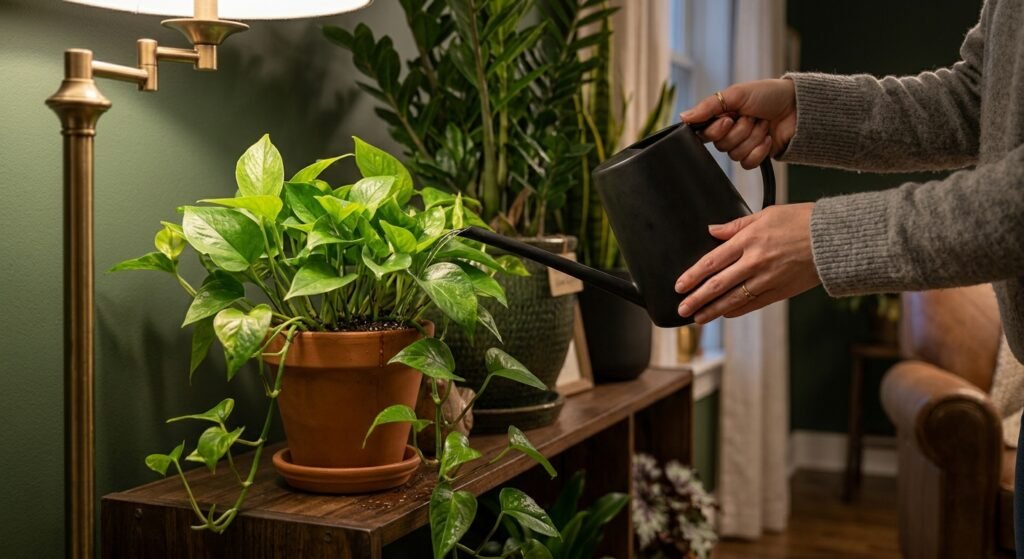
Overwatering poses the greatest risk to low light houseplants for dark rooms.
In dim spaces, soil stays moist much longer because plants perform less active transpiration.
Always check that the top 2 to 3 inches of potting mix feel completely dry before watering.
Potting Soil Mix and Drainage Setup
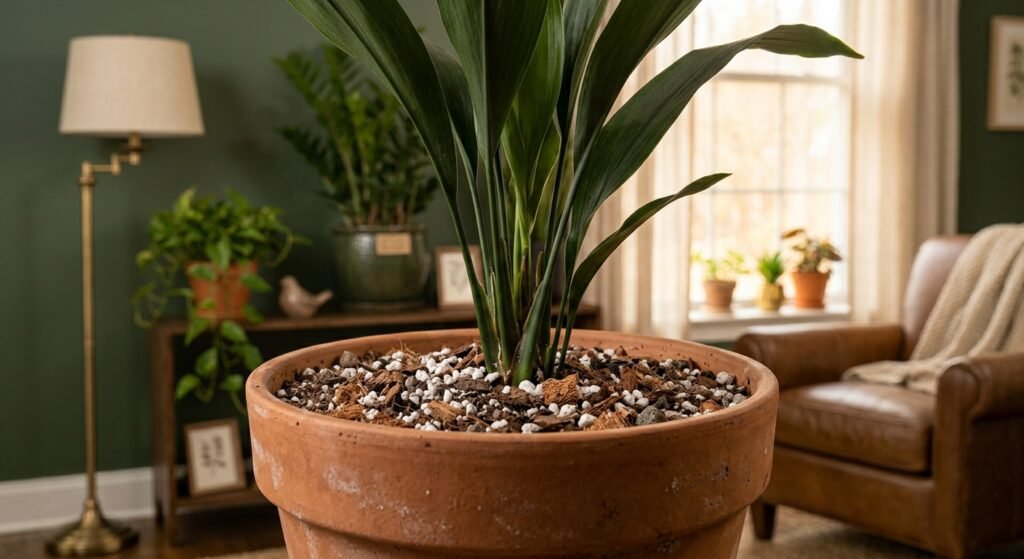
Soil selection directly influences root health when growing low light houseplants for dark rooms.
Dense garden soil retains excessive moisture, leading quickly to fungal root decay.
Combine standard potting soil with perlite and coarse bark to ensure fast drainage.
Low Light Plant Performance Matrix
The performance table below compares key care parameters across top low-light varieties:
| Plant Variety | Growth Rate | Water Needs | Temperature Range | Beginner Friendly Rating |
| Snake Plant | Slow | Low (Every 3–4 Weeks) | 65°F – 85°F | ⭐⭐⭐⭐⭐ (5/5) |
| ZZ Plant | Moderate | Very Low (Every 4 Weeks) | 60°F – 80°F | ⭐⭐⭐⭐⭐ (5/5) |
| Cast Iron Plant | Slow | Low (Every 2–3 Weeks) | 55°F – 75°F | ⭐⭐⭐⭐⭐ (5/5) |
| Pothos | Moderate to Fast | Moderate (Every 1–2 Weeks) | 65°F – 85°F | ⭐⭐⭐⭐☆ (4/5) |
| Parlor Palm | Slow | Moderate (Every 1–2 Weeks) | 65°F – 80°F | ⭐⭐⭐⭐☆ (4/5) |
7 Essential Care Tips for Dark Room Plants
Follow this diagnostic flowchart to manage soil moisture effectively in dim rooms:
            [Check Soil Moisture Level]
                         |
      +------------------+------------------+
      |                                     |
[Soil Feels Damp / Cool]             [Soil Feels Dry / Loose]
      |                                     |
(Delay Watering)                     (Provide Light Soak)
      |                                     |
      v                                     v
Wait 7-10 more days,                 Water thoroughly,
ensure proper air flow               allow pot to drain 100%
1. Water Less Frequently
Allow potting soil to dry out further than you would for plants sitting in bright sunny windows.
2. Rotate Pots Monthly
Rotate plants a quarter-turn each month so all sides receive balanced ambient light.
3. Wipe Dust Off Leaves
Clean leaf surfaces monthly using a damp cloth to boost photosynthesis in dim conditions.
4. Avoid Heavy Fertilization
Feed low-light plants sparingly (1–2 times per year) since growth rates are naturally slower.
5. Use Terracotta Pots
Terracotta pots pull lingering moisture out through porous clay walls, protecting roots from rot.
6. Supplement with LED Grow Lights
Add a small LED grow light on a timer if rooms lack natural window light entirely.
7. Keep Away from Cold Drafts
Position tropical foliage away from exterior doors, drafty windows, and air conditioning vents.
Conclusion
Growing low light houseplants for dark rooms offers an easy way to bring nature into dim indoor spaces. By selecting tough varieties like Snake Plants or ZZ Plants, using well-draining soil mixes, and avoiding overwatering, your indoor garden will stay vibrant and healthy.
Evaluate your dim room spaces today, choose your favorite low-light plant, and enjoy green foliage in every corner!
Frequently Asked Questions
Can low light houseplants live in rooms without windows?
Plants cannot live in total darkness indefinitely. In windowless rooms, supplement with artificial LED grow lights running 8 to 12 hours daily to maintain health.
How often should I water low light houseplants for dark rooms?
Watering frequency depends on humidity and pot size, but most low-light plants require watering only every 2 to 4 weeks. Always check soil dryness before watering.
Why are leaves on my low light houseplant turning yellow?
Yellow leaves in dim spaces usually indicate overwatering or poorly draining soil. Reduce watering frequency immediately and ensure your pot has working drainage holes.


One Comment