

7 Best Tips: Pothos Plant Care for Trailing Vines
Pothos plant care provides an ideal foundation for houseplant enthusiasts aiming to grow long, cascading vines across US living spaces. Known botanically as Epipremnum aureum, the Pothos (or Devil’s Ivy) is celebrated for its incredible hardiness, air-purifying qualities, and glossy heart-shaped foliage.
Mastering proper Pothos plant care helps you achieve fuller growth while preventing sparse, leggy stems. While these tropical vines survive under minimal light and irregular watering, optimal moisture, indirect lighting, and routine pruning produce magnificent foliage displays.
Effective Pothos plant care transforms simple potted greenery into dramatic interior accents draping from hanging baskets or bookshelves. Adjusting your care routine for different seasons keeps root systems robust and prevents leaf yellowing. Let us explore actionable, step-by-step techniques to grow healthy, long-trailing vines indoors.
Table of Contents
- Key Takeaways
- Understanding Pothos Growth and Light Requirements
- Watering Rules for Lush Trailing Foliage
- Potting Soil Mix and Drainage Setup
- Pruning and Propagation for Fuller Vines
- Pothos Care & Growth Matrix
- 7 Essential Steps for Long Trailing Pothos Vines
- Conclusion
- Frequently Asked Questions
Key Takeaways
- Provide Bright Indirect Sunlight: Indirect sunlight enhances leaf variegation and encourages faster vine elongation.
- Avoid Waterlogging: Allow the top 2 inches of potting soil to dry out between waterings to prevent root rot.
- Prune to Boost Bushiness: Trimming long stems encourages dormant nodes to branch out with multiple stems.
- Propagate Stem Cuttings: Root vine cuttings easily in water to repot back into the base for dense coverage.
- Use Fast-Draining Soil: Peat-based potting soil mixed with perlite ensures proper root aeration.
Understanding Pothos Growth and Light Requirements
Optimizing light exposure represents a core component of successful Pothos plant care.
While Pothos vines tolerate low light, extended shade causes leggy growth with large gaps between leaves.
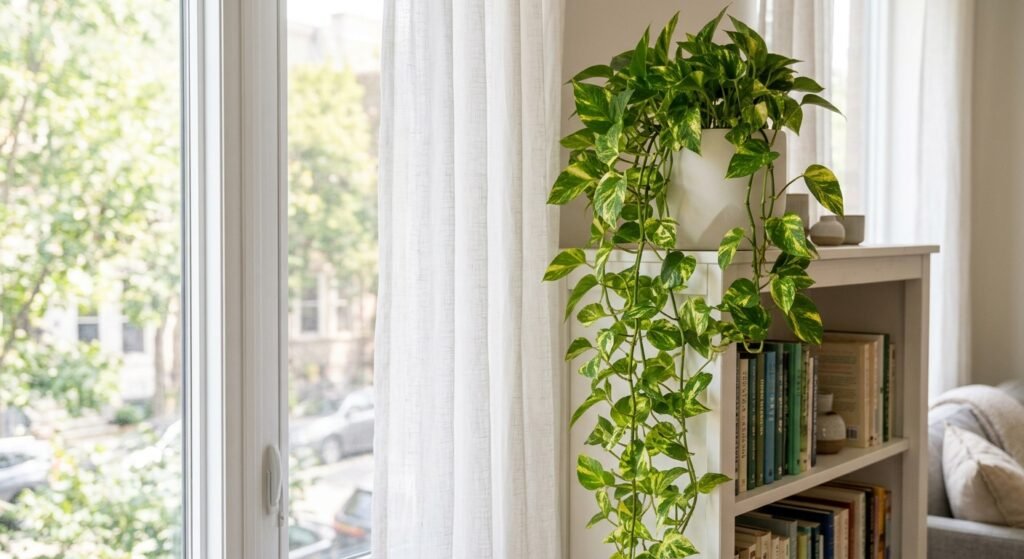
Placing your plant 3 to 5 feet from an east or south-facing window delivers ideal bright, indirect sunlight.
Watering Rules for Lush Trailing Foliage
Balanced moisture is essential in maintaining effective Pothos plant care routines.
Overwatering Consequences
Excessive water starves roots of oxygen, leading to soggy soil, black stem bases, and yellowing foliage.
Underwatering Recovery
When soil dries completely, leaves wilt dramatically and curl inward; a deep soaking restores leaf turgor quickly.
Potting Soil Mix and Drainage Setup
Healthy root systems form the basis of sustained Pothos plant care and leaf development.
Standard dense soil traps excess moisture around roots, elevating the risk of fungal decay.
Blended soil containing peat moss, perlite, and coarse orchid bark provides optimal drainage and aeration.

Pruning and Propagation for Fuller Vines
Strategic pruning plays a powerful role in advanced Pothos plant care.
Trimming leafless or extra-long vines stimulates hormone distribution, pushing new growth from lower stem nodes.
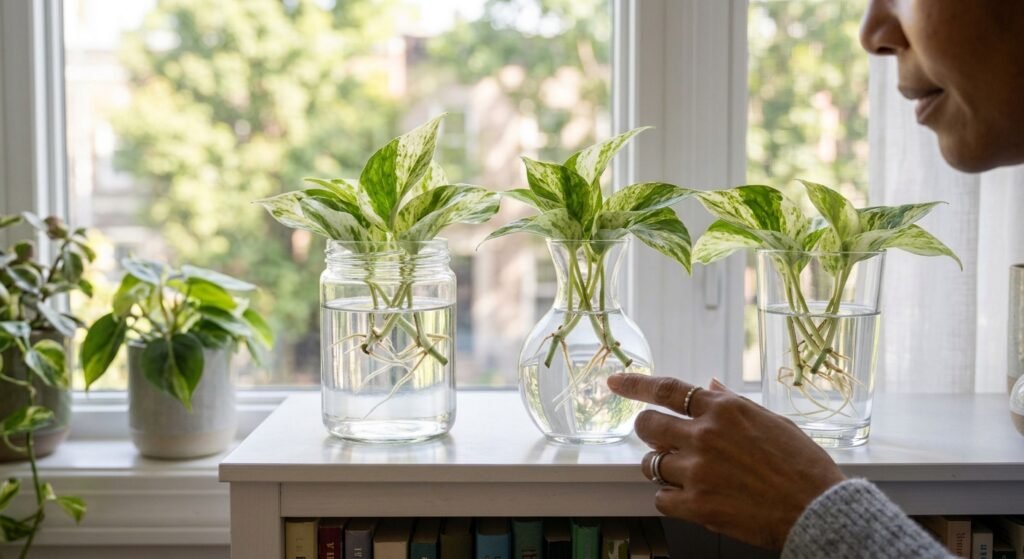
Stem cuttings placed in clean water root within 2 to 3 weeks, creating fresh plants for repotting.
Pothos Care & Growth Matrix
The table below outlines optimal care conditions across different Pothos cultivars:
| Cultivar Variety | Light Needs | Watering Frequency | Growth Rate | Special Feature |
| Golden Pothos | Moderate to Bright Indirect | Every 1–2 Weeks | Fast | Yellow Variegation |
| Marble Queen | Bright Indirect Light | Every 1–2 Weeks | Moderate | White & Green Marbling |
| Neon Pothos | Moderate to Bright Light | Every 1–2 Weeks | Fast | Chartreuse Leaves |
| Jade Pothos | Low to Moderate Light | Every 2 Weeks | Moderate | Deep Solid Green |
| N’Joy Pothos | Bright Indirect Light | Every 1–2 Weeks | Slow | Compact Variegated Leaves |
7 Essential Steps for Long Trailing Pothos Vines
Follow this step-by-step flowchart to optimize growth conditions:
               [Check Soil Moisture]
                         |
      +------------------+------------------+
      |                                     |
[Soil Dry 2 Inches Deep]             [Soil Still Damp]
      |                                     |
(Provide Deep Watering)               (Delay Watering)
      |                                     |
      v                                     v
Pour water until pot drains,          Recheck soil moisture
empty standing tray liquid            in 3 to 5 days
1. Water Only When Topsoil Dries
Test topsoil moisture using your finger; water thoroughly only when the top 2 inches feel dry.
2. Maximize Bright, Indirect Light
Relocate plants near bright windows to encourage dense leaf distribution along trailing vines.
3. Prune Vines Regularly
Prune long, thin vines directly above a leaf node using sharp, sterile shears to promote branching.
4. Propagate Cuttings Back Into Pot
Plant rooted water cuttings into the original container pot to create a denser, fuller top base.
5. Apply Balanced Fertilizer Monthly
Feed plants monthly during spring and summer with diluted 10-10-10 liquid houseplant fertilizer.
6. Clean Leaves Periodically
Wipe leaf surfaces with a damp cloth monthly to remove accumulated dust and enhance light absorption.
7. Repot Every 2 Years
Move growing roots into a container 2 inches larger filled with well-draining aroid potting mix.
Conclusion
Mastering Pothos plant care combines proper light positioning, attentive soil moisture testing, and regular vine pruning. By delivering bright indirect light, allowing soil to dry out between waterings, and propagating cuttings, you can grow cascading vines that elevate your home decor.
Inspect your Pothos today, apply these 7 essential tips, and enjoy flourishing, long-trailing greenery year-round!
Frequently Asked Questions
Why are my Pothos leaves turning yellow?
Yellow leaves are most commonly caused by overwatering or poor soil drainage. Ensure the top 2 inches of soil dry completely before watering again, and check that your pot has drainage holes.
How fast do Pothos vines grow indoors?
Under optimal bright indirect sunlight and regular spring/summer feeding, Pothos vines can grow 12 to 18 inches per month.
Can Pothos vines grow in water permanently?
Yes, Pothos cuttings can live and grow in water indefinitely, provided you change the water every 1 to 2 weeks and add a few drops of liquid fertilizer periodically.





One Comment