
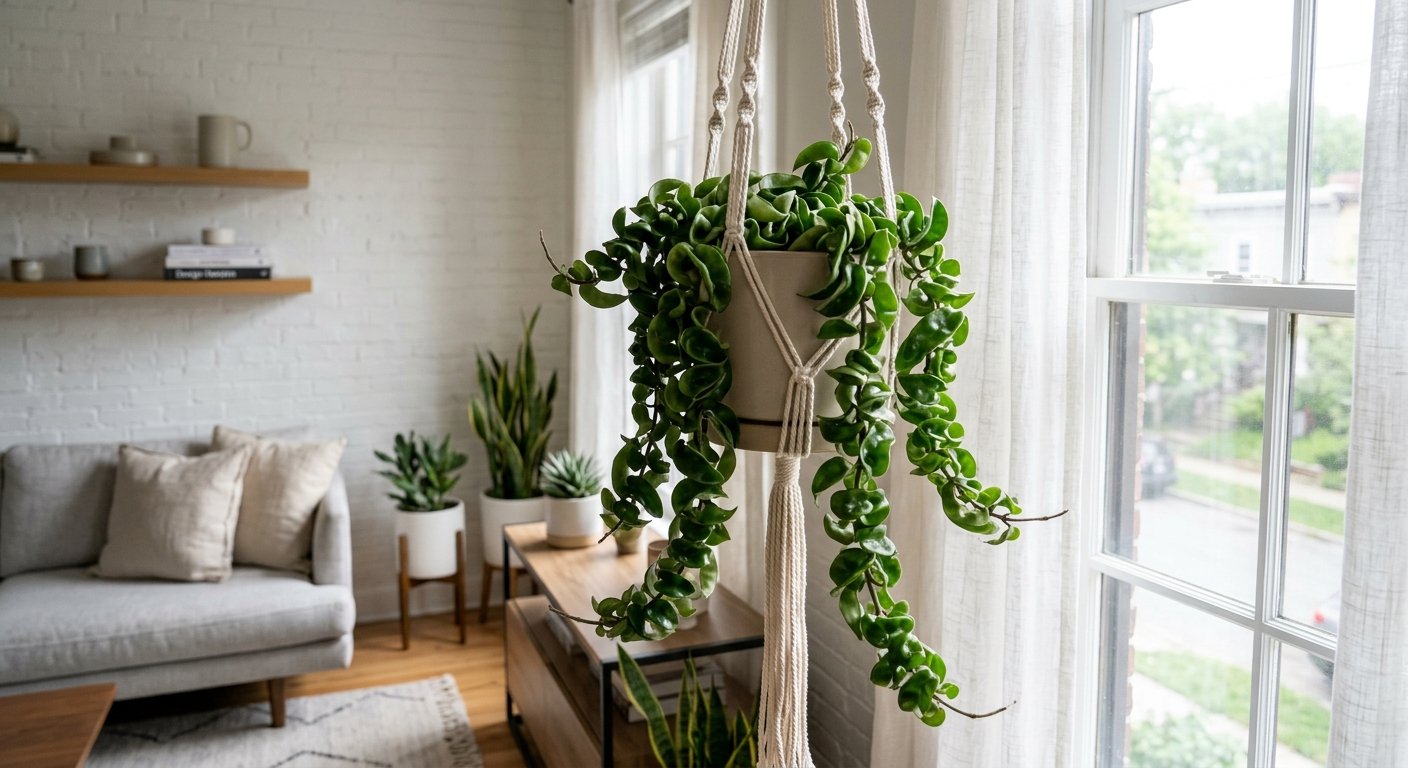
7 Best Tips: Care for Hoya Compacta Plants
Knowing how to care for Hoya Compacta plants enables indoor gardeners to cultivate one of the most distinctive tropical houseplants across US homes. Botanically named Hoya carnosa ‘Compacta’ and commonly known as the Hindu Rope plant, this semi-succulent vine features contorted, waxy foliage that drapes beautifully from hanging pots.
Proper care for Hoya Compacta prevents common issues like root decay and mealybug infestations within twisted leaf folds. Native to southern Asia and Australia, this slow-growing epiphyte stores water inside its succulent leaves, requiring bright indirect sunlight and well-aerated soil mixes to thrive indoors.
Mastering care for Hoya Compacta encourages clusters of star-shaped, sweet-scented pink flowers known as peduncles. Balancing moisture, soil porosity, and light intensity protects your plant during winter dormancy while promoting vibrant spring and summer growth. Let us walk through the essential care steps to keep your Hindu Rope plant healthy.
Table of Contents
- Key Takeaways
- Light Requirements for Twisted Waxy Foliage
- Watering Rules for Semi-Succulent Vines
- Creating the Ultimate Succulent & Aroid Soil Mix
- Managing Pests and Encouraging Flowers
- Hoya Compacta Growth & Care Matrix
- 7 Best Steps to Care for Hoya Compacta
- Conclusion
- Frequently Asked Questions
Key Takeaways
- Provide Bright Indirect Sun: Place plants near bright windows to maintain tight leaf clusters and induce blooms.
- Avoid Soil Over-Saturation: Allow potting soil to dry out completely between waterings to protect root systems.
- Use Airy Soil Mixtures: Combine succulent mix, orchid bark, and coarse perlite for rapid pot drainage.
- Inspect Leaf Crevices: Check twisted leaves regularly to prevent hidden mealybug infestations.
- Never Cut Flower Peduncles: Preserve old bloom spurs, as future flower clusters emerge from the exact same points.
Light Requirements for Twisted Waxy Foliage
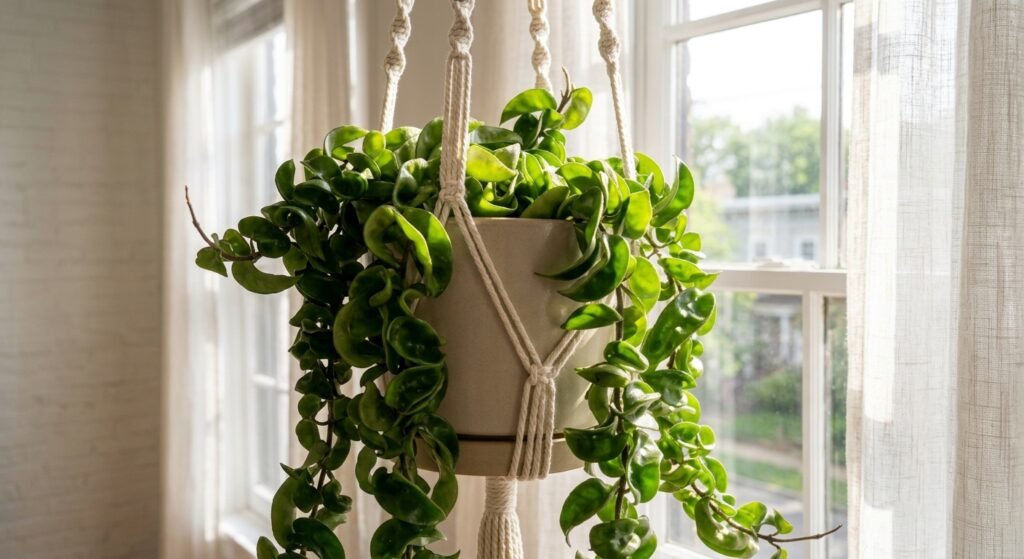
Delivering proper lighting forms a foundational step when learning to care for Hoya Compacta vines.
Inadequate lighting causes long internodal gaps, resulting in sparse, stretched-out growth with pale leaves.
Place your plant within 2 to 4 feet of a bright east or south-facing window with sheer curtains.
Providing 6 to 8 hours of bright indirect sunlight daily fuels photosynthesis and triggers fragrant blooming.
Watering Rules for Semi-Succulent Vines
Controlled hydration strategy is essential to care for Hoya Compacta roots safely.
Because the thick, contorted foliage stores moisture, these plants tolerate minor neglect far better than excess water.
Overwatering Consequences
Excess water fills soil air pockets, causing roots to rot while leaves turn soft, yellow, and wrinkled.
Underwatering Indicators
When potting soil dries out too long, leaves lose firmness and feel thin or puckered; a deep soak restores turgor.
Always check that the soil feels 100% dry down to the pot bottom before adding water.
Creating the Ultimate Succulent & Aroid Soil Mix
Soil porosity plays a vital role when working to care for Hoya Compacta plants long-term.
Dense standard potting soil retains moisture too long, smothering delicate epiphytic roots.
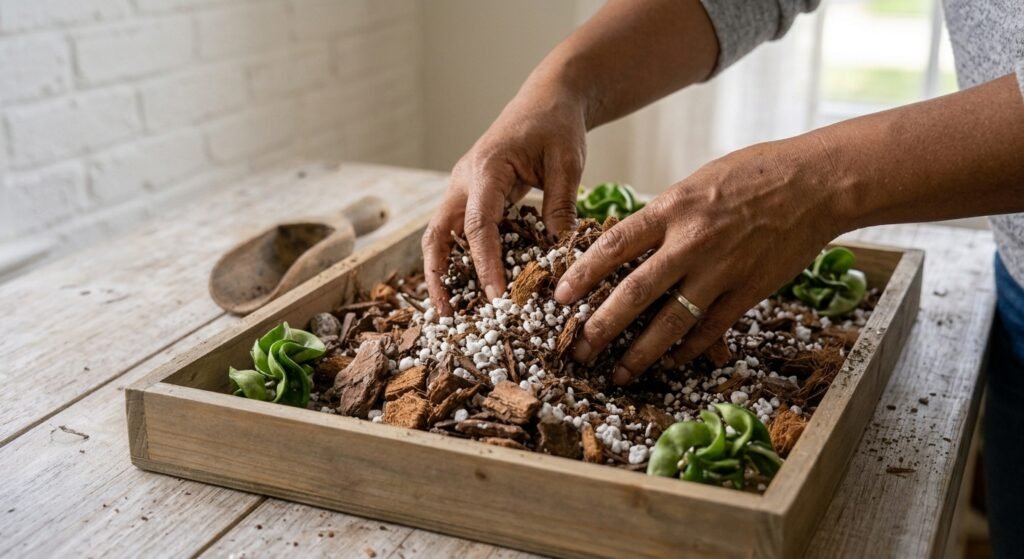
Blend 40% succulent potting soil, 30% orchid bark, 20% coarse perlite, and 10% horticultural charcoal.
This gritty mixture allows excess water to escape instantly while providing root aeration.
Managing Pests and Encouraging Flowers
Pest management and blooming strategies elevate your overall care for Hoya Compacta routine.
The contorted leaf shape creates ideal hiding spots for cottony mealybugs and scale insects.
Dip cotton swabs in 70% isopropyl alcohol to wipe away visible pests inside leaf folds, or apply neem oil spray monthly.
To encourage star-shaped bloom clusters, keep the plant slightly root-bound and apply phosphorus-rich fertilizer in spring.

Hoya Compacta Growth & Care Matrix
The diagnostic table below outlines ideal environmental targets for optimal plant vitality:
| Environmental Factor | Target Range | Common Error | Corrective Action |
| Light Exposure | Bright Indirect (6–8 Hours) | Deep Shade / Low Light | Relocate near east or south window |
| Water Frequency | Every 10–14 Days | Fixed Weekly Calendar | Water only when soil is completely dry |
| Soil Mixture | Chunky Succulent & Bark Mix | Dense Heavy Topsoil | Repot in bark, perlite & succulent soil |
| Humidity Level | 40% – 60% Humidity | Dry Winter HVAC Air | Group plants or use pebble tray |
| Temperature | 65°F – 85°F Range | Cold Window Drafts | Keep away from exterior doors & AC vents |
7 Best Steps to Care for Hoya Compacta
Follow this step-by-step diagnostic flowchart to maintain healthy foliage and encourage flowers:
             [Check Soil Depth Dryness]
                         |
     +-------------------+-------------------+
     |                                       |
[Soil 100% Dry Throughout]           [Soil Still Moist]
     |                                       |
(Provide Thorough Soak)              (Delay Watering)
     |                                       |
     v                                       v
Pour water until pot drains,         Recheck soil moisture
empty standing saucer liquid         in 4 to 5 days
1. Water Only When Soil Dries Fully
Test soil moisture to the pot bottom; water thoroughly only when the entire potting mix feels bone-dry.
2. Provide Bright, Filtered Sunlight
Hang your plant near bright windows where it receives strong indirect light to keep leaf growth tight.
3. Use Terracotta Pots with Drainage
Select unglazed terracotta containers with working bottom drainage holes to draw away excess moisture.
4. Inspect Crevices for Mealybugs
Examine twisted leaf folds bi-weekly and treat pests immediately using alcohol-dipped cotton swabs.
5. Keep Plants Slightly Root-Bound
Avoid repotting too frequently, as snug root conditions encourage peduncles and blooming cycles.
6. Never Remove Flower Spurs
Leave spent bloom spurs intact after flowers fall, as new buds emerge from the exact same spurs yearly.
7. Feed Monthly During Active Growth
Apply diluted 10-10-10 liquid houseplant fertilizer monthly during spring and summer cycles.
Conclusion
Mastering care for Hoya Compacta relies on supplying bright indirect sunlight, well-aerated soil mixes, and extended dry periods between waterings. By inspecting leaf folds for hidden pests and leaving bloom spurs intact, your Hindu Rope plant will reward you with lush, twisted vines and fragrant star-shaped flowers.
Check your Hindu Rope plant today, apply these 7 best care steps, and enjoy growing a stunning tropical houseplant!
Frequently Asked Questions
Why are my Hoya Compacta leaves turning yellow and mushy?
Yellow, soft, or mushy leaves are caused by overwatering or poor soil drainage. Allow the soil mix to dry out completely between waterings, and ensure your container drains freely.
How do I get my Hoya Compacta to bloom?
To encourage blooming, provide bright indirect light, keep the plant slightly root-bound in a small pot, avoid removing old flower spurs, and feed with high-phosphorus fertilizer during spring.
Why is my Hindu Rope plant growing so slowly?
Hoya Compacta plants are naturally slow growers. However, if growth stalls completely, ensure the plant receives enough bright indirect sunlight and is not suffering from root rot or mealybug infestations.



One Comment