
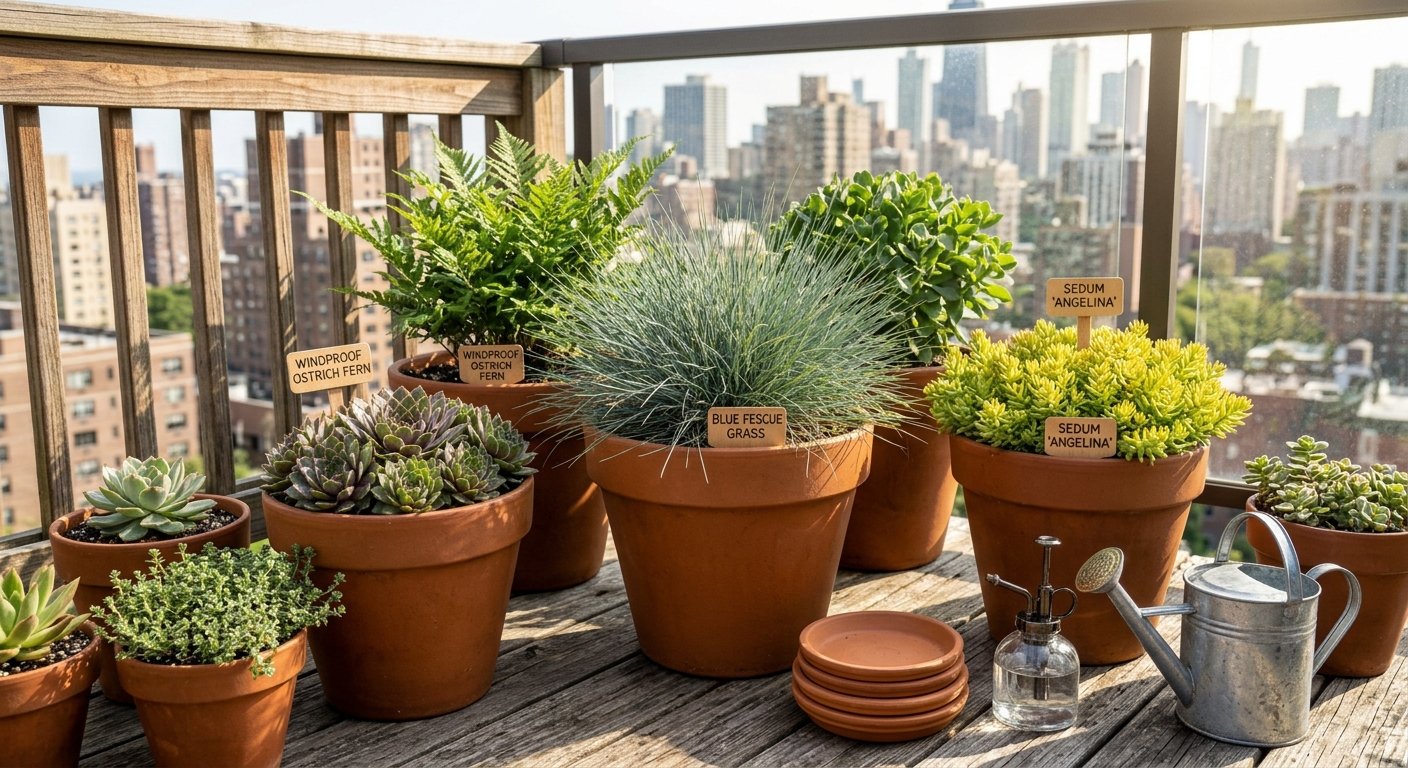
Windproof Outdoor Plants: 7 Best High-Rise Balcony Choices
Windproof outdoor plants are the ultimate resilient green solution every US high-rise apartment dweller needs to cultivate a thriving balcony garden without storm damage. Upper-floor urban balconies experience intense, accelerated wind currents that can easily snap delicate stems, shred large tropical leaves, and tip over lightweight plastic pots.
Mastering how to select and arrange windproof outdoor plants allows you to transform a blustery, exposed ledge into a protected, lush urban oasis. Instead of watching your expensive foliage get battered and destroyed by gales, choosing sturdy, flexible botanical species ensures long-term survival in harsh weather.
Implementing expert guidelines for windproof outdoor plants ensures your high-rise botanical collection stays vibrant, stable, and remarkably robust. Let us explore the core science of aerodynamic leaf structures, heavy container stability rules, and a foolproof 7-step balcony design framework tailored for modern US households.
Table of Contents
- Key Takeaways
- The Science of Aerodynamic Leaf Structures and Wind Resistance
- Choosing Heavy Containers to Prevent Tip-Over Accidents
- Step-by-Step Balcony Wind-Braking Setup
- Windproof Plants Comparison Matrix
- 7 Best Windproof Outdoor Plants for High-Rise Apartment Balconies
- Avoiding Soil Dehydration and Wind Burn Risks
- Conclusion
- Frequently Asked Questions
Key Takeaways
- Choose Flexible Stems: Select plant species with narrow, flexible leaves or sturdy woody stems that bend rather than snap under high winds.
- Anchor With Heavy Pots: Use dense terracotta or concrete planters to lower the center of gravity and prevent pots from blowing over.
- Create Wind Breaks: Group taller resilient plants together or install architectural screens to shield delicate species from intense drafts.
- Combat Rapid Evaporation: High winds dry out potting soil rapidly; monitor moisture levels daily and use thick surface mulches.
- Avoid Broad-Leafed Plants: Keep delicate tropicals like banana plants and large monsteras indoors away from severe upper-floor balcony drafts.
The Science of Aerodynamic Leaf Structures and Wind Resistance
Understanding the selection of windproof outdoor plants starts with examining how specific leaf shapes and cellular flexibility handle high-velocity air streams.
Plants with broad, flat leaves create massive wind resistance, acting like sails that catch gales and tear delicate cellular structures apart.
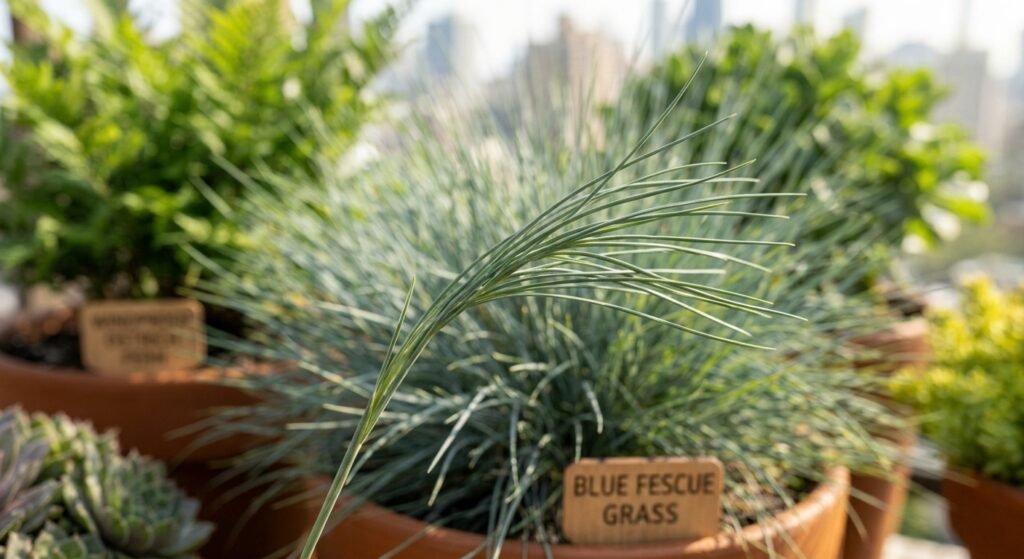
In contrast, narrow needle-like foliage, fine ornamental grasses, and succulent rosettes allow air to pass smoothly through their canopies without damage.
Choosing Heavy Containers to Prevent Tip-Over Accidents
Successfully growing windproof outdoor plants requires pairing resilient botanical species with heavy, stable container vessels.
Lightweight plastic pots on upper-floor ledges act as dangerous projectiles during sudden urban storms if they lack adequate ballast.
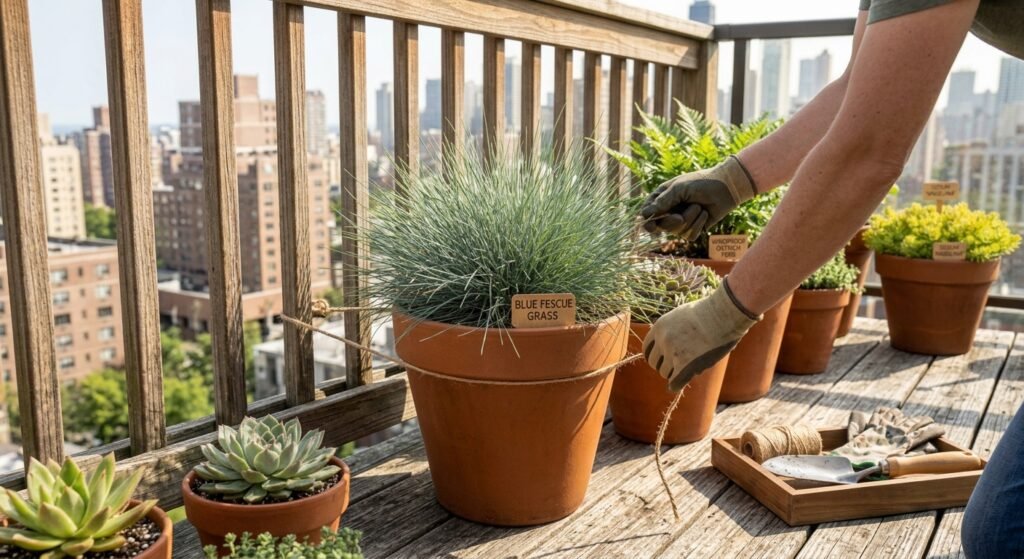
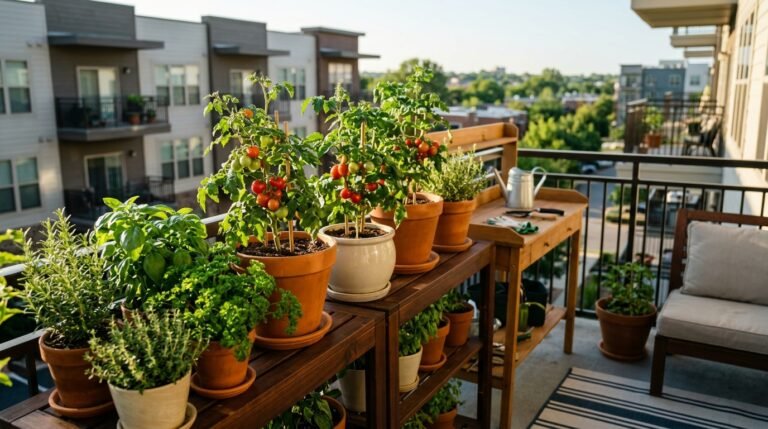
Always anchor your plants in thick terracotta, stone, or heavy ceramic pots filled with dense, fast-draining potting soil.
Step-by-Step Balcony Wind-Braking Setup
Mastering the layout for windproof outdoor plants involves creating protective architectural wind breaks along exposed balcony perimeters.
Position tall, woody shrubs or sturdy trellises at the windward edge to deflect high-velocity air currents upward and over your seating area.
Group smaller resilient succulents and trailing herbs in sheltered microclimates behind these primary botanical shields.
Windproof Outdoor Plants Comparison Matrix
The comparison table below outlines wind tolerance, growth habits, and container requirements for top high-rise balcony plant species:
| Plant Species | Wind Tolerance Level | Foliage Structure | Minimum Pot Size | Best Balcony Placement |
| Ornamental Blue Fescue | Exceptionally High | Narrow Needle Blades | 8-Inch Pot | Exposed Perimeter Edge |
| Dwarf Alberta Spruce | Very High | Dense Woody Needles | 12-Inch Pot | Corner Wind Shield |
| Hardy Succulents (Sedum) | High | Low-Growing Rosettes | 10-Inch Bowl | Sunny Railing Boxes |
| Boxwood Shrub | High | Woody Dense Branches | 14-Inch Pot | Central Wind Buffer |
7 Best Windproof Outdoor Plants for High-Rise Apartment Balconies
Follow this comprehensive framework to select and establish windproof outdoor plants on your exposed urban high-rise balcony:
               [Assess High-Rise Balcony Wind Exposure]
                             |
         +-------------------+-------------------+
         |                                       |
[Select Heavy Terracotta Containers]     [Choose Flexible, Narrow-Leaf Species]
         |                                       |
(Prevent high-rise tip-over accidents)   (Withstand high-velocity air streams)
         |                                       |
         v                                       v
Arrange in tiered wind-breaking layouts, Water daily to combat wind evaporation,
enjoy a secure, thriving balcony garden  enjoy resilient greenery above the city
1. Plant Ornamental Blue Fescue Grass
Choose blue fescue for its fine, flexible needle blades that sway effortlessly without breaking in strong winds.
2. Utilize Dwarf Alberta Spruce Shrubs
Incorporate compact evergreen spruce trees to create dense, woody wind blocks in heavy ceramic containers.
3. Cultivate Low-Growing Hardy Sedum
Grow sprawling succulent sedums that hug soil surfaces tightly, remaining immune to upper-floor balcony gusts.
4. Anchor Boxwood Shrubs Securely
Plant sheared boxwood topiaries in heavy stone pots to provide classic evergreen structure and wind defense.
5. Select Rosemary for Woody Stems
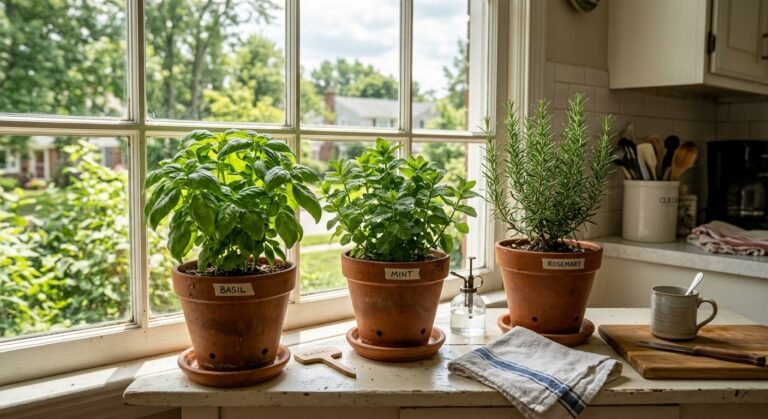
Grow culinary rosemary bushes featuring strong, woody stalks that resist snapping during severe weather storms.
6. Install Heavy Concrete or Clay Pots
Always use dense, heavy planters to anchor your greenery and eliminate the risk of pots blowing over balcony edges.
7. Group Plants in Protective Clusters
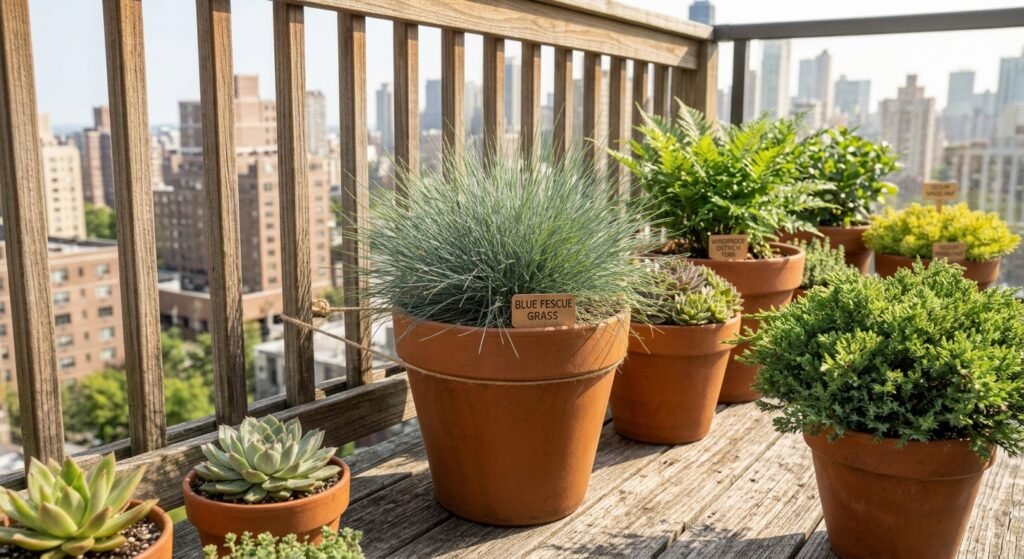
Cluster multiple resilient pots together to create a mutual microclimate that buffers harsh prevailing winds.
Avoiding Soil Dehydration and Wind Burn Risks
Managing windproof outdoor plants requires recognizing that constant upper-floor air movement rapidly wicks moisture out of container soil.
High winds accelerate plant transpiration and soil evaporation, causing leaves to develop brown, crispy tips known as wind burn.
Combat this by checking container moisture levels daily, watering deeply, and applying organic mulch layers over topsoil surfaces.
Conclusion
Mastering the selection and arrangement of windproof outdoor plants empowers you to cultivate a stunning, resilient garden on even the most exposed high-rise apartment balcony. By combining flexible botanical species with heavy containers and protective layouts, you can overcome urban wind challenges with absolute confidence.
Review your balcony space today, apply these 7 best high-rise choices, and enjoy your flourishing urban botanical oasis!
Frequently Asked Questions
What are the best plants for a windy high-rise balcony?
Ornamental grasses, dwarf conifers like spruce, hardy succulents, and woody herbs like rosemary handle high winds exceptionally well.
How do I keep my balcony flower pots from blowing away in the wind?
Use heavy terracotta, stone, or concrete containers, and choose compact, low-profile plants that create minimal wind resistance.
Why are the leaves on my balcony plants turning brown and crispy?
Constant high-rise winds cause rapid soil and foliage evaporation, leading to wind burn and dehydration that requires more frequent watering.


One Comment