
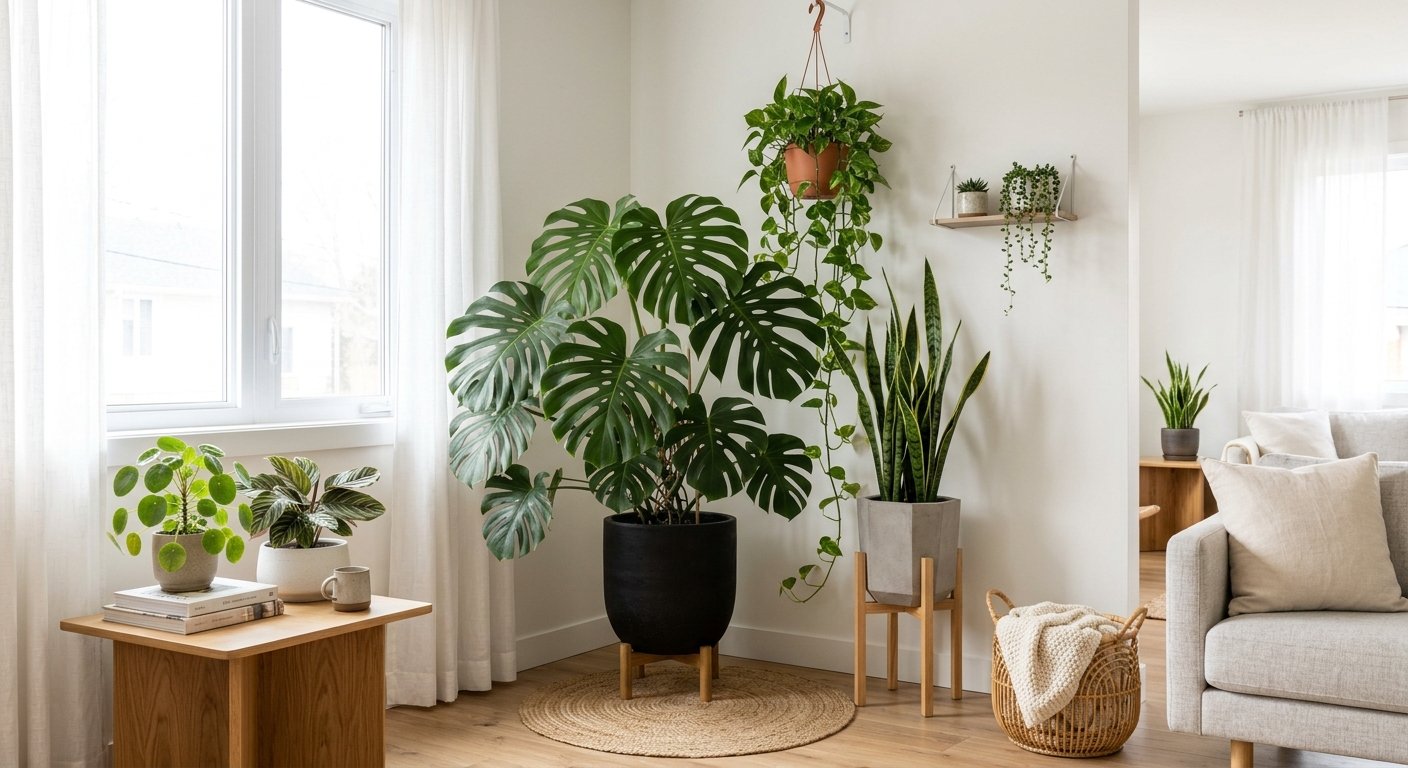
7 Best Ways to Arrange Floor Plants in Small Apartments
Arrange floor plants effectively when you live in a compact urban apartment requires strategic planning, creative spatial awareness, and an understanding of indoor lighting dynamics. Greenery breathes life into compact interiors, but large pots can quickly overwhelm limited square footage if they block walking paths or absorb valuable living space.
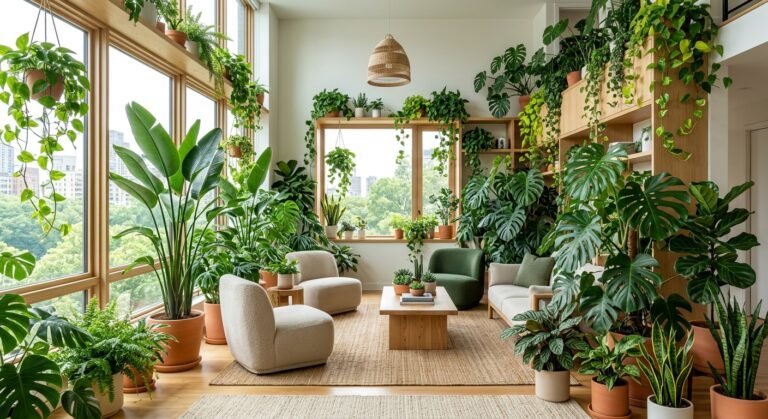
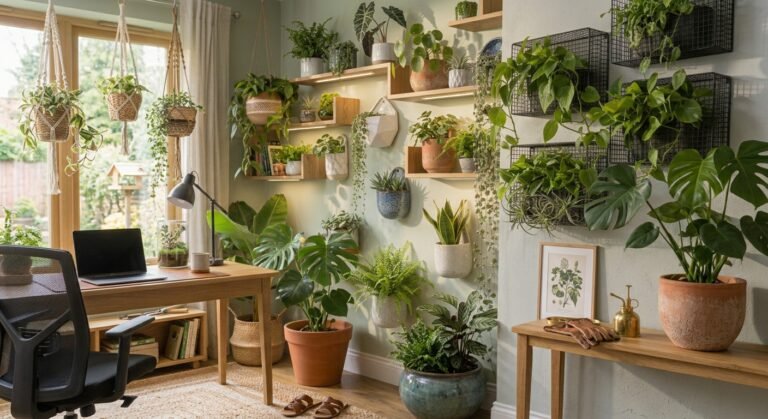
Mastering how to arrange floor plants allows city dwellers to transform awkward, dead corners into lush botanical focal points without sacrificing room functionality. By utilizing vertical risers, tiered stands, and complementary container profiles, you can build a dense, layered jungle vibe even in studio apartments.
Implementing smart strategies to arrange floor plants ensures your greenery receives optimal air circulation and light exposure. Let us explore the expert-backed steps and layout techniques designed to maximize your small apartment’s aesthetic potential.
Table of Contents
- Key Takeaways
- Evaluating Your Small Apartment’s Spatial Layout
- Using Vertical Stands to Optimize Corner Space
- Layering Foliage Textures and Heights
- Balancing Natural Light and Traffic Flow
- Floor Plant Arrangement Matrix
- 7 Essential Steps to Arrange Floor Plants in Small Corners
- Conclusion
- Frequently Asked Questions
Key Takeaways
- Target Dead Corners: Utilize neglected structural corners to anchor large statement plants without blocking room pathways.
- Stagger Plant Heights: Combine tall floor specimens with mid-sized stands and low pots to create dynamic visual depth.
- Keep Walkways Clear: Ensure your plant arrangements leave at least 30 inches of clearance for comfortable apartment movement.
- Unify Container Materials: Use consistent planter materials like matte ceramic or natural baskets to prevent visual clutter.
- Match Light Exposure: Position high-light plants near windows while placing shade-tolerant species deeper in room corners.
Evaluating Your Small Apartment’s Spatial Layout
Before you arrange floor plants across your living quarters, take time to audit your room layout and traffic patterns.
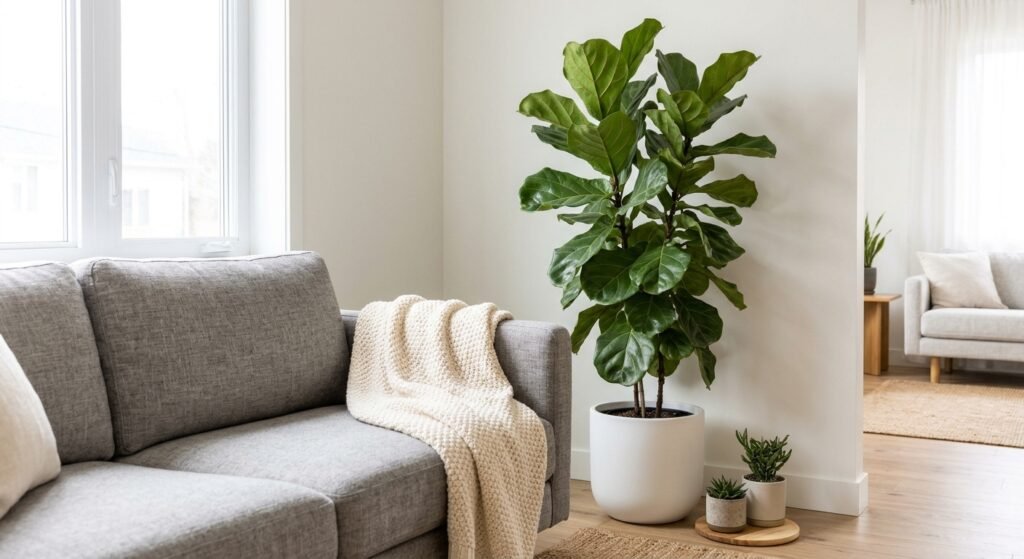
Identify unused architectural angles, such as the space between a media console and a bookshelf, where a tall planter fits naturally.
Avoid placing bulky pots near entryways or narrow hallways where they risk getting knocked over during daily routines.
Using Vertical Stands to Optimize Corner Space
Learning how to arrange floor plants vertically is essential when horizontal floor space is restricted.
Placing all pots directly on the floor creates a cluttered surface and blocks light from reaching lower leaves.
Tiered Plant Stands
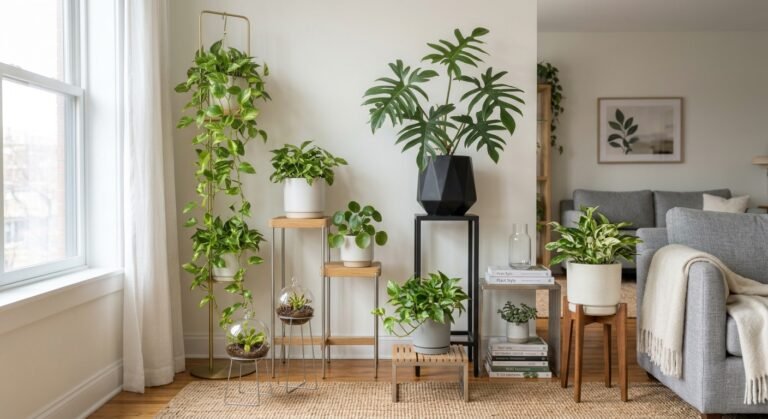
Utilize multi-tiered wooden or metal plant stands to stack three or four pots within the footprint of a single container.
Corner Shelving Units
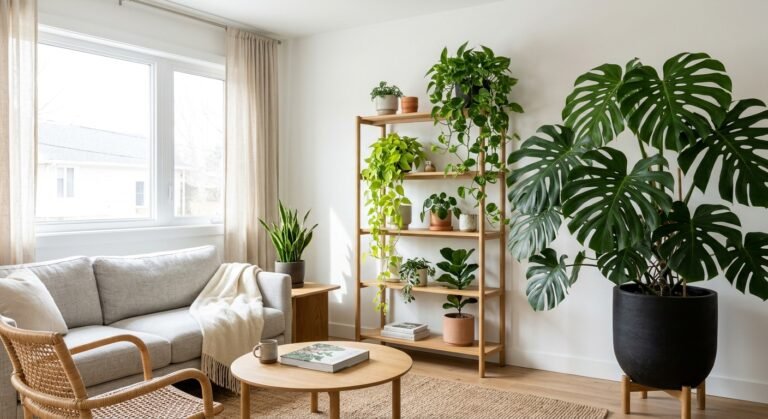
Install narrow corner shelving towers that draw the eye upward, maximizing vertical wall height in studio apartments.
Layering Foliage Textures and Heights
When you arrange floor plants, combining contrasting leaf shapes creates immediate interior design sophistication.
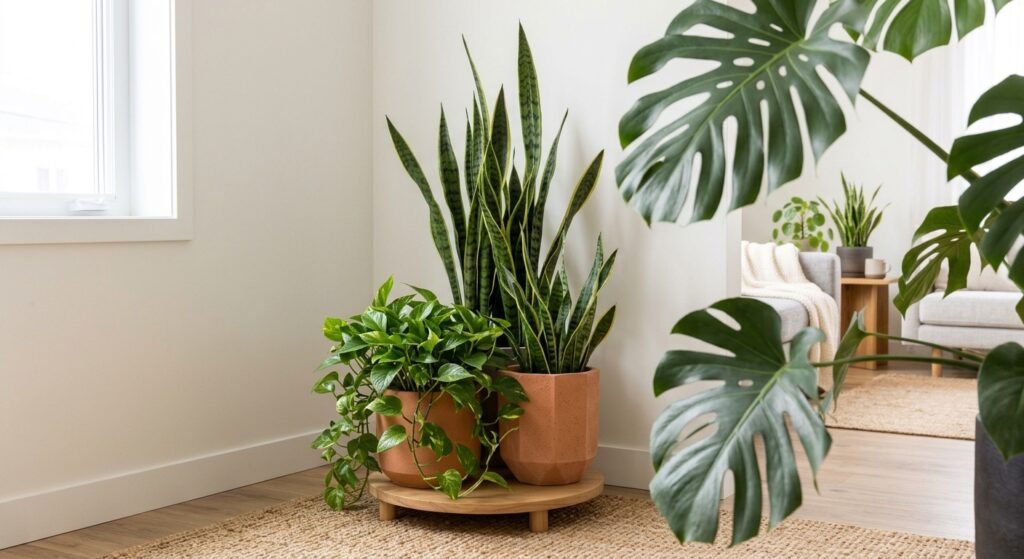
Pair broad, glossy leaves like Monsteras or Rubber Plants with fine, arching fronds like parlor palms or sword-like snake plants.
Clustering plants with diverse textures prevents the corner from looking heavy or monolithic.
Balancing Natural Light and Traffic Flow
Successful interior greening requires that you arrange floor plants where they receive adequate window light without creating tripping hazards.
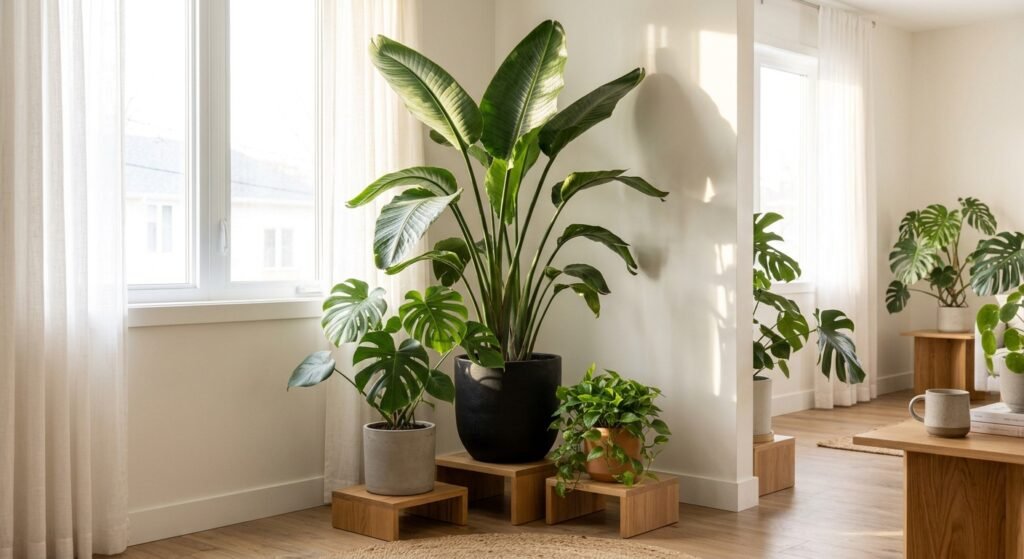
Position sun-loving tropicals within 3 to 4 feet of east or south-facing windows, using lightweight stands if you need to shift them easily.
Floor Plant Arrangement Matrix
The comparison table below outlines optimal apartment zones, plant choices, and setup methods:
| Apartment Zone | Recommended Plant Variety | Ideal Arrangement Method | Planter Material |
| Living Room Corner | Tall Statement Plant (Ficus / Monstera) | Standalone Floor Placement | Large Matte Ceramic Pot |
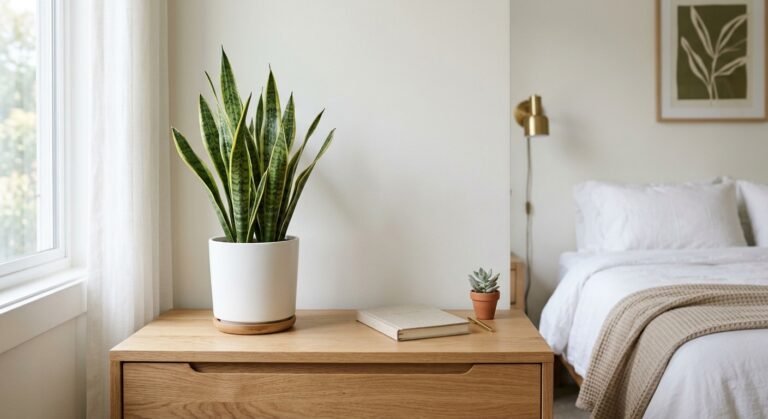
| Next to Sofa / Media Unit | Medium Upright Plant (Snake Plant) | Single Pot on Wooden Stand | Lightweight Fiberglass |
| Dark Hallway Corner | Low-Light Tolerant (ZZ Plant) | Compact Floor Grouping | Heavy Terracotta Planter |
| Window Sill / Corner | Sun-Loving Palm or Strelitzia | Direct Sunlight Positioning | Breathable Clay Pot |
| Studio Partition Area | Bushy Multi-Stemmed Foliage | Linear Corner Cluster | Neutral Woven Basket |
7 Essential Steps to Arrange Floor Plants in Small Corners
Follow this step-by-step framework to design a balanced, space-saving indoor plant corner:
                  [Audit Apartment Floor Space]
                                |
         +----------------------+----------------------+
         |                                             |
[High-Light Window Corners]                  [Low-Light Interior Corners]
         |                                             |
(Place Sun-Loving Tropicals)                 (Place Shade-Tolerant Species)
         |                                             |
         v                                             v
Use vertical stands to stagger              Group in odd numbers using
plant heights and save space                compact floor saucers
1. Identify Underutilized Floor Space
Survey your apartment to find neglected structural corners that remain clear of daily foot traffic.
2. Match Plants to Light Levels
Ensure the corner you select provides sufficient natural light for the specific plant species you intend to use.
3. Elevate Using Vertical Stands
Use sturdy plant stands or risers to lift pots off the floor, freeing up visual space and improving air circulation.
4. Group Pots in Odd Numbers
Cluster plants in groups of three or five, varying pot heights to create a natural, balanced designer look.
5. Harmonize Planter Materials
Unify your arrangement by choosing pots with a cohesive color palette, such as matte white, black, or natural terracotta.
6. Protect Flooring Surfaces
Place waterproof saucers and protective cork mats underneath all floor pots to prevent water damage to hardwood or laminate floors.
7. Rotate Weekly for Even Growth
Turn your potted arrangements every week to ensure balanced light exposure on all sides of the foliage.
Conclusion
Learning how to arrange floor plants in small apartment corners transforms cramped living spaces into vibrant, refreshing botanical retreats. By utilizing vertical risers, grouping plants in odd numbers, and matching species to appropriate light levels, you can achieve a stunning indoor garden without sacrificing room functionality.
Assess your apartment layout today, apply these 7 essential arrangement steps, and enjoy a beautifully curated green home!
Frequently Asked Questions
How do I keep floor plants from cluttering a small apartment?
Keep floor plants neat by utilizing vertical plant stands, clustering pots tightly in unused corners, and selecting tall, slender plant species rather than wide, sprawling bushes.
What are the best tall plants for small apartment corners?
Snake plants, ZZ plants, fiddle-leaf figs, and slender palms are excellent choices because their vertical growth habit fits snugly into tight corners without blocking walkways.
How do I protect apartment flooring from plant water damage?
Always place heavy-duty plastic saucers or waterproof cork mats underneath your plant pots to catch excess drainage and protect hardwood or laminate floors from moisture.

One Comment