

7 Best Trailing Plants for Shelves & Home Decor
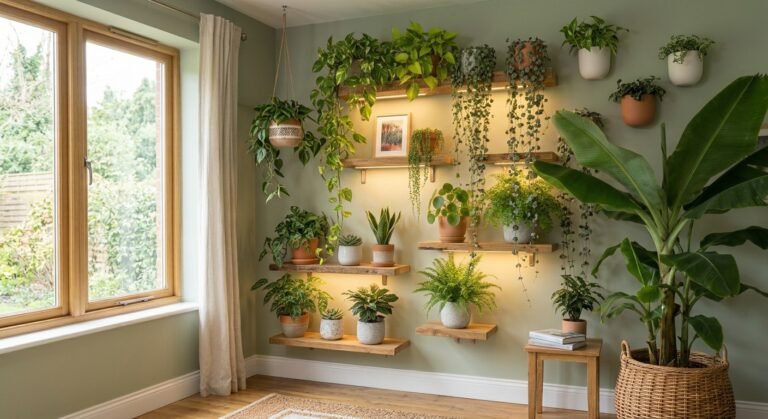
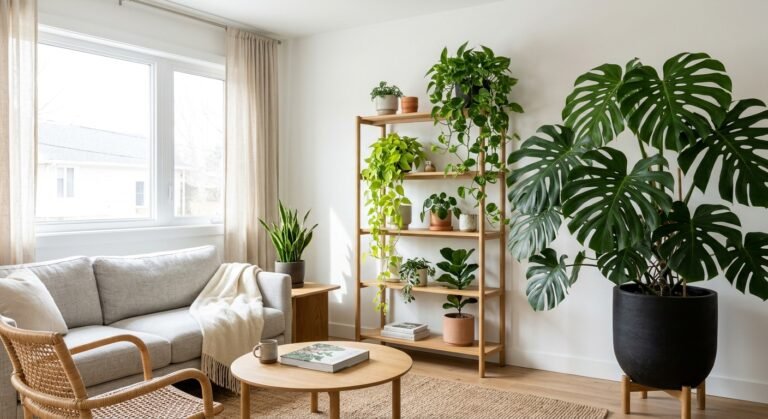
Trailing plants for shelves offer an exceptional way to introduce organic movement, texture, and lush greenery into modern living spaces across US homes. Utilizing cascading vines on bookcases, floating ledges, and high wall shelves instantly transforms rigid architectural lines into vibrant, organic displays.
Choosing the right trailing plants for shelves allows indoor gardeners to maximize vertical space while adding stunning botanical focal points to empty room corners. Whether your interior style leans toward minimalist Scandinavian design, cozy bohemian aesthetics, or sleek mid-century modern decor, cascading foliage elevates every room.
Implementing successful care routines for trailing plants for shelves ensures your vines stay full, healthy, and vibrant year-round. By balancing lighting placement, watering schedules, and soil porosity, you can curate a cascading indoor jungle. Let us explore the top resilient varieties and expert styling strategies designed for shelf cultivation.
Table of Contents
- Key Takeaways
- Why Cascading Vines Transform Indoor Shelving
- Top 7 Varieties of Trailing Plants for Shelves
- Essential Lighting and Watering Rules
- Styling and Placement Best Practices
- Trailing Plants for Shelves Comparison Matrix
- 7 Steps to Style and Maintain Shelf Vines
- Conclusion
- Frequently Asked Questions
Key Takeaways
- Maximize Vertical Space: Use high bookshelves and floating ledges to display cascading vines without taking up floor space.
- Select Low-Maintenance Varieties: Choose resilient species like Pothos and Heartleaf Philodendrons if you are a beginner.
- Monitor Water Frequency: Allow topsoil to dry completely between waterings to prevent root decay in enclosed shelf pots.
- Provide Filtered Light: Position shelves near east or south-facing windows with sheer curtains for optimal leaf growth.
- Prune Regularly: Trim long vines periodically to encourage branching and maintain a full, bushy appearance at the top.
Why Cascading Vines Transform Indoor Shelving
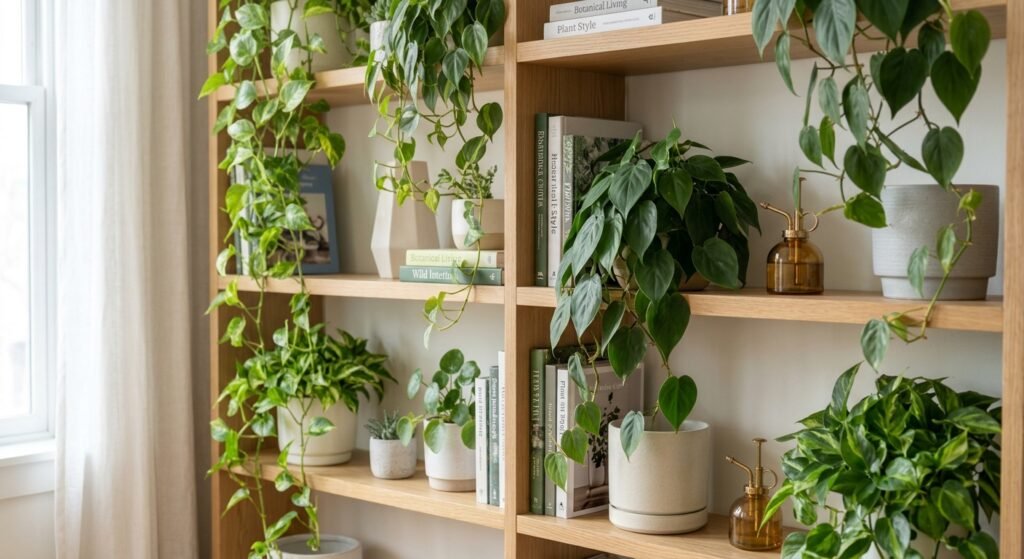
Incorporating trailing plants for shelves breaks up the monotony of flat book spines and rigid wooden furniture.
As vines spill downward, they soften sharp angles and draw the human eye across the vertical dimensions of the room.
Grouping trailing greenery with decorative objects, photo frames, and art books creates curated, designer-level vignettes.
Top 7 Varieties of Trailing Plants for Shelves
Selecting resilient species guarantees success when arranging trailing plants for shelves in indoor environments.
1. Golden Pothos (Epipremnum aureum)
An indestructible favorite featuring heart-shaped green leaves splashed with golden yellow variegation, tolerating low light effortlessly.
2. Heartleaf Philodendron (Philodendron hederaceum)
Known for glossy, deep green heart-shaped leaves that cascade rapidly down wooden shelves with minimal care requirements.
3. String of Pearls (Senecio rowleyanus)
A unique succulent featuring trailing strands of spherical bead-like leaves that thrive in bright window light.
4. Satin Pothos (Scindapsus pictus)
Features velvety dark green leaves marked with shimmering silver spots, adding sophisticated texture to upper shelves.
5. English Ivy (Hedera helix)
A classic trailing vine that produces dense, lobed green foliage, perfect for cool rooms with bright filtered light.
6. Bolivian Wandering Jew (Tradescantia zebrina)
Displays stunning purple and silver striped leaves that add vibrant pops of color to floating wall shelves.
7. Mistletoe Cactus (Rhipsalis baccifera)
An epiphytic jungle cactus with slender, branching green stems that create a unique, modern cascading silhouette.
Essential Lighting and Watering Rules
Maintaining healthy trailing plants for shelves requires understanding how indoor environmental factors impact growth.
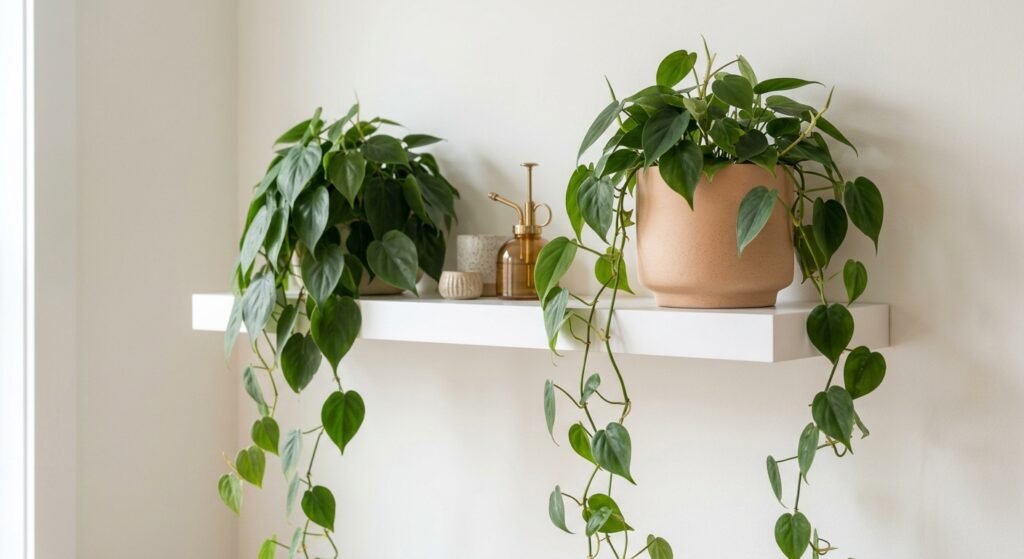
Shelves positioned high up near ceilings often trap warm air and receive less direct window light than lower surfaces.
Always check soil moisture by inserting your finger 2 inches into the pot before adding water to prevent overwatering.
Styling and Placement Best Practices
Successfully arranging trailing plants for shelves involves balancing weight distribution and visual symmetry across your display.
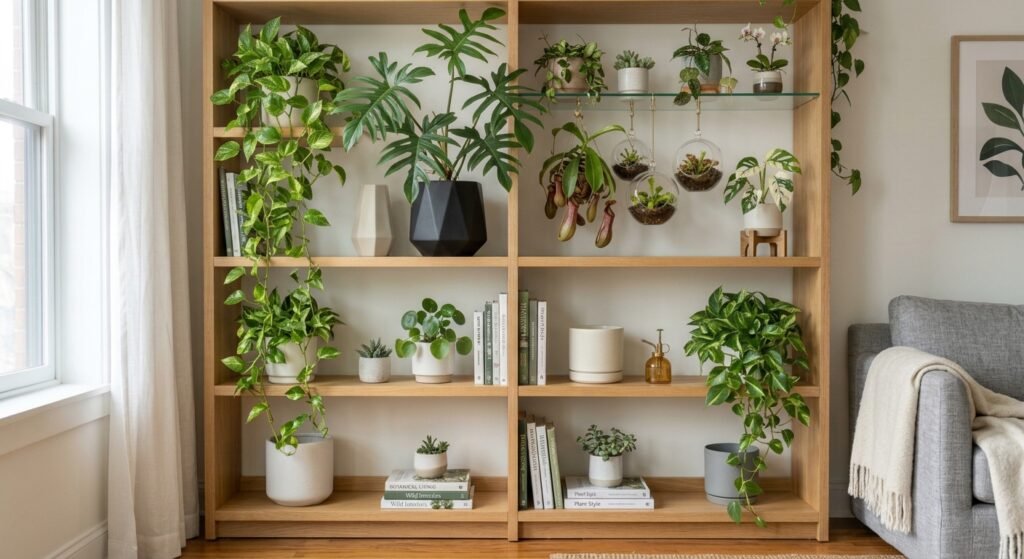
Place heavier ceramic pots on lower shelves to anchor the furniture piece, reserving lightweight plastic or fiberglass pots for upper ledges.
Allow vines to drape naturally down the sides of bookcases, or gently pin longer strands along wall hooks for custom styling patterns.
Trailing Plants for Shelves Comparison Matrix
The comparison table below details light requirements, watering frequency, and growth habits for top shelf vines:
| Plant Variety | Light Requirement | Watering Frequency | Growth Rate | Best Shelf Level |
| Golden Pothos | Low to Bright Indirect | Every 7–10 Days | Fast Growth | Upper / Middle Shelf |
| Heartleaf Philodendron | Medium Indirect | Every 7–10 Days | Moderate Growth | Upper Shelf Ledge |
| String of Pearls | Bright Direct / Indirect | Every 14–21 Days | Moderate Growth | Top Window Shelf |
| Satin Pothos | Bright Indirect Light | Every 10–12 Days | Slow to Moderate | Middle Shelf |
| English Ivy | Bright Filtered Light | Every 7–10 Days | Fast Growth | Lower / Middle Shelf |
| Bolivian Wandering Jew | Bright Indirect Light | Every 5–7 Days | Fast Growth | Upper Floating Shelf |
| Mistletoe Cactus | Bright Indirect Light | Every 10–14 Days | Moderate Growth | High Wall Ledge |
7 Steps to Style and Maintain Shelf Vines
Follow this step-by-step framework to arrange and care for your indoor shelving plants:
                  [Assess Shelf Lighting Exposure]
                                 |
         +-----------------------+-----------------------+
         |                                               |
[Bright Window Ledges]                           [Shaded Bookcases]
         |                                               |
(Place Succulent / Ivy Vines)                    (Place Pothos / Philodendrons)
         |                                               |
         v                                               v
Water when soil is dry,                         Check topsoil moisture,
trim vines for full shape                       dust leaves monthly
1. Evaluate Shelf Light Levels
Check how much natural sunlight reaches your bookshelves before selecting specific trailing plant species.
2. Choose Lightweight Planters
Use lightweight fiberglass or plastic nursery pots inside decorative outer containers to reduce weight on upper shelves.
3. Anchor Heavy Pots Below
Place large, heavy ceramic planters on bottom shelves to maintain structural stability and prevent tipping.
4. Monitor Soil Dryness Regularly
Check soil moisture weekly, watering thoroughly only when the top 2 inches of potting mix feel completely dry.
5. Prune Vines for Fullness
Trim long stems periodically just below leaf nodes to encourage branching and prevent leggy, sparse growth.
6. Clean Dust from Foliage
Wipe dust from trailing leaves monthly using a damp microfiber cloth to maximize photosynthetic efficiency.
7. Rotate Pots for Even Growth
Turn your pots 180 degrees every few weeks to ensure all sides of the plant receive balanced light exposure.
Conclusion
Mastering trailing plants for shelves transforms ordinary bookcases and floating ledges into stunning, vibrant botanical displays. By selecting resilient cascading varieties, providing appropriate lighting, and maintaining consistent watering habits, you can create a lush indoor jungle that enhances any room.
Inspect your shelving space today, apply these 7 essential styling steps, and enjoy flourishing indoor greenery!
Frequently Asked Questions
What is the easiest trailing plant for bookshelves?
The Golden Pothos and Heartleaf Philodendron are the easiest trailing plants for shelves because they tolerate low light, survive occasional underwatering, and grow rapidly.
How do I water plants placed on high floating shelves?
To water high shelf plants safely, use a watering can with a long narrow spout, or take the inner nursery pot down to the sink for a thorough soaking before returning it.
Why are the stems on my shelf plant becoming bare at the top?
Bare stems usually occur when upper foliage blocks light from reaching the base of the plant. Pruning the vine tips encourages new side shoots and restores a full appearance.
One Comment