
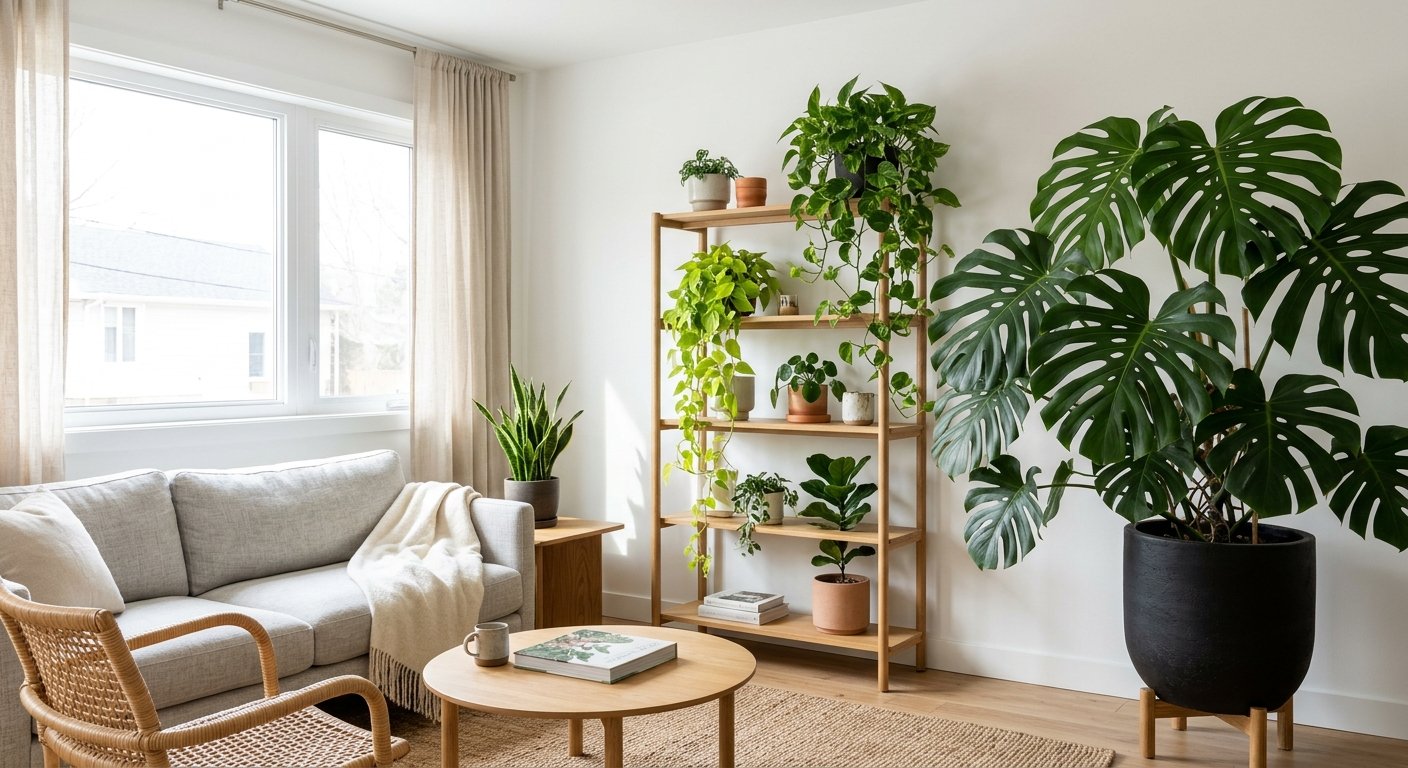
7 Best Indoor Plant Styling Ideas for Modern Spaces
Indoor plant styling ideas provide an exceptional way to transform ordinary living rooms into vibrant, sophisticated, and tranquil sanctuaries across US homes. Integrating greenery into interior design goes beyond simply placing pots on windowsills; it involves intentional arrangement, varying heights, and selecting complementary containers that match your personal aesthetic.
Mastering creative indoor plant styling ideas helps you maximize natural light, improve indoor air quality, and create stunning visual focal points throughout your living space. Whether you prefer minimalist Scandinavian decor, sleek mid-century modern styling, or lush bohemian vibes, strategic plant placement elevates every corner of the room.
Implementing effective indoor plant styling ideas requires understanding scale, texture, and growth habits. By combining statement floor plants, hanging vines, and tabletop botanical accents, you can curate a cohesive and professional interior look. Let us explore actionable, step-by-step strategies to style your living room plants like an expert interior designer.
Table of Contents
- Key Takeaways
- The Foundation of Modern Indoor Plant Styling Ideas
- Creating Height Variations with Plant Stands and Shelves
- Grouping and Layering Foliage Textures
- Hanging and Trailing Greenery for Vertical Depth
- Indoor Plant Styling Matrix
- 7 Best Steps to Execute Indoor Plant Styling Ideas
- Conclusion
- Frequently Asked Questions
Key Takeaways
- Vary Plant Heights: Combine tall floor specimens with medium tabletop pots and trailing plants to create dynamic visual layers.
- Curate Matching Planters: Use cohesive pot materials like matte ceramic, terracotta, or woven baskets to unify your design theme.
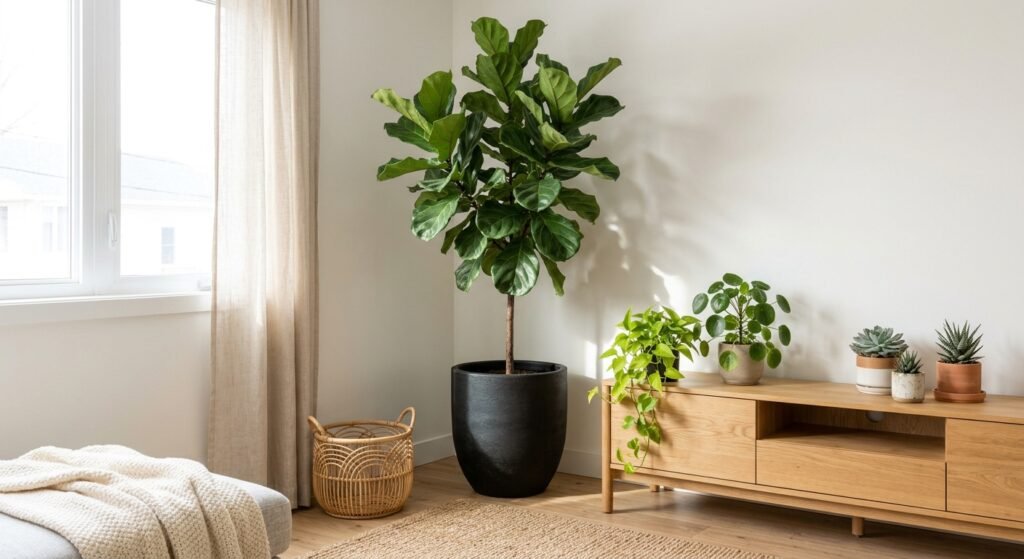
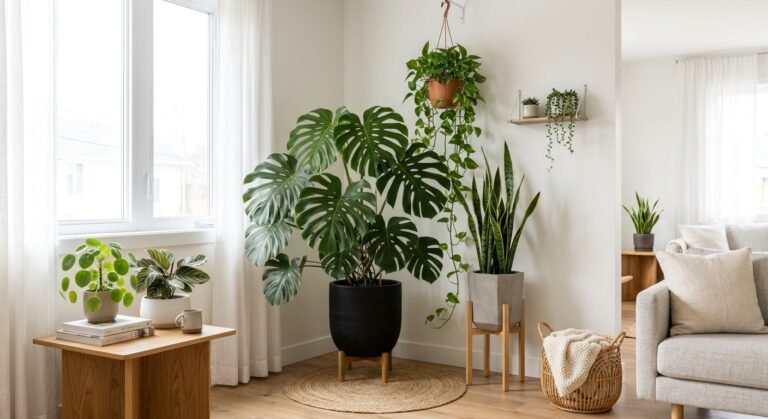
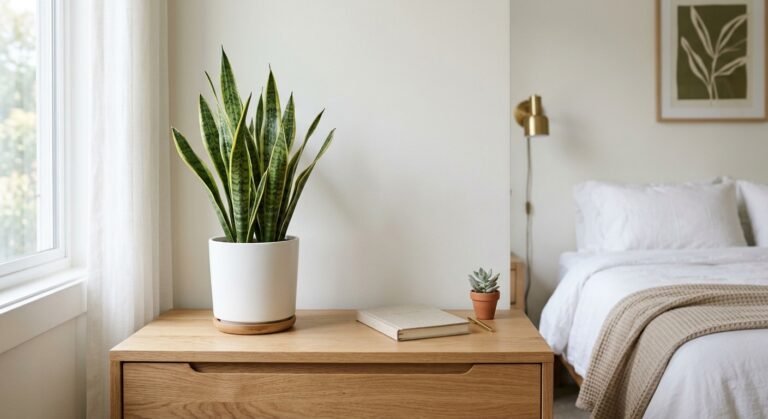
- Anchor Empty Corners: Place large statement plants like Monsteras or Snake Plants in unused living room corners to add architectural weight.
- Prioritize Lighting Needs: Match your styling arrangements with the natural light exposure of specific room zones.
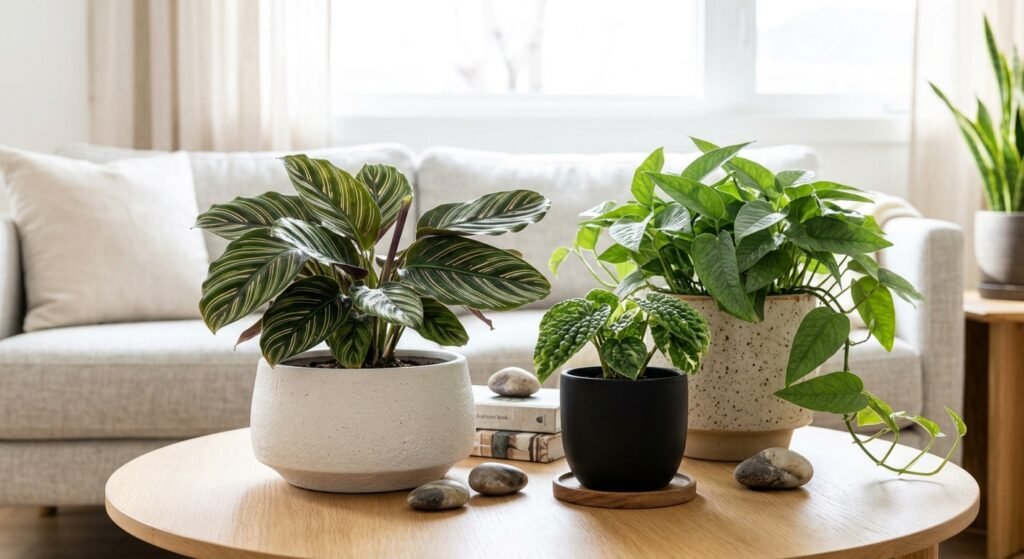
- Group in Odd Numbers: Cluster plants in groups of three or five to create balanced, visually appealing interior vignettes.
The Foundation of Modern Indoor Plant Styling Ideas
Establishing a cohesive look with indoor plant styling ideas begins with evaluating your living room’s natural layout and light patterns.
Before purchasing planters or rearranging furniture, identify primary focal points such as empty fireplace mantels, blank walls, or bare room corners.
Selecting plants with contrasting leaf shapes—such as broad aroid leaves paired with fine sword-like fronds—creates instant visual depth.
Creating Height Variations with Plant Stands and Shelves
Introducing varied elevation is a cornerstone of professional indoor plant styling ideas.
Placing all your plant pots directly on the floor creates a cluttered, flat appearance that lacks interior design sophistication.
Using Mid-Century Plant Stands
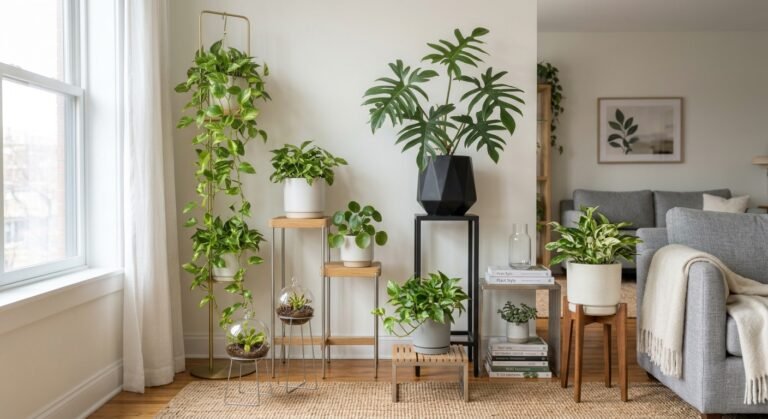
Elevate medium-sized pots using wooden or metal stands to lift greenery into the natural line of sight.
Floating Shelves and Bookshelves
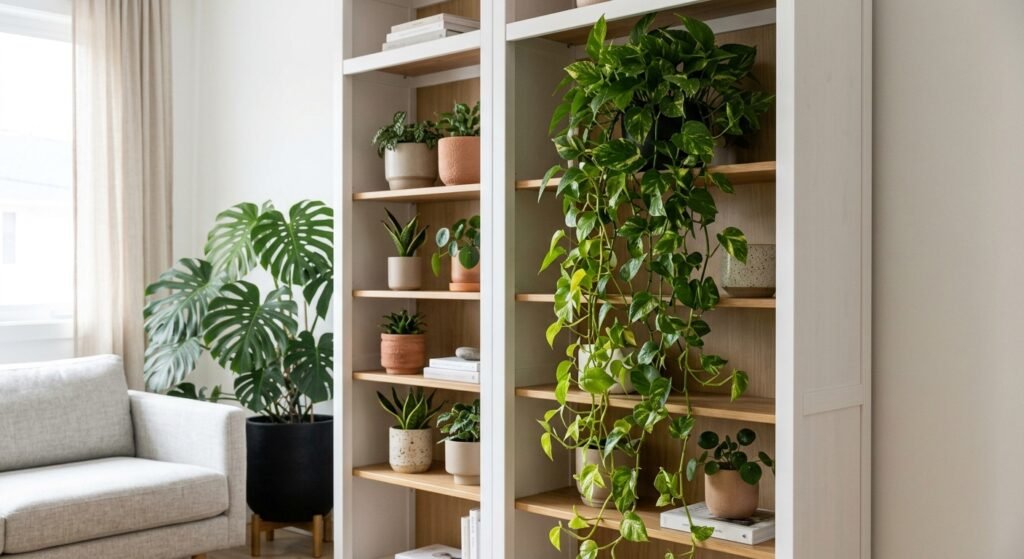
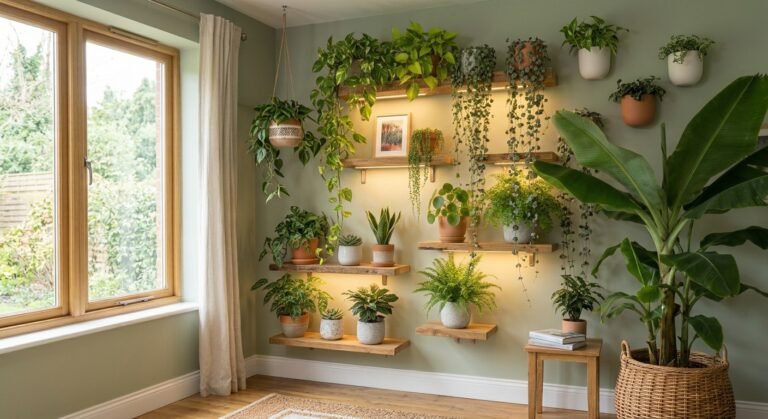
Integrate small trailing plants onto upper bookshelves to draw the eye upward and utilize vertical space effectively.
Grouping and Layering Foliage Textures
Successfully executing indoor plant styling ideas relies heavily on grouping plants with diverse foliage textures.
Pair broad, glossy leaves like Monsteras or Rubber Plants with delicate, feathery ferns or architectural snake plants.
Clustering plants together also creates a beneficial microclimate by naturally increasing local air humidity around the foliage.
Hanging-and-Trailing-Greenery-for-Vertical-Depth
Adding trailing plants is one of the most effective indoor plant styling ideas for softening harsh architectural lines in modern living rooms.
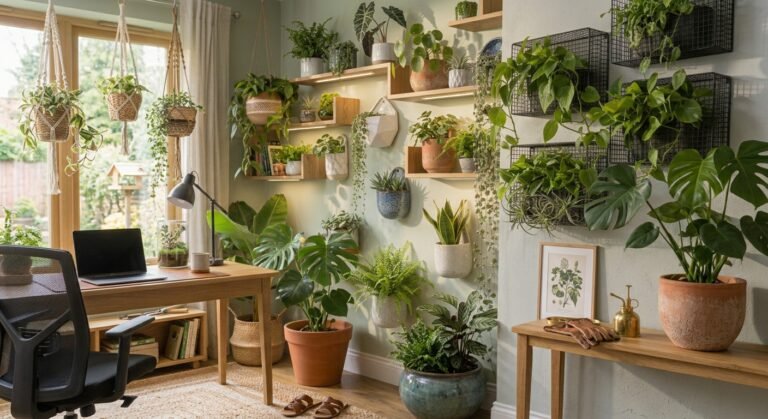
Suspend macrame plant hangers from ceiling hooks near sunny windows, or let vines cascade down from the top of tall cabinets.
Popular trailing choices like Pothos, Philodendrons, and String of Pearls bring organic movement and fluidity to interior spaces.
Indoor Plant Styling Matrix
The comparison table below outlines optimal styling placements and plant types for various living room zones:
| Living Room Zone | Recommended Plant Type | Ideal Styling Method | Best Planter Style |
| Empty Room Corner | Tall Statement Plant (Monstera / Ficus) | Standalone Floor Placement | Large Matte Ceramic Pot |
| Coffee Table / Console | Compact Foliage (Pothos / Succulent) | Grouped in Odd Numbers | Small Ceramic or Concrete Planters |
| Bookshelf / Mantel | Trailing Vines (Hoya / Philodendron) | Cascading Edge Placement | Neutral Terracotta or Hanging Pot |
| Window Sill | Sun-Loving Variegated Plants | Linear Window Arrangement | Matching White Ceramic Pots |
| Blank Wall Space | Climbing Plants on Trellis | Wall-Mounted Shelving | Lightweight Wall Planters |
7 Best Steps to Execute Indoor Plant Styling Ideas
Follow this step-by-step framework to design a balanced, professionally styled indoor plant arrangement:
               [Assess Room Natural Lighting]
                             |
         +-------------------+-------------------+
         |                                       |
[Bright Sunny Window Zones]              [Low Light Corners]
         |                                       |
(Place Sun-Loving Plants)               (Place Low-Light Varieties)
         |                                       |
         v                                       v
Group in odd numbers on                 Anchor corner spaces with
stands, shelves, and tables             tall statement floor pots
1. Audit Your Living Room Lighting
Assess which areas receive bright indirect sunlight versus low light, matching plant varieties to their ideal environmental conditions.
2. Anchor Corners with Statement Plants
Place a large focal plant in an underutilized corner to add immediate visual weight and architectural structure.
3. Incorporate Varied Elevations
Use plant stands, stools, and floating shelves to stagger plant heights and break up horizontal furniture lines.
4. Create Cohesive Planter Themes
Unify your plant collection by using pots with a consistent color palette, such as matte white, black, or natural terracotta.
5. Add Trailing Movement to Shelves
Place cascading vines on high surfaces to draw the eye upward and maximize vertical living room space.
6. Cluster Plants in Odd Numbers
Arrange smaller tabletop and floor pots in groups of three or five to achieve a natural, balanced designer look.
7. Rotate Plants Periodically
Rotate your potted arrangements every few weeks to ensure even light exposure and balanced growth on all sides.
Conclusion
Mastering indoor plant styling ideas transforms a standard living room into a vibrant, stylish, and welcoming space. By combining varied elevations, contrasting foliage textures, and cohesive planters, you can create a professionally designed indoor garden tailored to modern aesthetics.
Evaluate your living room layout today, apply these 7 essential styling steps, and enjoy a flourishing green interior!
Frequently Asked Questions
How do I style indoor plants in a small living room?
In small living rooms, maximize vertical space by utilizing wall shelves, hanging planters, and narrow plant stands rather than taking up valuable floor space with large pots.
How many plants should I put in my living room?
There is no strict rule, but starting with a balanced mix of one or two large statement floor plants, a few medium tabletop pots, and a trailing shelf plant creates an effortless look without overcrowding.
What are the best pots to use for modern plant styling?
Matte ceramic pots, terracotta planters, and woven seagrass baskets are top choices for modern interiors because they offer neutral textures that complement any home decor style.

One Comment