
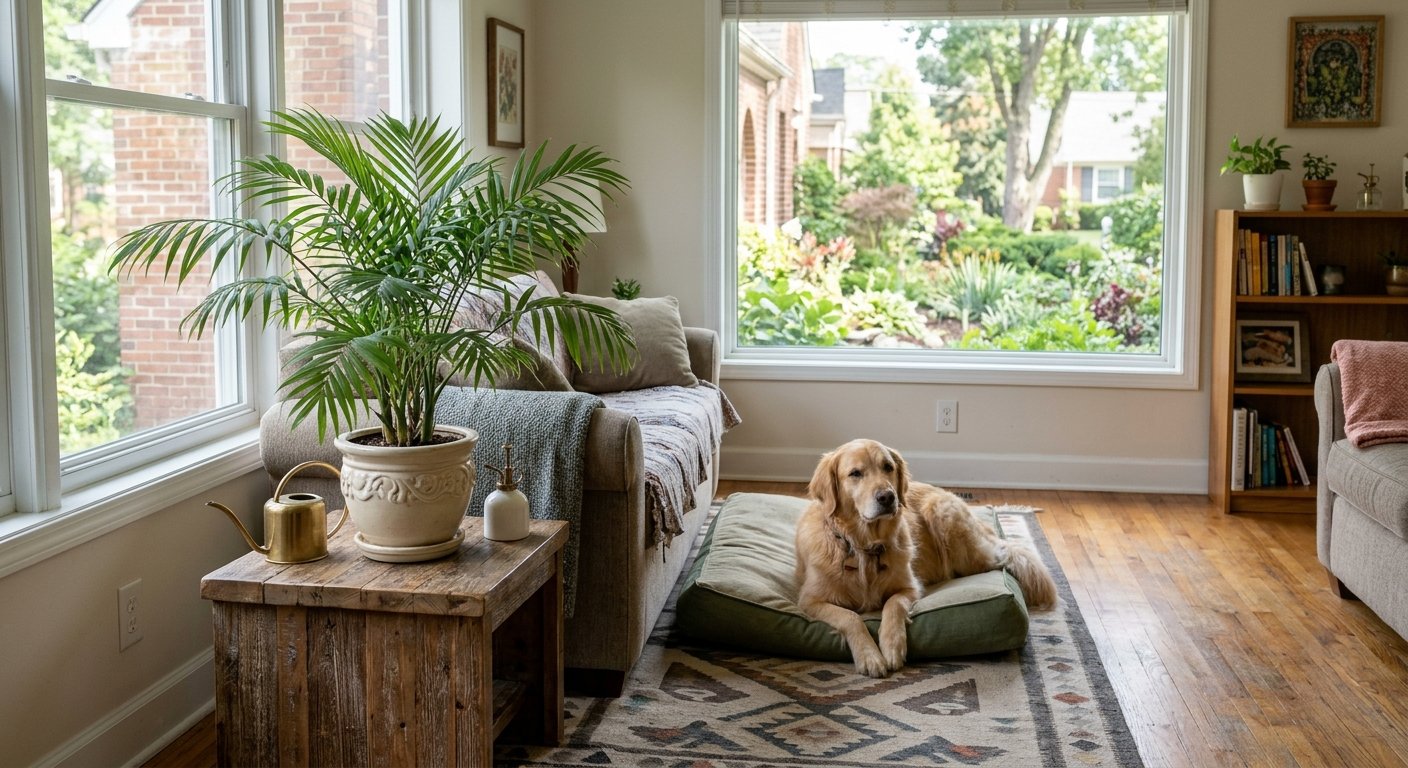
Parlor Palm Care: 7 Amazing Essential Tips for Dogs
Parlor palm care is an essential skill for US pet owners who want to enjoy lush, resort-style tropical foliage without risking the health and safety of their dogs. The parlor palm (Chamaedorea elegans) has graced American living rooms for over a century, offering delicate, feathery green fronds and effortless adaptability to low-light indoor environments.
Mastering proper parlor palm care allows you to cultivate a stunning, elegant houseplant that is 100% non-toxic and certified safe by veterinary organizations. Instead of worrying about hazardous aroids or sharp toxic stems, you can design a welcoming, pet-friendly home where your green collection and canine companions thrive together.
Implementing expert guidelines for parlor palm care ensures your plant remains vibrant, pest-free, and remarkably easy to maintain. Let us explore core watering practices, ideal lighting conditions, and a foolproof 7-step cultivation framework tailored for modern US households.
Table of Contents
- Key Takeaways
- Why Parlor Palms Are the Ultimate Dog-Safe Plant
- Understanding Light and Temperature Needs
- Watering Schedules and Soil Requirements
- Parlor Palm Care Comparison Matrix
- 7 Amazing Essential Tips for Parlor Palm Care in Dog Homes
- Troubleshooting Common Indoor Palm Problems
- Conclusion
- Frequently Asked Questions
Key Takeaways
- 100% Pet Safe: Parlor palms are officially recognized by the ASPCA as completely non-toxic to dogs, cats, and horses.
- Embrace Indirect Light: Position pots in medium to low indirect light, avoiding harsh scorching afternoon sun rays.
- Allow Soil to Dry: Water your palm only when the top two inches of potting mix feel dry to the touch.
- Maintain High Humidity: Mist fronds weekly or use a room humidifier to prevent brown leaf tips in dry US homes.
- Use Well-Draining Soil: Plant in a porous peat-based mix enriched with perlite to protect delicate root systems from rot.
Why Parlor Palms Are the Ultimate Dog-Safe Plant
Understanding the fundamentals of parlor palm care starts with recognizing why this Victorian-era favorite remains a staple in American interior design.
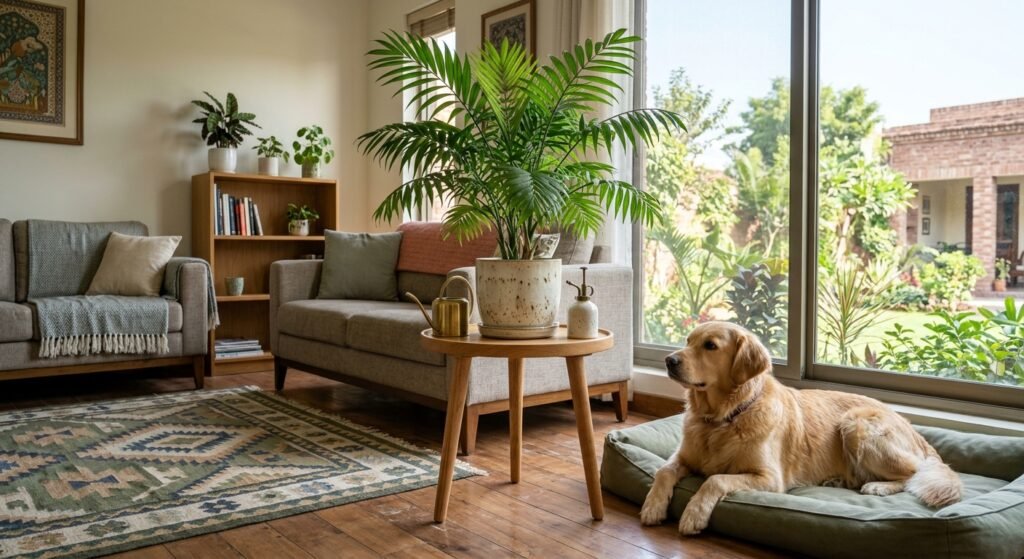
Dogs are naturally curious explorers, often investigating low-hanging leaves or sniffing around container soil during daily indoor routines.
Because parlor palms contain zero toxic alkaloids or calcium oxalate crystals, accidental nibbling results in zero veterinary emergencies.
Understanding Light and Temperature Needs
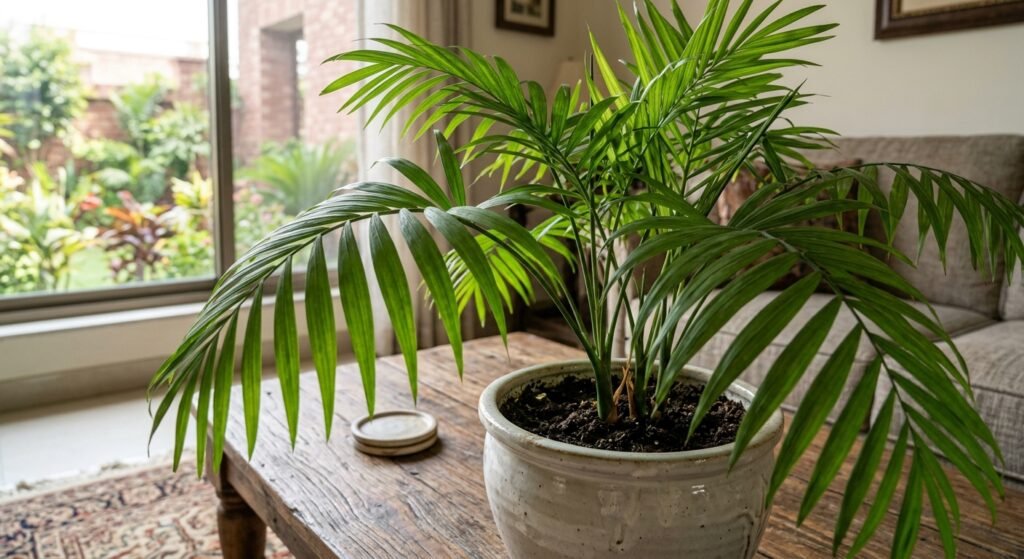
Proper execution of parlor palm care requires matching your indoor lighting conditions to the plant’s native rainforest understory habitat.
In the wild, these palms grow beneath towering forest canopies, making them exceptionally tolerant of low-light apartment corners and north-facing windows.
Maintain stable indoor temperatures between 65°F and 80°F, protecting your palm from cold drafts and sudden HVAC heating vents.
Watering Schedules and Soil Requirements
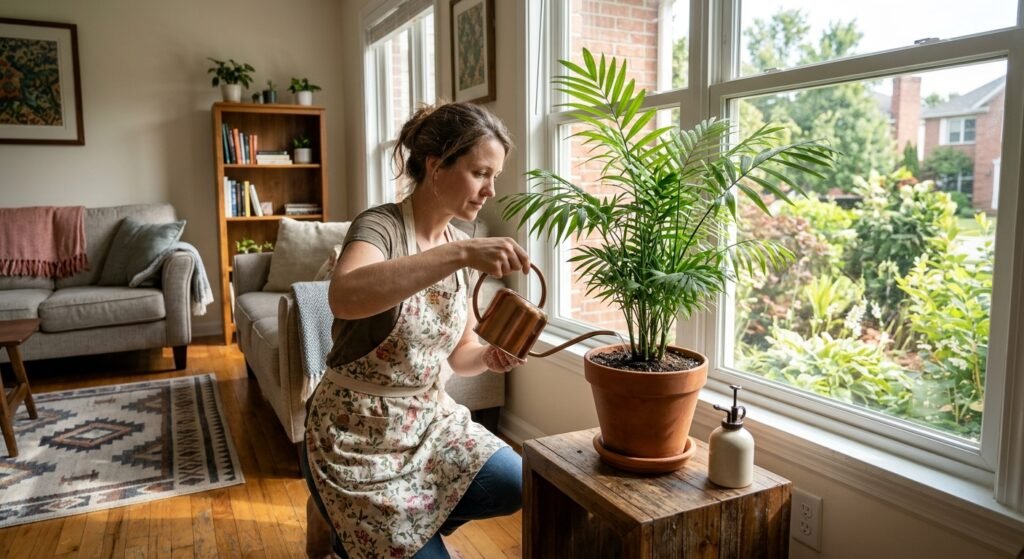
Mastering hydration is the cornerstone of successful parlor palm care for indoor plant enthusiasts across the United States.
Overwatering is the single most common cause of palm decline, quickly suffocating roots and turning stems black at the soil line.
Always test soil moisture with your finger before watering, ensuring the container features functional bottom drainage holes.
Parlor Palm Care Comparison Matrix
The comparison table below outlines lighting needs, watering frequency, and pet safety ratings for popular indoor palm varieties:
| Palm Species | Light Requirement | Watering Frequency | Growth Rate | Dog Safety Status |
| Parlor Palm | Low to Medium Indirect | Every 7 to 10 Days | Slow to Moderate | 100% Safe |
| Areca Palm | Bright Indirect Light | Every 5 to 7 Days | Moderate | 100% Safe |
| Cat Palm | Bright Filtered Light | Every 5 to 7 Days | Moderate | 100% Safe |
| Kentia Palm | Low to Bright Indirect | Every 10 to 14 Days | Slow | 100% Safe |
7 Amazing Essential Tips for Parlor Palm Care in Dog Homes
Follow this comprehensive framework to ensure your indoor parlor palm care routine keeps your plants flourishing and your dogs safe:
               [Select Healthy Dog-Safe Palm]
                             |
         +-------------------+-------------------+
         |                                       |
[Provide Medium Indirect Light]          [Use Well-Draining Potting Soil]
         |                                       |
(Avoid harsh scorching sun rays)         (Prevent root rot and saturation)
         |                                       |
         v                                       v
Water when topsoil is dry,              Place pots on stable high stands
mist fronds weekly for humidity          away from wagging dog tails
1. Verify 100% Pet Safety
Confirm your specimen is a genuine Chamaedorea elegans to guarantee absolute non-toxicity for your household dogs.
2. Provide Filtered Indirect Light
Place your palm near an east or north-facing window where it receives gentle, indirect illumination without leaf scorching.
3. Use Porous, Well-Draining Soil
Plant your palm in a rich peat-based potting mix combined with perlite to ensure optimal root aeration and quick drainage.
4. Water Only When Topsoil Dries
Check soil dryness weekly, watering thoroughly only when the top two inches of earth feel completely dry.
5. Elevate Pots on Stable Stands
Set your plant in a heavy ceramic pot resting on an elevated stand so wagging dog tails cannot knock it over.
6. Boost Indoor Humidity Levels
Mist fronds regularly or run a cool-mist humidifier nearby to prevent brown leaf tips during dry winter months.
7. Dust Fronds Monthly
Wipe delicate leaflets gently with a damp cloth to remove accumulated household dust and maximize photosynthetic efficiency.
Troubleshooting Common Indoor Palm Problems
Mastering advanced parlor palm care involves diagnosing minor aesthetic issues before they impact overall plant health.
Brown tips on lower fronds usually indicate low humidity or underwatering, while yellowing lower leaves often signal overwatering.
Prune away fully brown fronds cleanly at the base using sterile shears to keep your palm looking neat and energetic.
Conclusion
Mastering essential parlor palm care enables you to maintain a gorgeous, lush indoor garden while ensuring total safety for your beloved dogs. By providing indirect light, careful watering habits, and stable placement, this classic houseplant will reward you with year-round tropical beauty.
Review your indoor plant collection today, apply these 7 amazing essential tips, and enjoy a flourishing pet-safe home!
Frequently Asked Questions
Are parlor palms completely safe if eaten by dogs?
Yes, parlor palms are 100% non-toxic and harmless to dogs, cats, and other household pets according to official ASPCA safety guidelines.
How often should I water my indoor parlor palm?
Water your parlor palm every 7 to 10 days, allowing the top two inches of potting mix to dry out completely between watering sessions.
Why are the tips of my parlor palm turning brown?
Brown tips typically result from low indoor humidity, dry air from heating vents, or inconsistent watering habits.

One Comment