

Propagate Succulents from Leaves: 7 Amazing Easy Steps
Propagate succulents from leaves is one of the most magical, cost-effective, and satisfying indoor gardening projects for plant enthusiasts across the US. Instead of buying expensive new potted specimens from local nurseries, you can gently pluck healthy leaves from your existing plants and watch them sprout brand-new baby rosettes from scratch.
Mastering how to propagate succulents from leaves allows urban gardeners to multiply their botanical collections exponentially with zero financial investment. By understanding the natural regenerative biology stored within succulent foliage, you can turn a single mature echeveria or sedum into dozens of thriving independent plants.
Implementing expert-approved techniques when you propagate succulents from leaves ensures high success rates and prevents common pitfalls like leaf rot or shriveling. Let us explore the core anatomical principles, essential soil requirements, and a foolproof 7-step propagation framework designed for modern indoor growers.
Table of Contents
- Key Takeaways
- The Biology of Succulent Leaf Regeneration
- Selecting and Twisting the Perfect Leaf Cutting
- Callusing and Watering Best Practices
- Succulent Propagation Comparison Matrix
- 7 Amazing Steps to Propagate Succulents from Leaves Successfully
- Caring for Baby Succulent Pups
- Conclusion
- Frequently Asked Questions
Key Takeaways
- Get a Clean Break: Always twist leaves gently from the stem to ensure the entire basal node stays intact for root generation.
- Allow Leaves to Callus: Let plucked leaf ends dry and seal over in open air for 2 to 3 days before placing them on soil.
- Provide Bright Indirect Light: Set propagation trays in warm rooms receiving filtered sunlight, avoiding harsh direct outdoor rays.
- Mist Sparingly: Wait until pink roots emerge before giving baby leaves light misting or droplet watering.
- Leave Mother Leaf Alone: Let the original mother leaf wither and detach naturally once the baby pup absorbs all its nutrients.
The Biology of Succulent Leaf Regeneration
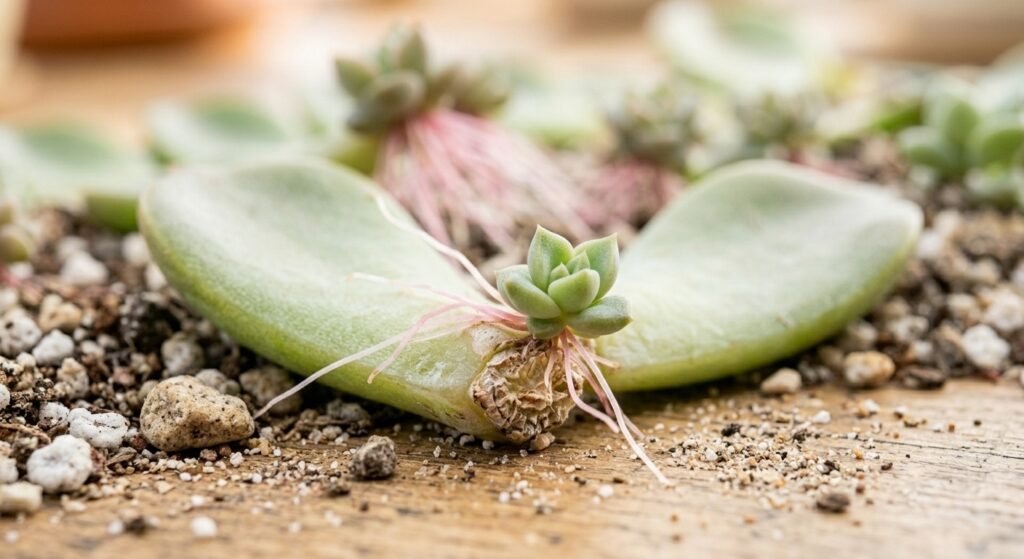
When you propagate succulents from leaves, you tap into specialized meristematic cells packed inside the fleshy tissue.
These pluripotent cells possess the unique biological ability to divide and differentiate into brand-new roots and shoots when stimulated by detachment.
Unlike woody plants, succulent leaves store abundant water and carbohydrates, sustaining the growing baby pup for weeks without needing soil contact.
Selecting and Twisting the Perfect Leaf Cutting
Choosing healthy, plump foliage is critical when you propagate succulents from leaves to ensure high viability.
Inspect your mature succulent and select firm, unblemished leaves located near the middle or lower section of the stem.
Gently grasp the leaf and wiggle it side to side until it snaps off cleanly right at the main stem junction.
Callusing and Watering Best Practices
Managing moisture correctly is the single most important factor as you propagate succulents from leaves over a multi-week period.
Placing fresh leaves directly onto wet soil immediately invites fungal bacteria, causing the cut end to turn translucent and rot.
Allowing the cut to form a protective callous layer first ensures the delicate tissue remains sterile and healthy.
Succulent Propagation Comparison Matrix
The comparison table below outlines key propagation methods, timelines, and success rates for multiplying succulents:
| Propagation Method | Plant Part Used | Average Rooting Time | Success Rate | Best Beginner Suitability |
| Leaf Propagation | Individual Healthy Leaves | 3 to 6 Weeks | 85% – 95% | Highly Recommended |
| Stem Cuttings | Entire Rosette Top Cuttings | 2 to 4 Weeks | 95% – 99% | Very Easy |
| Plant Division | Separating Rooted Pups | Instant / No Wait | 99% | Instant Results |
| Seed Propagation | Botanical Seeds | 6 to 12 Weeks | 40% – 60% | Advanced Growers |
7 Amazing Steps to Propagate Succulents from Leaves Successfully
Follow this step-by-step framework to successfully twist, callus, root, and grow your succulent leaf cuttings:
               [Select Plump, Healthy Leaf]
                             |
         +-------------------+-------------------+
         |                                       |
[Gently Twist Off Stem]                  [Let Callus Dry for 3 Days]
         |                                       |
(Ensure clean base separation)           (Prevent rot and fungal decay)
         |                                       |
         v                                       v
Lay flat on dry succulent soil,         Mist roots when they appear,
place in bright indirect light           repot once mother leaf withers
1. Select Plump, Healthy Leaves
Choose firm, vibrant leaves from a healthy parent succulent, avoiding any yellow, translucent, or bruised foliage.
2. Twist Leaves Gently off the Stem
Grasp the leaf securely and gently wiggle it side to side until it breaks away cleanly from the main stem without tearing.
3. Allow Cuts to Callus Over
Place your harvested leaves flat on a clean paper towel in a shaded room for 2 to 3 days until the cut ends seal over.
4. Prepare a Shallow Propagation Tray
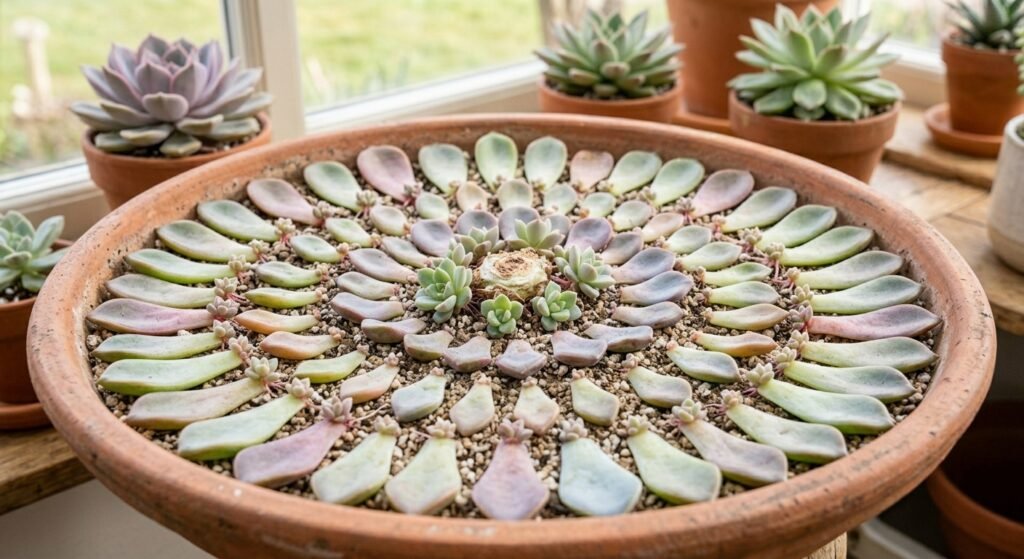
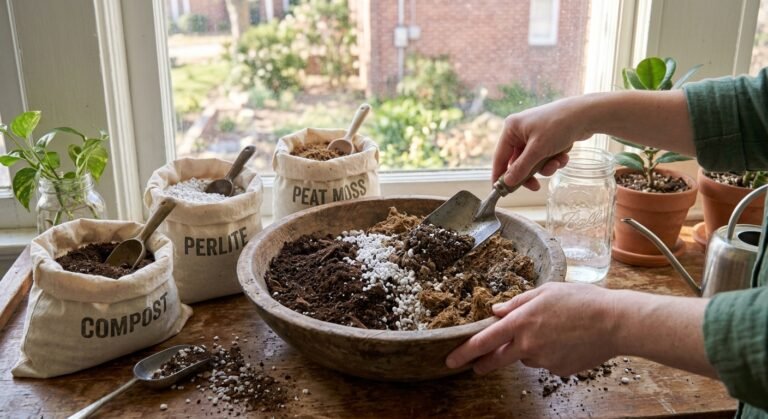
Fill a shallow nursery tray or wide terracotta dish with a porous, dry cactus and succulent potting soil mix.
5. Lay Leaves Flat on Soil Surface
Arrange your callused leaves flat on top of the dry soil, making sure the severed base ends are exposed to ambient air.
6. Provide Bright Indirect Light
Set your tray in a warm room near a window receiving bright indirect sunlight, avoiding harsh scorching sun rays.
7. Mist Lightly Once Roots Appear
Begin lightly misting the soil around the base of the leaves every few days once tiny pink roots and baby rosettes sprout.
Caring for Baby Succulent Pups
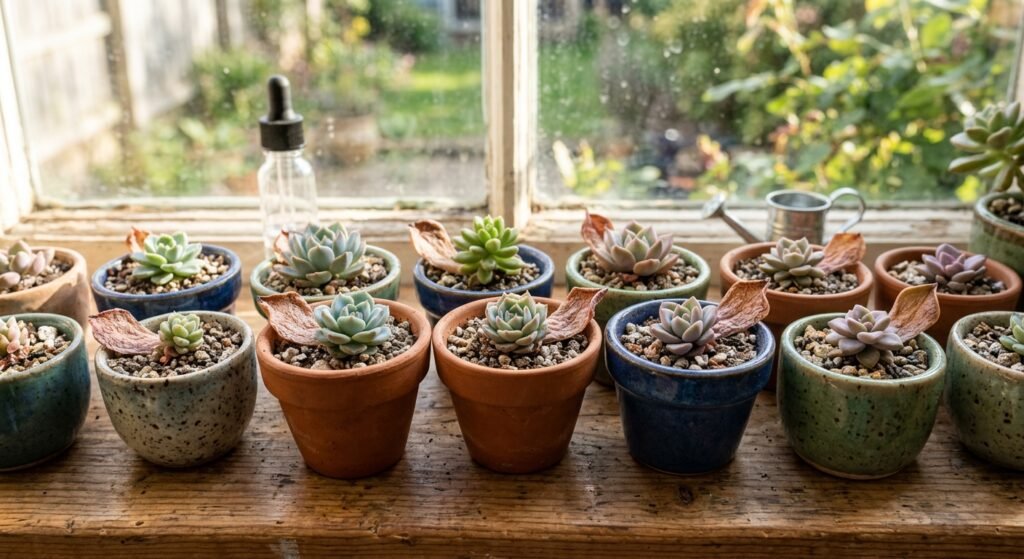
Once your baby rosettes emerge and develop small root systems, they require gentle ongoing care to mature into sturdy houseplants.
Allow the soil to dry out completely between waterings, watering only when the delicate root zone becomes dry.
You can gently snip away the shriveled mother leaf once it completely dries up and detaches from the growing baby pup.
Conclusion
Mastering how to propagate succulents from leaves unlocks an endless, highly rewarding way to expand your indoor plant collection for free. By harvesting clean leaf cuttings, letting them callus, and providing bright indirect light, you can achieve remarkable propagation success.
Select a healthy succulent leaf today, follow these 7 amazing steps, and enjoy growing your own miniature botanical garden!
Frequently Asked Questions
Why are my succulent leaves turning mushy instead of growing roots?
Succulent leaves turn mushy and rot when they are exposed to excessive moisture, un-callused cuts touching wet soil, or placed in dark, humid environments.
Do I need to bury the end of the succulent leaf in soil?
No, never bury the leaf end. Laying the leaf flat on top of dry soil allows roots and baby rosettes to grow naturally outward toward the light.
How long does it take for a succulent leaf to grow roots?
Most succulent leaves begin sprouting tiny pink roots and miniature rosettes within 3 to 6 weeks, depending on ambient room temperature and sunlight exposure.


One Comment