Rooting Hormones for Houseplants: 7 Amazing Essential Facts
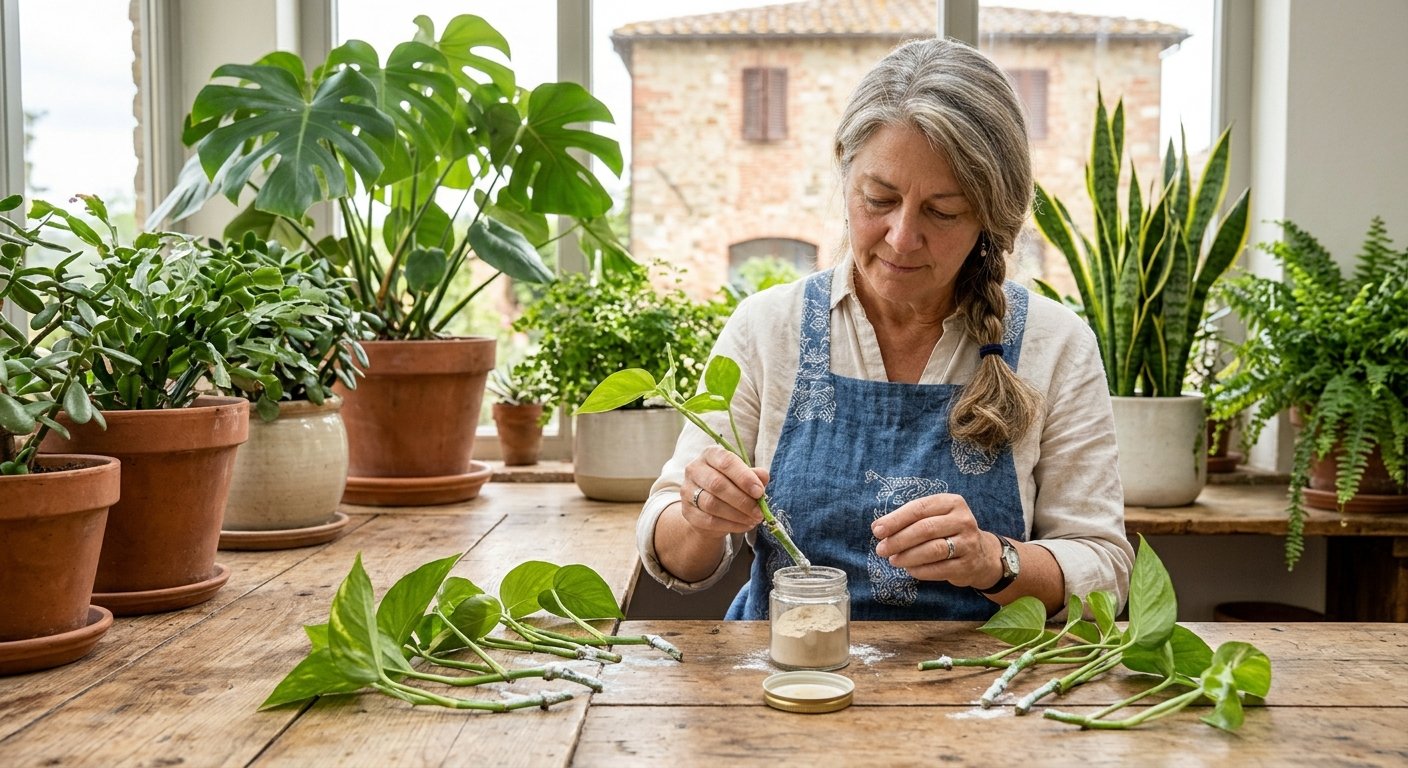
Rooting hormones for houseplants are chemical or organic compounds designed to accelerate root cell division, prevent stem rot, and dramatically improve propagation success rates across US homes. When indoor gardeners snip stems to multiply their favorite plants, applying a specialized rooting agent can mean the difference between rapid establishment and total cutting decay.
Mastering how and when to use rooting hormones for houseplants allows both beginners and experienced botanists to propagate stubborn woody stems, rare aroids, and delicate tropical cuttings with professional precision. Instead of relying solely on plain water and hoping for the best, applying auxins stimulates robust root systems in a fraction of the usual time.
Implementing expert guidelines when handling rooting hormones for houseplants ensures clean cuts, disease prevention, and high survival rates. Let us explore the core science behind auxins, powder versus gel formulations, and a foolproof 7-step application framework designed for modern indoor gardeners.
Table of Contents
- Key Takeaways
- The Science of Plant Auxins and Root Growth
- Comparing Powder, Gel, and Liquid Formulations
- Do Easy Houseplants Like Pothos Actually Need Hormones?
- Rooting Hormones Comparison Matrix
- 7 Essential Steps to Apply Rooting Hormones Correctly
- Avoiding Common Propagation Mistakes
- Conclusion
- Frequently Asked Questions
Key Takeaways
- Accelerate Root Development: Auxins stimulate rapid cellular division at the cut node, shortening the overall rooting timeline.
- Prevent Fungal Pathogens: Many commercial rooting powders contain built-in fungicides that protect vulnerable cut tissue from rot.
- Match Formulation to Medium: Use gels for soil propagation and powders for air layering or direct soil planting.
- Avoid Contaminating Stock Containers: Pour a small amount of hormone into a separate dish rather than dipping cuttings directly into the main jar.
- Not Always Mandatory: Fast-rooting species like pothos and spider plants root easily in plain water without any added chemicals.
The Science of Plant Auxins and Root Growth
Understanding how rooting hormones for houseplants function requires a brief look into natural plant endocrinology.
Auxins are naturally occurring plant hormones that direct growth responses, including bending toward light and initiating root development at wound sites.
Commercial rooting products replicate these natural auxins—most commonly Indole-3-butyric acid (IBA)—to signal unspecialized stem cells to transform into active root tissue.
Comparing Powder, Gel, and Liquid Formulations
Choosing the right type of rooting hormones for houseplants depends entirely on your preferred propagation medium and technique.
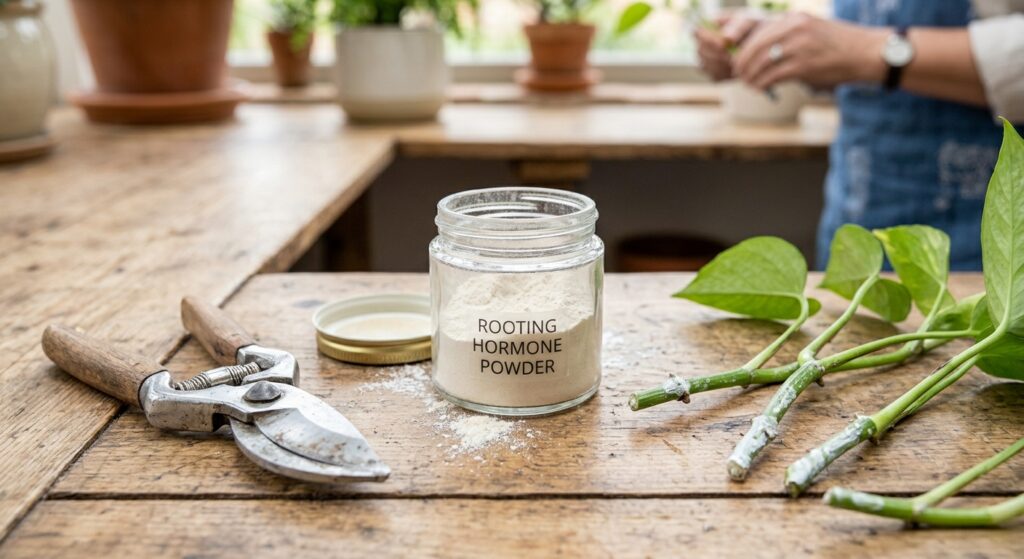
Powder formulas offer an exceptionally long shelf life and work wonderfully when planting stem cuttings directly into soil or perlite.
Gel formulas cling tightly to the cut stem node, sealing the vascular tissue against bacteria while keeping active hormones concentrated right where roots form.
Do Easy Houseplants Like Pothos Actually Need Hormones?
One of the most common questions among indoor gardeners is whether rooting hormones for houseplants are necessary for every single propagation project.
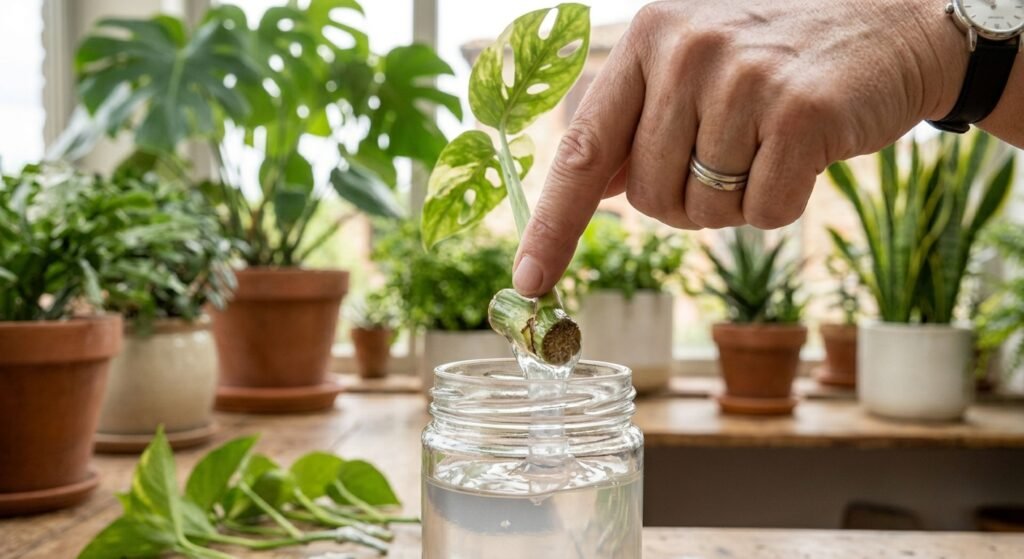
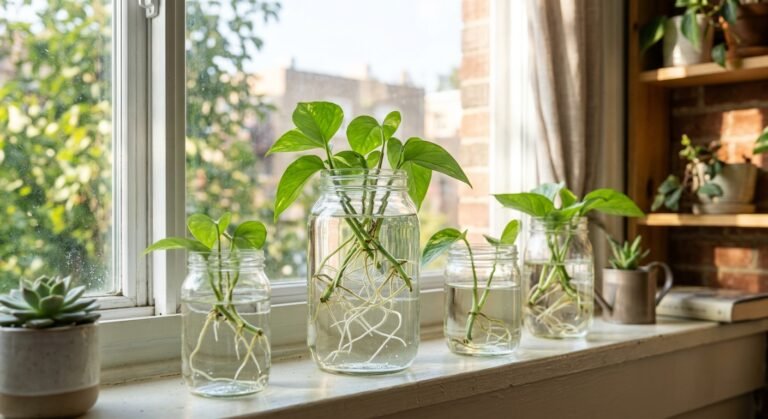
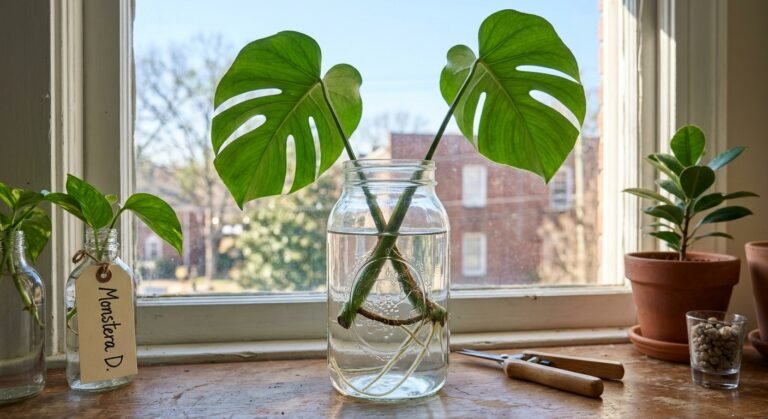
For aggressive growers like pothos, heartleaf philodendrons, and tradescantia, natural auxins are already abundant enough to trigger roots in plain water within days.
However, for woody stems, rare variegated specimens, or slow-establishing hoyas, chemical rooting assistance significantly reduces failure rates.
Rooting Hormones Comparison Matrix
The comparison table below outlines different types of rooting products, their shelf lives, and best applications:
| Hormone Type | Physical Form | Shelf Life | Best Propagation Medium | Ideal Plant Suitability |
| IBA Powder | Dry Powder | 2 to 3 Years | Soil, Perlite, Moss | Woody stems, fast-draining mixes |
| PBA Gel | Viscous Gel | 1 to 2 Years | Soil, Coco Coir | Tropical aroids, rare cuttings |
| Liquid Concentrate | Water-Soluble Liquid | 1 Year | Hydroponic / Water | General indoor green cuttings |
| Organic Willow Water | Homemade Liquid | Use Immediately | Water or Soil | Natural alternative for soft stems |
7 Essential Steps to Apply Rooting Hormones Correctly
Follow this step-by-step framework to handle and apply rooting hormones for houseplants safely and effectively:
               [Sanitize Pruning Shears]
                             |
         +-------------------+-------------------+
         |                                       |
[Make Clean 45-Degree Cut]               [Pour Hormone into Separate Dish]
         |                                       |
(Snip just below a node)                 (Prevent cross-contamination)
         |                                       |
         v                                       v
Dip lower node into hormone,            Plant in well-draining medium,
tap off excess powder gently             keep warm with indirect light
1. Sanitize Your Cutting Tools
Wipe your pruning shears with rubbing alcohol to prevent introducing bacteria into your propagation cuts.
2. Make a Clean Stem Cut
Snip a healthy 6-inch stem section at a 45-degree angle directly below an active leaf node.
3. Pour Hormone into a Small Dish
Transfer a small amount of your powder or gel into a separate bottle cap or dish to avoid contaminating your main supply container.
4. Strip Lower Leaves Away
Remove any foliage near the bottom of the cutting so no leaves sit submerged in soil or rooting media.
5. Apply the Hormone Lightly
Dip the lower node of your cutting into the hormone, ensuring a thin, even coating covers the exposed plant tissue.
6. Tap Off Excess Powder
Gently tap the stem to remove any heavy clumps of hormone powder, as excessive concentration can actually inhibit root growth.
7. Plant in Prepared Medium
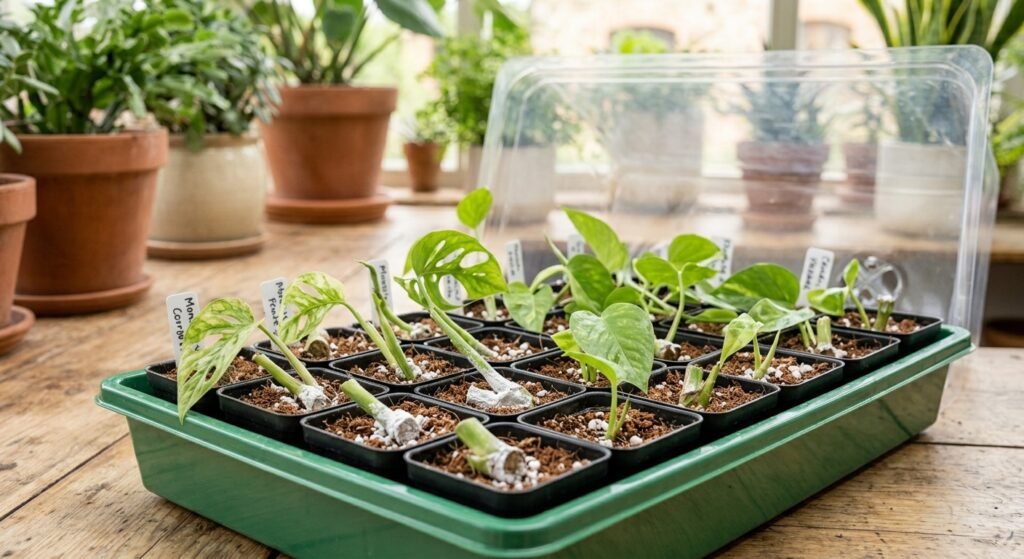
Insert your treated cutting into a clean pot filled with moist, well-draining propagation soil or perlite.
Avoiding Common Propagation Mistakes
Improper handling of rooting hormones for houseplants can sometimes hinder rather than help your propagation endeavors.
Never dip your wet stem directly into the primary container of rooting powder, as moisture contaminates the entire batch with fungi.
Always store unused powder or gel in a cool, dark cupboard away from direct sunlight to preserve the chemical integrity of the active auxins.
Conclusion
Mastering the use of rooting hormones for houseplants gives you a reliable tool to accelerate root development and expand your indoor jungle with confidence. While easy vines root readily on their own, applying professional auxins to stubborn or rare cuttings guarantees superior success.
Gather your propagation tools today, apply these 7 essential application steps, and enjoy flourishing indoor plant growth!
Frequently Asked Questions
Do all indoor plant cuttings require rooting hormone?
No, many fast-rooting houseplants like pothos, philodendrons, and tradescantia produce enough natural auxins to root successfully in plain water without any chemical additives.
Can I use honey as a natural substitute for commercial rooting hormone?
Yes, raw honey possesses mild antibacterial properties and has been used by gardeners as an organic alternative, though commercial hormone products offer much stronger and more predictable results.
What happens if I apply too much rooting hormone powder?
Applying an excessively thick layer of rooting hormone can chemically burn the stem tissue, stunting root development or causing the cutting to rot prematurely.

One Comment