

Divide Snake Plants: 7 Best Steps for Fast Multiplication
Divide snake plants is the fastest, most effective, and reliable technique for indoor plant enthusiasts across the US to multiply their botanical collections without waiting months for leaf cuttings to root. Snake plants (Sansevieria or Dracaena trifasciata) grow naturally by producing underground stems called rhizomes that push out dense clusters of upright architectural leaves.
Mastering how to divide snake plants allows urban gardeners to rescue overcrowded pots, stimulate vigorous new leaf growth, and share healthy specimens with friends and family. Instead of letting tightly packed rhizomes crack plastic nursery containers, splitting the root ball gives each individual pup the breathing room and nutrients required to flourish.
Implementing expert guidelines when you divide snake plants ensures minimal root shock and guarantees high success rates across US households. Let us explore the core indicators of overcrowding, essential soil requirements, and a foolproof 7-step division framework designed to maximize your indoor jungle.
Table of Contents
- Key Takeaways
- Recognizing When Your Snake Plant Needs Division
- Preparing Tools, Soil, and Planters
- Rhizome Separation and Shock Prevention
- Snake Plant Division Comparison Matrix
- 7 Best Steps to Divide Snake Plants Successfully
- Post-Division Care and Watering Rules
- Conclusion
- Frequently Asked Questions
Key Takeaways
- Target Mature Clumps: Select snake plants that have produced multiple distinct offsets or pups crowding the container rim.
- Inspect Rhizome Health: Use sterilized shears to cut cleanly through fleshy underground rhizomes, ensuring each division retains active roots.
- Let Cuts Callus Over: Allow severed rhizome cuts to dry in open air for 24 hours before planting to prevent fungal rot.
- Use Fast-Draining Soil: Plant divided sections in a porous cactus or succulent mix to avoid waterlogged roots.
- Withhold Water Initially: Wait a week before watering newly potted divisions to encourage natural root healing and growth.
Recognizing When Your Snake Plant Needs Division
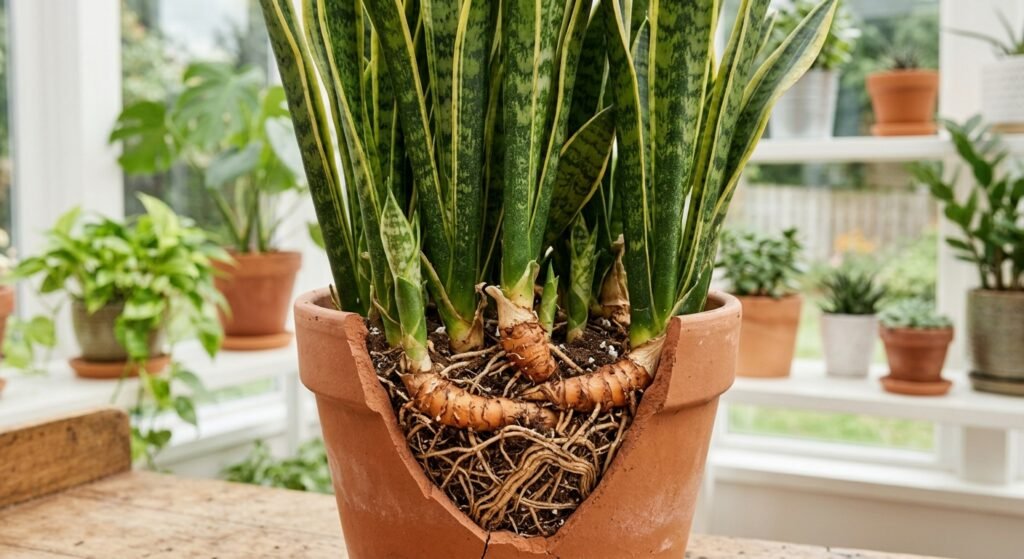
Before you divide snake plants, you must evaluate whether your plant has genuinely outgrown its current pot.
Common signs of overcrowding include bulging plastic containers, roots emerging aggressively from bottom drainage holes, and completely stunted leaf production.
When a snake plant’s underground rhizomes run out of lateral space, they crowd the soil surface and push existing shoots tightly together.
Preparing Tools, Soil, and Planters
As you prepare to divide snake plants, gathering clean, high-quality equipment is vital for preventing plant infections.
Sanitize your pruning shears with rubbing alcohol and prepare fresh, well-draining succulent soil mix alongside appropriately sized pots.
Rhizome Separation and Shock Prevention
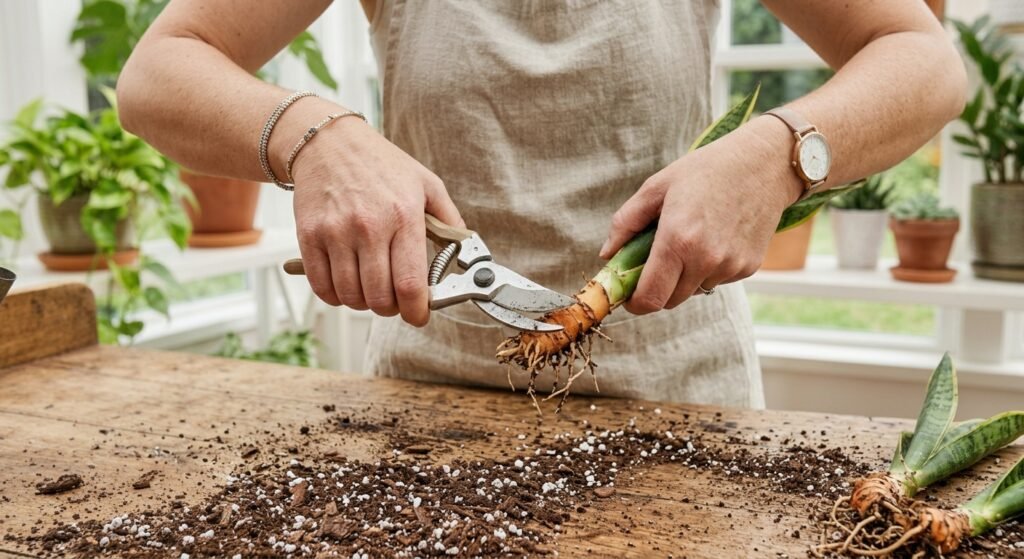
Executing clean cuts when you divide snake plants protects the vascular tissue and prevents bacterial entry into the mother plant.
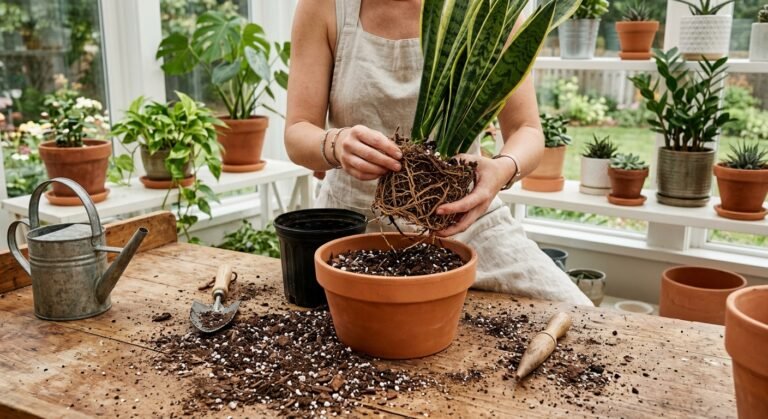
Gently untangle soil from the root ball, locate the thick underground rhizome connecting separate leaf clusters, and slice cleanly through it.
Snake Plant Division Comparison Matrix
The comparison table below outlines propagation methods, timelines, and success rates for multiplying snake plants:
| Propagation Method | Medium / Technique | Average Establishment Time | Success Rate | Best Beginner Suitability |
| Plant Division | Separating rooted pups / rhizomes | 2 to 4 Weeks | 99% | Highly Recommended |
| Water Leaf Cuttings | Submerging leaf sections in water | 6 to 10 Weeks | 60% – 70% | Moderate Difficulty |
| Soil Leaf Cuttings | Planting leaf cuttings in soil | 8 to 12 Weeks | 70% – 80% | Patient Growers |
| Tissue Culture | Laboratory cloning process | 4 to 6 Weeks | 95% | Advanced Commercial |
7 Best Steps to Divide Snake Plants Successfully
Follow this step-by-step framework to safely unpot, separate, and replant your snake plant clusters:
               [Gently Slide Out Root Ball]
                             |
         +-------------------+-------------------+
         |                                       |
[Wash Away Old Soil]                     [Locate Underground Rhizomes]
         |                                       |
(Expose root structure clearly)          (Identify natural pup clusters)
         |                                       |
         v                                       v
Cut cleanly with sterile shears,        Let callus dry for 24 hours,
plant in fast-draining cactus mix       repot and withhold water for a week
1. Gently Slide the Plant Free
Tilt your pot sideways, support the base of the upright leaves, and gently pull or tap the container walls to release the root mass.
2. Remove Old Potting Soil
Carefully brush or wash away compacted old soil from the roots so you can clearly see the underlying rhizome connections.
3. Locate Natural Division Points
Examine the root structure to find where individual leaf pups naturally branch off from the main parent rhizome.
4. Cut Cleanly Through Rhizomes
Use your sanitized pruning shears to make sharp, clean cuts through the connecting rhizomes, ensuring each division retains its own root strands.
5. Let Cut Surfaces Dry Out
Place your newly separated snake plant sections on a clean tray for 24 hours to let all cut rhizome surfaces callus over securely.
6. Plant in Fresh Cactus Mix
Position each division into a clean pot filled with a porous, fast-draining cactus and succulent potting medium.
7. Delay Initial Watering
Keep the newly potted divisions dry for 5 to 7 days to allow any minor root micro-abrasions to heal completely before hydration.

Post-Division Care and Watering Rules
After you divide snake plants, your newly established specimens require minimal attention while they adapt to their fresh soil environment.
Position your pots in a bright room with indirect sunlight, avoiding harsh direct sun rays that could stress recovering roots.
Resume normal infrequent watering schedules only after the first week has passed and the surrounding soil is completely dry.
Conclusion
Mastering how to divide snake plants is an efficient, highly rewarding method to multiply your indoor botanical collection and refresh overcrowded pots. By following sterile cutting practices, allowing cuts to callus, and using well-draining soil, you can achieve near-100% propagation success.
Inspect your snake plant roots today, apply these 7 essential division steps, and enjoy an abundance of healthy new indoor foliage!
Frequently Asked Questions
When is the best time of year to divide snake plants?
Spring and early summer are the ideal seasons to divide snake plants because the plant is entering its active growing phase, allowing for rapid root recovery.
Can I divide a snake plant without cutting the roots?
Yes, if the pups have developed their own independent root systems and have pushed outward, you can often gently pull or tease them away from the main rhizome without cutting.
Why are my snake plant divisions drooping after repotting?
Drooping typically occurs due to transplant shock or overwatering before the cut rhizomes have had time to callus and heal properly in the fresh soil.


One Comment