
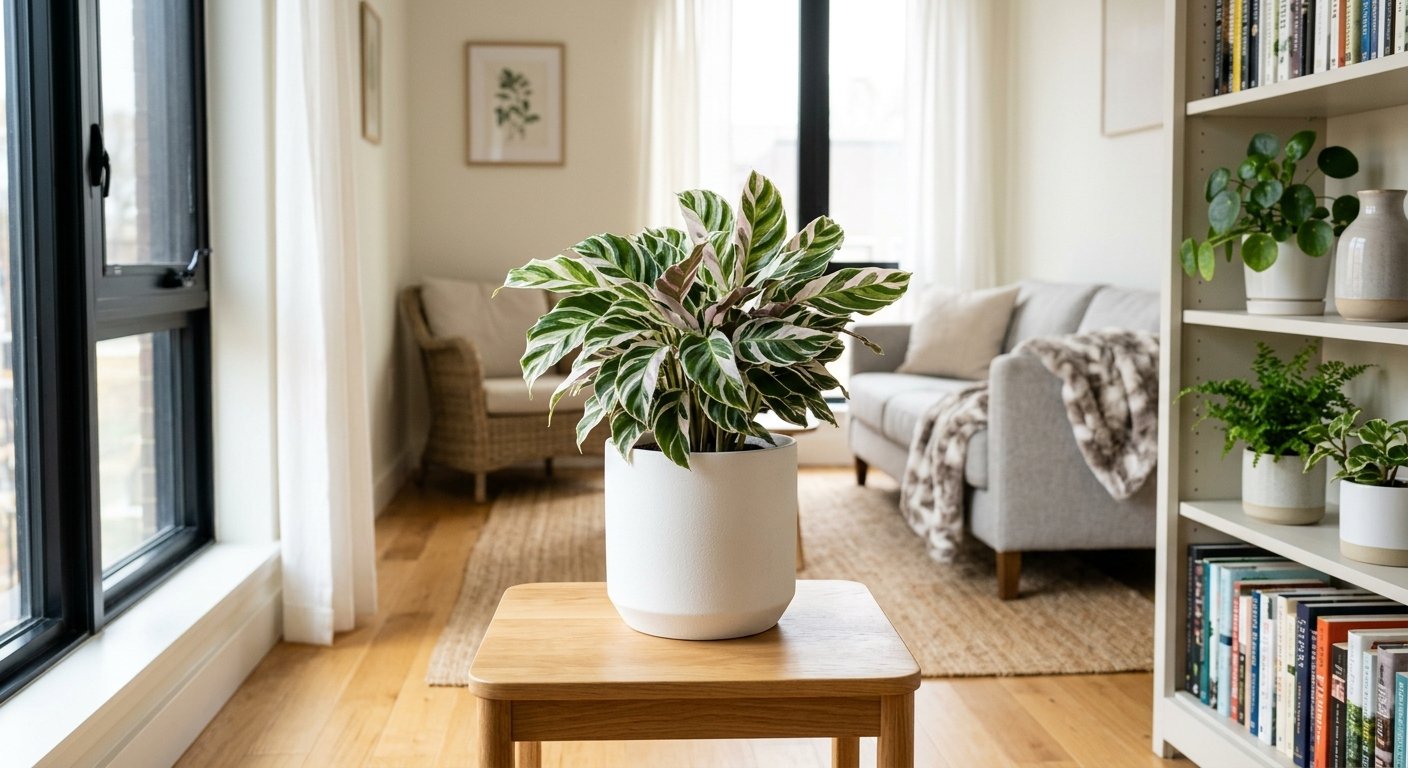
7 Ultimate Tips for Calathea White Fusion Care
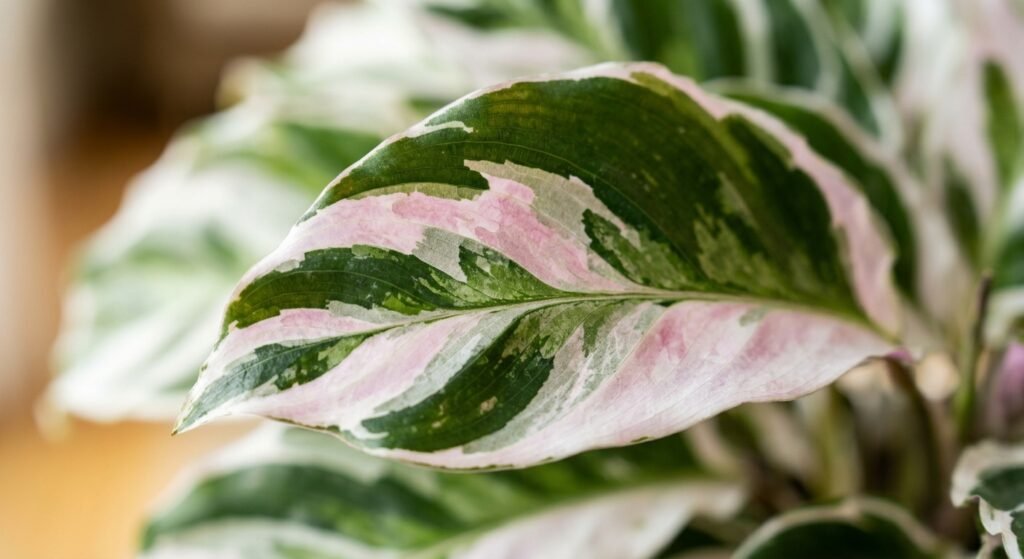
Mastering Calathea White Fusion Care is essential for indoor gardeners who want to keep their stunning variegated prayer plants healthy and free of dry leaf edges across US homes. Botanically celebrated for its striking pink, green, and white brushstroke foliage, the Calathea ‘White Fusion’ is widely considered one of the most breathtaking yet sensitive tropical houseplants available today.
Proper Calathea White Fusion Care prevents common issues such as brown leaf tips, curling foliage, and loss of delicate coloration. Because this plant originates under dense tropical rainforest canopies, it demands high ambient humidity, pure filtered water, and well-aerated soil mixes to thrive in indoor living environments.
Implementing a consistent Calathea White Fusion Care routine protects delicate root systems and ensures new leaves emerge crisp and unblemished. By managing moisture levels, avoiding harsh tap water minerals, and providing gentle indirect sunlight, you can enjoy vibrant foliage year-round. Let us explore the step-by-step strategies designed to stop leaf crispness completely.
Table of Contents
- Key Takeaways
- Understanding Leaf Crispness in Prayer Plants
- Water Quality and Hydration Rules
- Mastering Indoor Humidity and Temperature
- Chunky Soil Blends and Potting Best Practices
- Calathea White Fusion Care Matrix
- 7 Best Steps for Calathea White Fusion Care
- Conclusion
- Frequently Asked Questions
Key Takeaways
- Use Filtered or Distilled Water: Tap water minerals like fluoride and chlorine cause rapid leaf tip browning.
- Maintain High Humidity Levels: Keep relative humidity between 60% and 80% using room humidifiers to stop leaf crispness.
- Never Let Soil Dry Out Completely: Keep potting mix evenly moist like a wrung-out sponge without waterlogging roots.
- Provide Bright Indirect Sunlight: Protect delicate variegated leaves from harsh direct sun rays that bleach leaf patterns.
- Use Fast-Draining Soil Mixes: Combine peat moss, perlite, and orchid bark to safeguard fine root structures from rot.
Understanding Leaf Crispness in Prayer Plants
Understanding why foliage dries out is the foundation of effective Calathea White Fusion Care.
Leaf crispness typically starts along the delicate edges and tips of the plant’s variegated leaves.
This reaction occurs when environmental moisture drops too low or when mineral salts accumulate in the potting soil.
Because White Fusion leaves lack uniform chlorophyll across their white sections, they are exceptionally fragile compared to standard green Calatheas.
Water Quality and Hydration Rules
Watering practices play a critical role when executing a successful Calathea White Fusion Care regimen.
The Dangers of Tap Water
Municipal tap water contains heavy minerals, fluoride, and chlorine that accumulate in potting mix and scorch leaf margins.
Always switch to distilled, reverse osmosis, or rainwater to prevent brown crispy tips.
Balanced Soil Moisture
Unlike succulents that require complete drying between waterings, prayer plants prefer evenly moist soil.
Allowing the top half-inch of soil to dry slightly is safe, but letting the entire pot dry out triggers leaf curl and crisping.
Mastering Indoor Humidity and Temperature
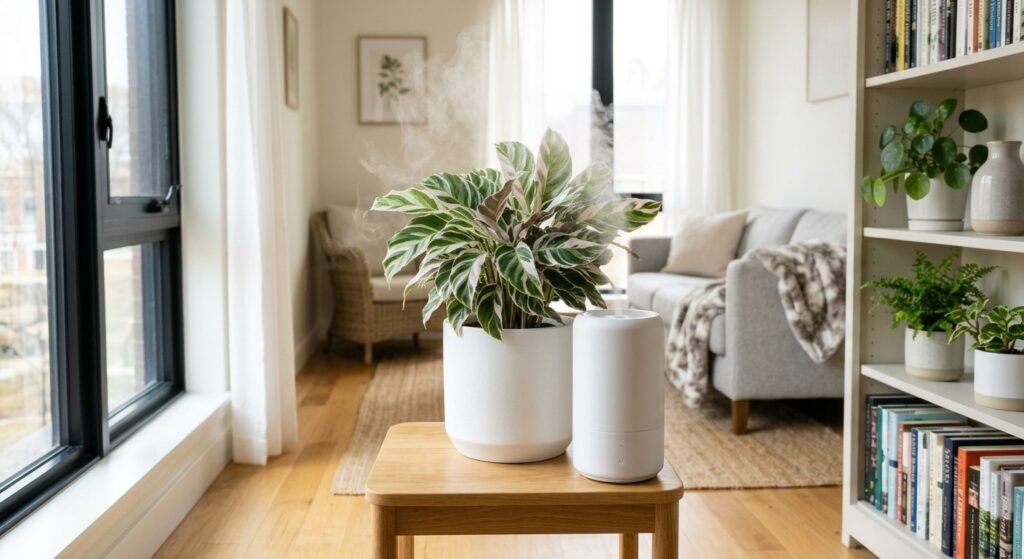
Ambient air moisture dictates whether your plant remains lush or develops dry edges during Calathea White Fusion Care.
Indoor US homes often feature dry HVAC heating or air conditioning that strips moisture from the air.
Maintain room humidity between 60% and 80% by positioning a cool-mist ultrasonic humidifier directly beside your plant.
Keep room temperatures stable between 65°F and 80°F, protecting foliage from sudden cold drafts or heating vents.
Chunky Soil Blends and Potting Best Practices
Soil composition forms an essential pillar of long-term Calathea White Fusion Care.
Standard dense potting soil retains excess water, suffocating fine roots and causing lower leaves to yellow.
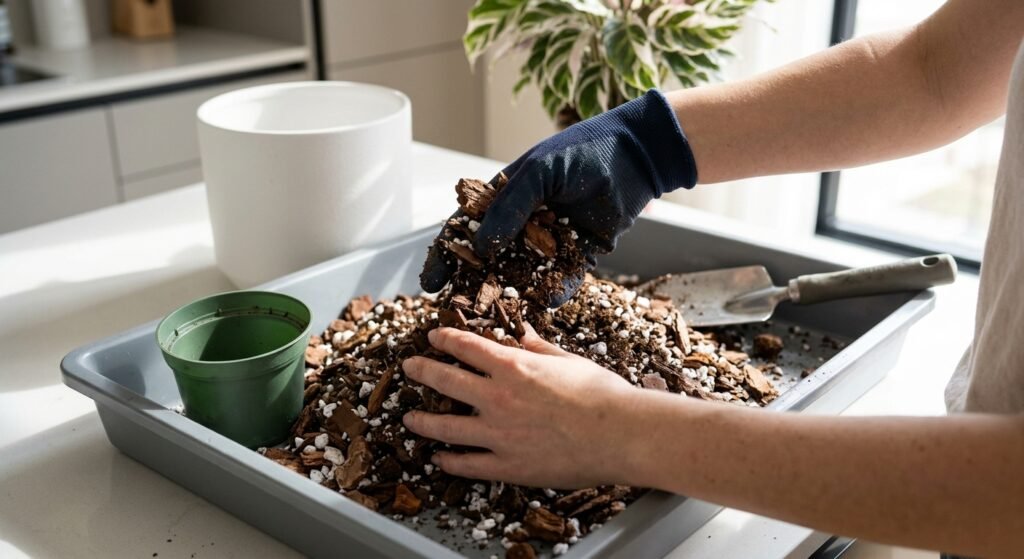
Create an airy aroid and prayer plant blend using 40% peat moss or coco coir, 30% perlite, 20% orchid bark, and 10% horticultural charcoal.
This porous mixture retains necessary moisture while allowing excess water to drain freely through pot drainage holes.
Calathea White Fusion Care Matrix
The diagnostic table below matches environmental factors with correct care adjustments:
| Care Parameter | Ideal Target Range | Common Mistake | Corrective Action |
| Water Source | Distilled / Rainwater | Municipal Tap Water | Switch to filtered or distilled water |
| Humidity Level | 60% – 80% Humidity | Dry Indoor HVAC Air | Run a cool-mist room humidifier daily |
| Soil Moisture | Evenly Moist Sponge | Bone-Dry Potting Mix | Water before topsoil dries completely |
| Light Exposure | Bright Indirect (Filtered) | Direct Afternoon Sun | Move 3 feet away from sunny windows |
| Temperature | 65°F – 80°F Range | Cold Window Drafts | Relocate away from exterior doors |
7 Best Steps for Calathea White Fusion Care
Follow this step-by-step diagnostic flowchart to maintain pristine, unblemished foliage:
               [Check Soil Moisture Level]
                           |
      +--------------------+--------------------+
      |                                         |
[Soil Feels Dry on Top]               [Soil Evenly Moist]
      |                                         |
(Provide Filtered Water)               (Maintain Humidity)
      |                                         |
      v                                         v
Water thoroughly with distilled,       Keep humidifier running,
drain excess tray water                monitor leaf tips weekly
1. Use Only Distilled or Filtered Water
Eliminate tap water minerals completely by watering your plant exclusively with distilled, purified, or rainwater.
2. Run a Dedicated Room Humidifier
Keep indoor humidity above 60% using a cool-mist humidifier placed close to the foliage.
3. Maintain Consistent Soil Moisture
Water thoroughly whenever the top half-inch of soil feels slightly dry, never allowing the root ball to dry out.
4. Provide Bright, Filtered Sunlight
Position your plant near east-facing windows with sheer curtains to protect variegated leaves from sunburn.
5. Use Pots with Drainage Outlets
Always plant in containers featuring functional bottom drainage holes so excess water escapes freely.
6. Feed with Diluted Liquid Fertilizer
Apply 50% strength balanced houseplant fertilizer monthly during spring and summer active growth cycles.
7. Mist Foliage Selectively or Use Pebble Trays
Supplement humidity around the plant container, ensuring leaves dry quickly to prevent fungal leaf spot.
Conclusion
Mastering Calathea White Fusion Care relies on using pure distilled water, maintaining high indoor humidity, and keeping soil evenly moist. By shielding delicate variegated leaves from harsh direct sun and providing a well-draining potting mix, you can eliminate leaf crispness completely.
Inspect your prayer plant today, apply these 7 easy care steps, and enjoy growing a vibrant indoor showpiece!
Frequently Asked Questions
Why are the tips of my Calathea White Fusion turning brown and crispy?
Brown, crispy tips are usually caused by low indoor air humidity or mineral buildup from tap water. Switch to distilled water and keep a room humidifier running nearby.
Should I cut off crispy brown leaf edges?
Yes, you can trim away dry brown edges using sterilized scissors. Cut along the natural contour of the leaf to maintain a neat appearance without harming healthy tissue.
How often should I water a Calathea White Fusion?
Watering frequency depends on home temperature, but typically every 5 to 7 days. Check the soil frequently and water before the potting mix dries out completely.




One Comment