
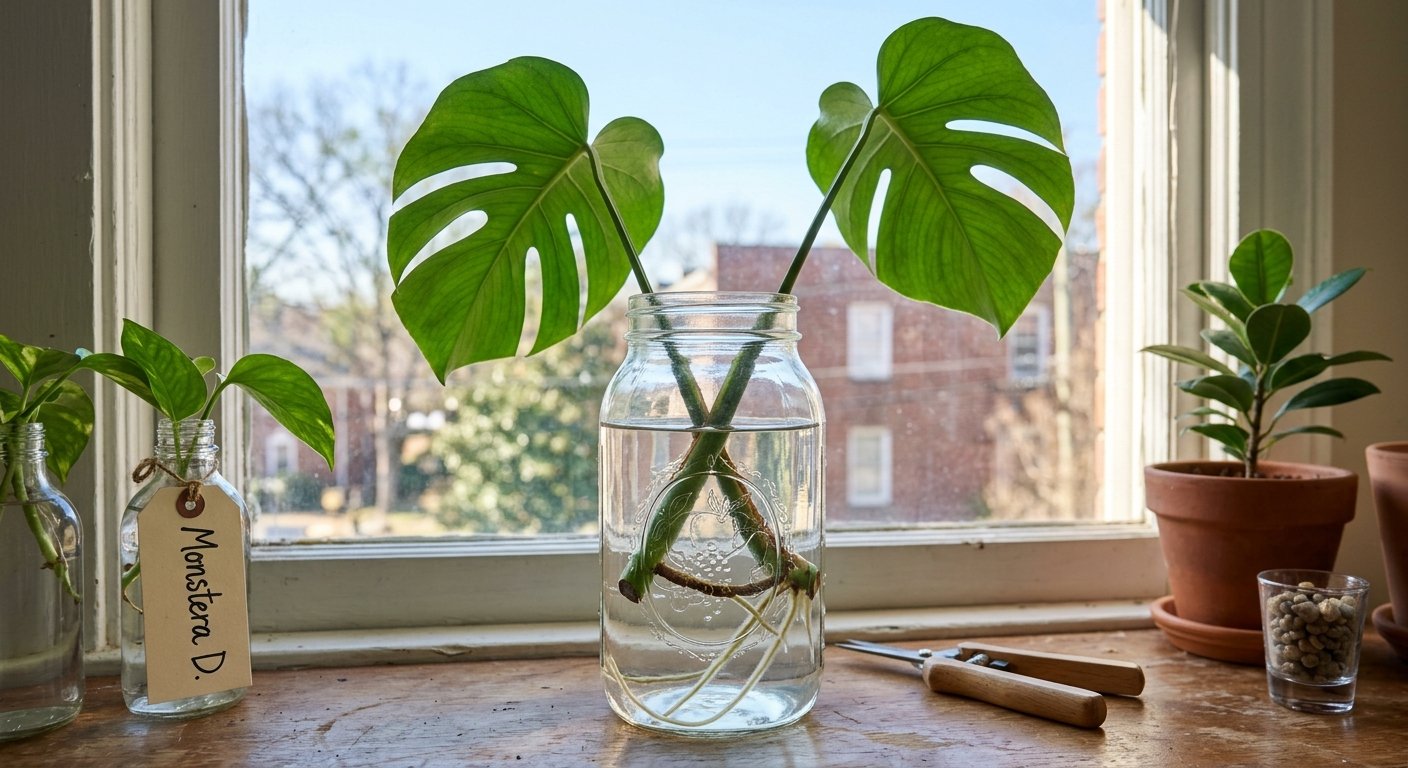
Propagate Monstera Deliciosa: 7 Best Stem Cutting Steps
Propagate Monstera Deliciosa stem cuttings is one of the most rewarding and popular indoor gardening projects for plant lovers across the US. The Swiss Cheese Plant is famous for its iconic split leaves and vigorous growth habit, making it an ideal botanical specimen to multiply and share with friends.
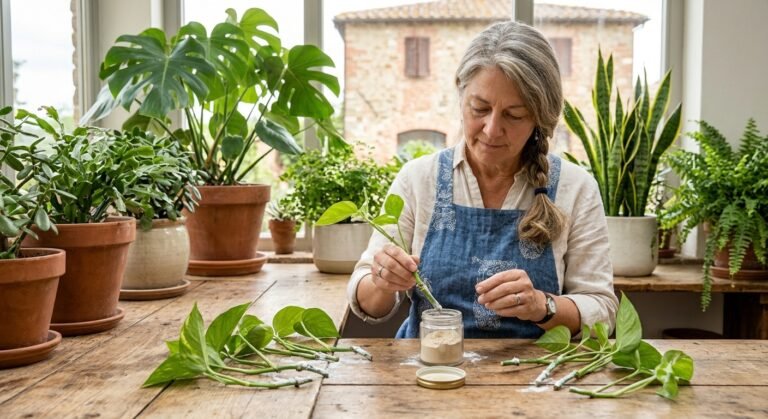
Mastering how to propagate Monstera Deliciosa allows you to transform a single leggy houseplant into multiple flourishing green specimens without spending extra money at the nursery. By cutting healthy stems just below a vital growth node, you unlock the plant’s natural cellular ability to generate robust roots in water or soil.
Implementing expert techniques when you propagate Monstera Deliciosa guarantees high success rates, vibrant leaf fenestrations, and rapid root development. Let us explore the essential tools, scientific principles, and step-by-step propagation framework designed to ensure your indoor jungle thrives.
Table of Contents
- Key Takeaways
- Understanding Nodes and Aerial Roots
- Selecting and Cutting the Ideal Stem
- Water vs. Soil Propagation Methods
- Monstera Propagation Comparison Matrix
- 7 Best Steps to Propagate Monstera Deliciosa Stem Cuttings
- Transitioning Cuttings to Potting Soil
- Conclusion
- Frequently Asked Questions
Key Takeaways
- Always Cut Below a Node: Root tissue only forms when your cut includes a healthy stem node or aerial root bump.
- Use Sterilized Shears: Wipe pruning blades with rubbing alcohol to prevent introducing bacteria or fungal rot into the cut.
- Provide Bright Indirect Light: Place propagation jars near east or south-facing windows with filtered sunlight for optimal energy.
- Refresh Water Weekly: Change jar water every 7 days to maintain high oxygen levels and prevent bacterial contamination.
- Wait for 3-Inch Roots: Allow water roots to grow at least 3 inches long before transplanting cuttings into fresh potting mix.
Understanding Nodes and Aerial Roots
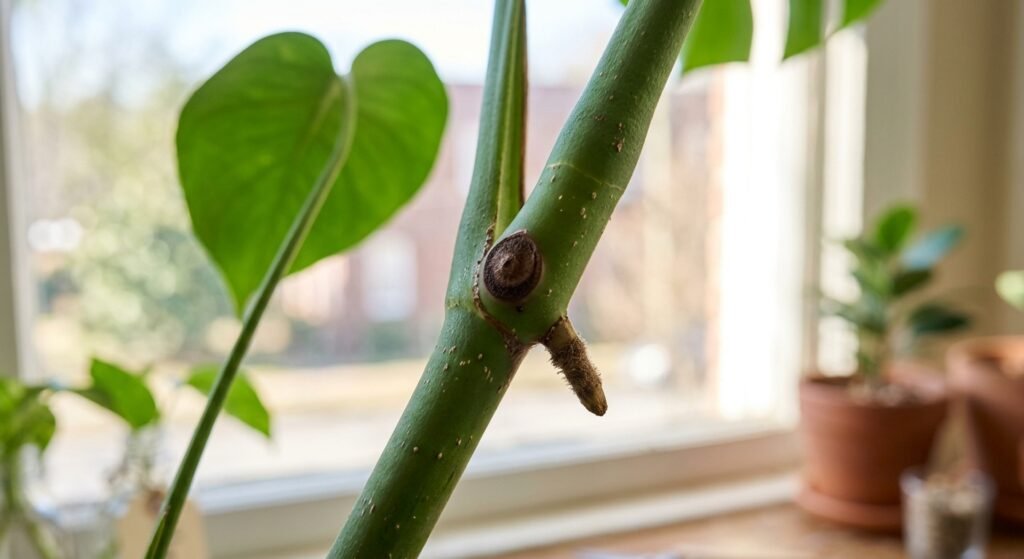
When you propagate Monstera Deliciosa, identifying the exact growth node is the single most critical factor for success.
A node is the small, swollen bump or ring on the main stem where leaves, side branches, and aerial roots naturally emerge.
Without including an active node in your cutting, the stem will simply sit in water and eventually decay without producing any roots.
Selecting and Cutting the Ideal Stem
Choosing a vigorous parent stem ensures strong results when you propagate Monstera Deliciosa in indoor environments.
Inspect your mature plant and locate a healthy green vine featuring at least one or two vibrant leaves and a prominent aerial root.
Use sterilized pruning shears to make a clean 45-degree angle cut about half an inch below the target node.
Water vs. Soil Propagation Methods
Deciding between liquid or solid mediums is essential when you propagate Monstera Deliciosa at home.
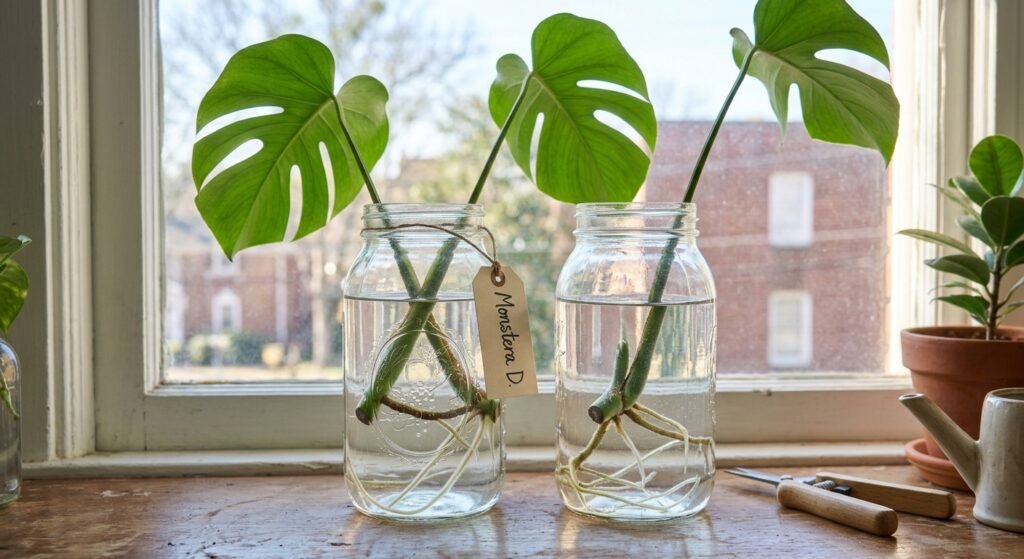
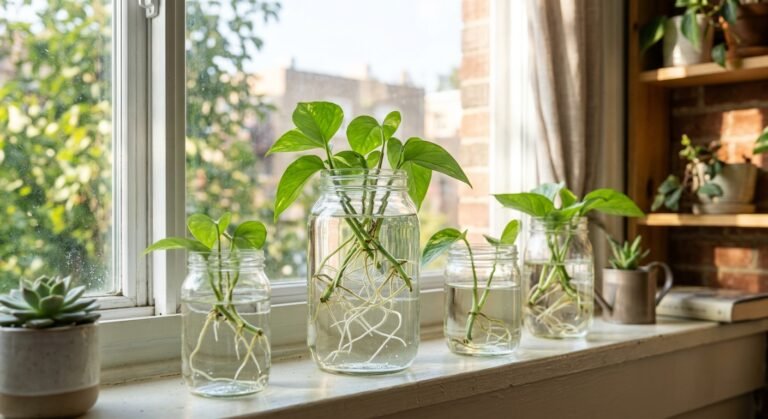
Water propagation is the most popular beginner method because you can visually track root growth every single day.
Soil propagation creates tougher, soil-adapted roots initially, eliminating the transition shock of moving water-grown roots into dirt later.
Monstera Propagation Comparison Matrix
The comparison table below outlines key propagation methods, timelines, and success rates:
| Propagation Method | Medium Used | Average Rooting Time | Success Rate | Best Beginner Suitability |
| Water Propagation | Clean Filtered Water | 3 to 6 Weeks | 95% – 100% | Highly Recommended |
| Sphagnum Moss | Damp Organic Moss | 3 to 5 Weeks | 85% – 90% | Moderate Difficulty |
| Direct Soil Planting | Fresh Potting Mix | 6 to 8 Weeks | 75% – 85% | Advanced Growers |
| Perlite Chamber | Moist Perlite Medium | 3 to 4 Weeks | 90% – 95% | Intermediate Level |
7 Best Steps to Propagate Monstera Deliciosa Stem Cuttings
Follow this step-by-step framework to successfully cut, root, and grow your Monstera cuttings:
               [Select Healthy Stem with Node]
                             |
         +-------------------+-------------------+
         |                                       |
[Sanitize Pruning Shears]                [Make 45-Degree Cut Below Node]
         |                                       |
(Wipe with rubbing alcohol)              (Ensure aerial root is included)
         |                                       |
         v                                       v
Submerge node in glass jar,             Change water weekly, wait
place in bright indirect light          for 3-inch roots to develop
1. Select a Healthy Stem
Choose a vigorous Monstera vine featuring at least one fully fenestrated leaf, a healthy bud, and an active aerial root.
2. Sanitize Your Tools
Wipe your pruning shears thoroughly with rubbing alcohol to prevent spreading bacteria or plant pathogens.
3. Make a Clean Cut
Snip the stem at a 45-degree angle approximately one-half inch below the target node, ensuring the cut is smooth.
4. Remove Lower Foliage
Trim away any lower leaves that would sit below the waterline to prevent bacterial rot in your propagation jar.
5. Submerge Node in Water
Place your cutting into a clean glass jar filled with room-temperature filtered water, making sure only the node is submerged.
6. Provide Bright Indirect Light
Set your jar in a warm room near a window that receives bright indirect sunlight, avoiding harsh direct sun rays.
7. Change Water Weekly
Empty the jar and refill it with fresh room-temperature water every 7 days to maintain high oxygen levels.
Transitioning Cuttings to Potting Soil
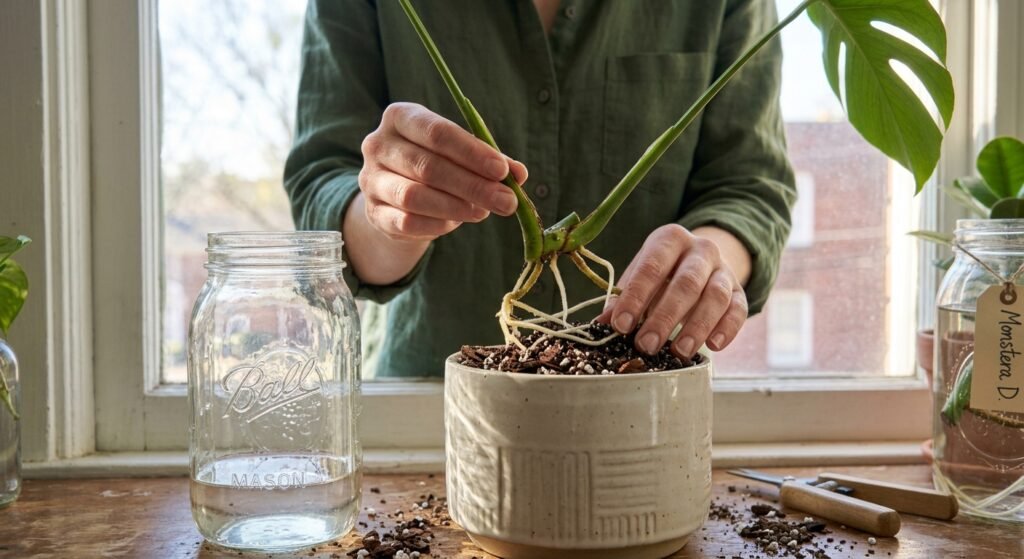
Once your water roots reach 3 inches in length, you can safely transition your cutting into a permanent container.
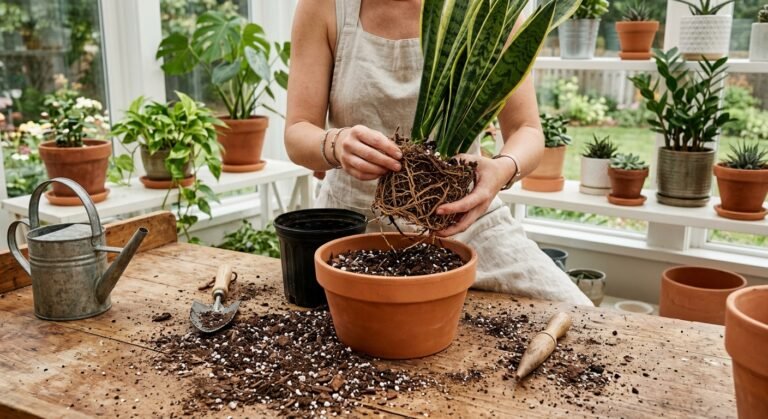
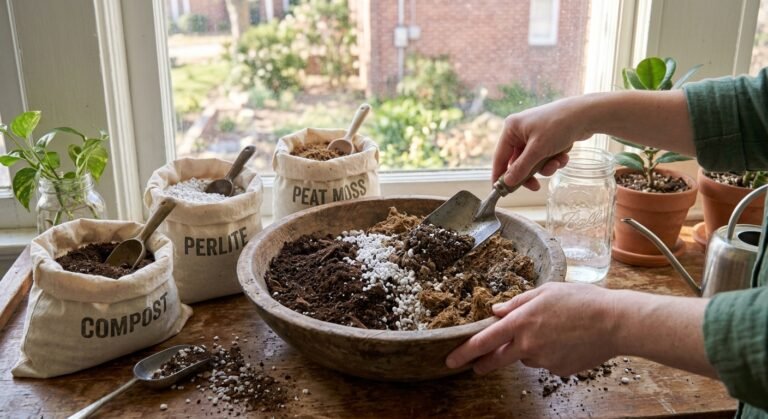
Plant your rooted cutting in a well-draining indoor potting mix enriched with perlite and orchid bark to mimic tropical rainforest soil.
Water the soil thoroughly immediately after planting, keeping the mix evenly moist for the first two weeks as roots adjust.
Conclusion
Mastering how to propagate Monstera Deliciosa is an exciting, cost-effective way to expand your indoor botanical collection. By selecting healthy node cuts, providing clean water, and ensuring bright indirect light, you can successfully multiply your favorite tropical houseplant.
Snip a healthy vine today, follow these 7 proven propagation steps, and enjoy watching your new Monstera thrive!
Frequently Asked Questions
How long does it take to propagate Monstera Deliciosa in water?
Monstera cuttings typically begin developing visible white roots within 3 to 4 weeks, and are ready for soil transplantation after 6 to 8 weeks when roots reach 3 inches long.
Can I propagate a Monstera leaf without a stem node?
No, a Monstera leaf placed in water will grow roots from its petiole, but it will never develop a new vine or stem because it lacks a growth node.
Why are the roots on my Monstera cutting turning brown?
Brown, mushy roots indicate root rot caused by stagnant water or bacteria. Snip away the decayed sections, wash the jar, and replace the water with fresh filtered liquid.

One Comment