
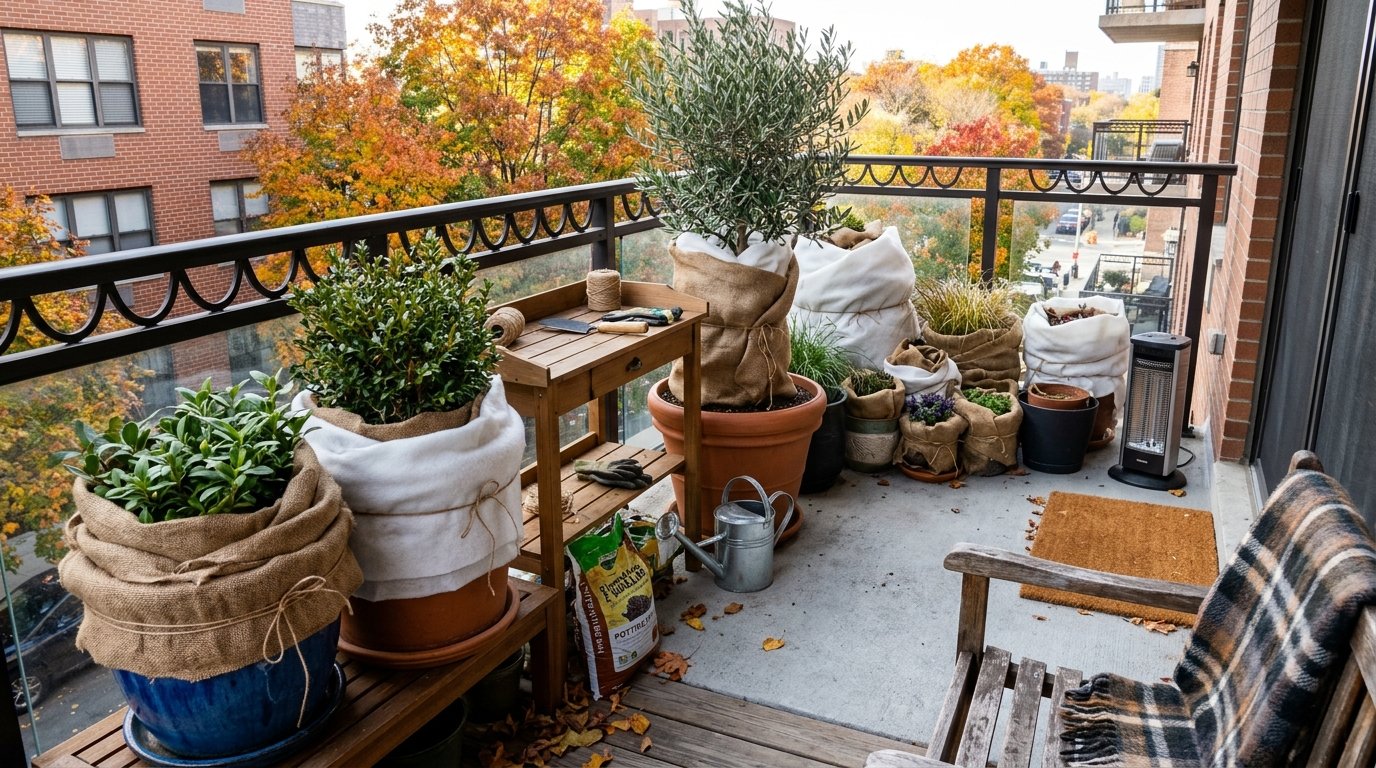
Winterize Balcony Potted Plants: 7 Amazing Steps
Winterize balcony potted plants is the ultimate seasonal survival strategy every US urban gardener needs to protect container greenery before freezing autumn temperatures hit. Container plants grown on exposed balconies face severe freeze-thaw cycles, soil freezing, and biting winds that can permanently damage root systems long before ground-planted flora suffers.
Mastering how to winterize balcony potted plants allows you to preserve your investments in perennial shrubs, container herbs, and tropical foliage for next spring. Instead of letting sudden autumn frosts turn your prized potted collection into mush, implementing cold-weather insulation and smart shelter routines guarantees high survival rates.
Implementing expert guidelines to winterize balcony potted plants ensures your outdoor botanical space remains healthy, resilient, and ready for spring regrowth. Let us explore the core science of root freezing points, protective wrapping techniques, and a foolproof 7-step overwintering framework tailored for modern US households.
Table of Contents
- Key Takeaways
- The Science of Root Zone Freezing and Container Vulnerability
- Identifying Tender Tropicals vs. Hardy Perennials
- Step-by-Step Burlap Wrapping and Soil Mulching
- Balcony Plant Overwintering Comparison Matrix
- 7 Amazing Steps to Winterize Balcony Potted Plants Successfully
- Avoiding Root Rot During Dormant Winter Months
- Conclusion
- Frequently Asked Questions
Key Takeaways
- Monitor Frost Dates: Track local US USDA hardiness zone frost forecasts so you can protect vulnerable potted plants before temperatures dip below 32°F.
- Insulate Pot Roots: Soil in elevated containers freezes from all sides; wrap pots in bubble wrap, burlap, or frost cloth to buffer roots.
- Bring Tropicals Indoors: Transition tender houseplants and tropical specimens inside prior to the first autumn frost event.
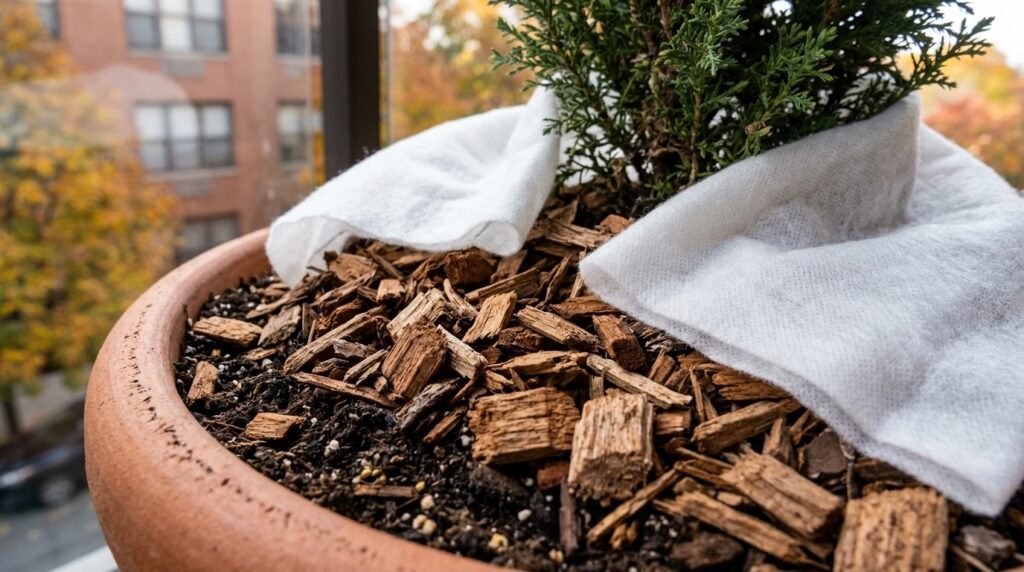
- Apply Surface Mulch: Layer 2 to 3 inches of organic straw or wood bark mulch over topsoil to minimize moisture loss and freeze shock.
- Reduce Winter Irrigation: Dormant balcony plants consume minimal water; irrigate only on warm days when topsoil feels bone dry.
The Science of Root Zone Freezing and Container Vulnerability
Learning how to winterize balcony potted plants requires understanding that roots are far less cold-tolerant than above-ground foliage stems.
In-ground plants benefit from the earth’s natural thermal mass, but container soil freezes completely solid when cold air surrounds pot walls.
When root ball moisture freezes solid, root cell walls rupture, preventing plants from drawing moisture once warm spring sunshine returns.
Identifying Tender Tropicals vs. Hardy Perennials
Executing plans to winterize balcony potted plants starts with categorizing your container collection by cold hardiness ratings.
Tropical specimens like hibiscus, citrus, and foliage houseplants must move indoors into bright rooms before outdoor night temperatures drop below 50°F.
Hardy perennials and woody shrubs can remain outside on the balcony, provided their root zones receive adequate insulation and wind protection.
Step-by-Step Burlap Wrapping and Soil Mulching
Mastering the physical steps to winterize balcony potted plants ensures clay and terracotta pots avoid cracking under freezing temperatures.
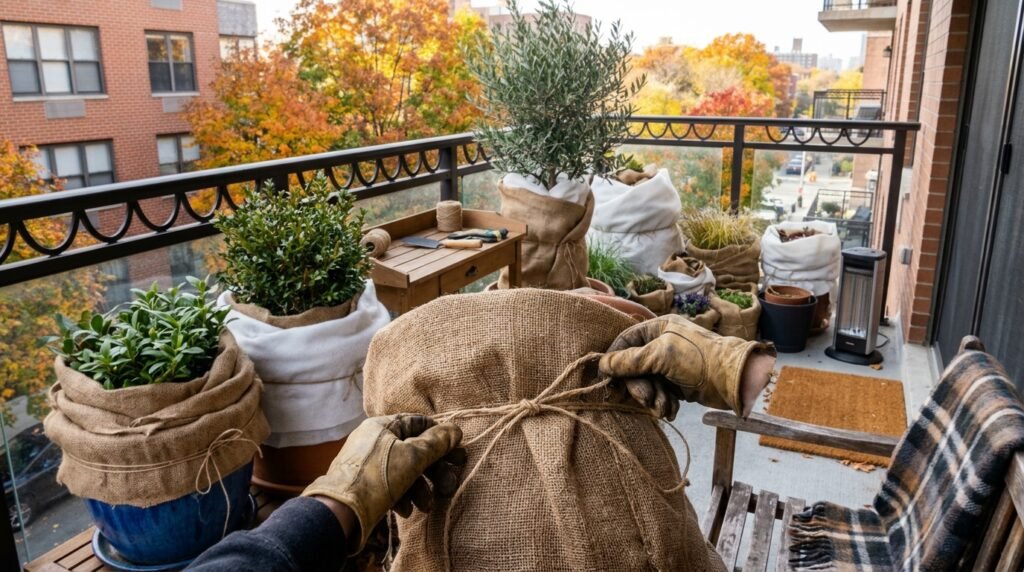
Wrap pot exteriors with layers of bubble wrap or heavy burlap, securing the material with twine to trap insulating dead air spaces.
Group wrapped containers together against interior building walls where radiant structure heat shields them from biting north winds.
Balcony Plant Overwintering Comparison Matrix
The comparison table below outlines plant types, minimum temperature thresholds, and recommended winter shelter locations:
| Plant Category | Freeze Sensitivity | Minimum Temperature | Recommended Winter Location | Insulation Needed |
| Tropical Houseplants | Extremely High | 50°F (10°C) | Indoor Living Room | Indoor Climate Control |
| Tender Perennials | High | 32°F (0°C) | Unheated Garage / Porch | Light Blanket Wrap |
| Hardy Evergreen Shrubs | Moderate | 10°F (-12°C) | Sheltered Balcony Wall | Heavy Burlap & Mulch |
| Deciduous Perennials | Low (Dormant) | 0°F (-18°C) | Shaded Balcony Corner | Pot Bubble Wrap |
7 Amazing Steps to Winterize Balcony Potted Plants Successfully
Follow this comprehensive framework to successfully winterize balcony potted plants before the first autumn freeze arrives:
               [Track Local First Frost Dates]
                             |
         +-------------------+-------------------+
         |                                       |
[Move Tropical Plants Indoors]           [Group Hardy Pots Against Building Wall]
         |                                       |
(Prevent chill injury to houseplants)    (Harness radiant heat from interior structure)
         |                                       |
         v                                       v
Wrap pots with bubble wrap & burlap,     Reduce watering & apply topsoil mulch,
enjoy surviving container plants         enjoy lush spring balcony growth
1. Monitor Local First Frost Dates
Check local US weather forecasts continuously during autumn to prepare your balcony garden before freezing nights hit.
2. Transition Tropical Specimens Indoors
Bring delicate houseplants, succulents, and warm-weather herbs indoors to bright windowsills before temperatures fall below 50°F.
3. Group Pots Against Interior Building Walls
Move remaining outdoor containers against exterior house walls to absorb escaping radiant building heat.
4. Wrap Pots With Insulation Materials
Encase clay, terracotta, and plastic containers in layers of bubble wrap or burlap to protect tender roots from freeze-thaw cycles.
5. Apply a Thick Soil Mulch Layer
Spread 2 to 3 inches of organic wood chips or straw across topsoil surfaces to suppress soil moisture evaporation.
6. Protect Foliage With Frost Blankets
Cover evergreen balcony plants with breathable fabric frost blankets during extreme cold snaps to block drying wind burn.
7. Water Sparingly on Warm Days
Hydrate dormant outdoor pots lightly only during mid-day warm spells when the soil thaws out, avoiding waterlogged roots.
Avoiding Root Rot During Dormant Winter Months
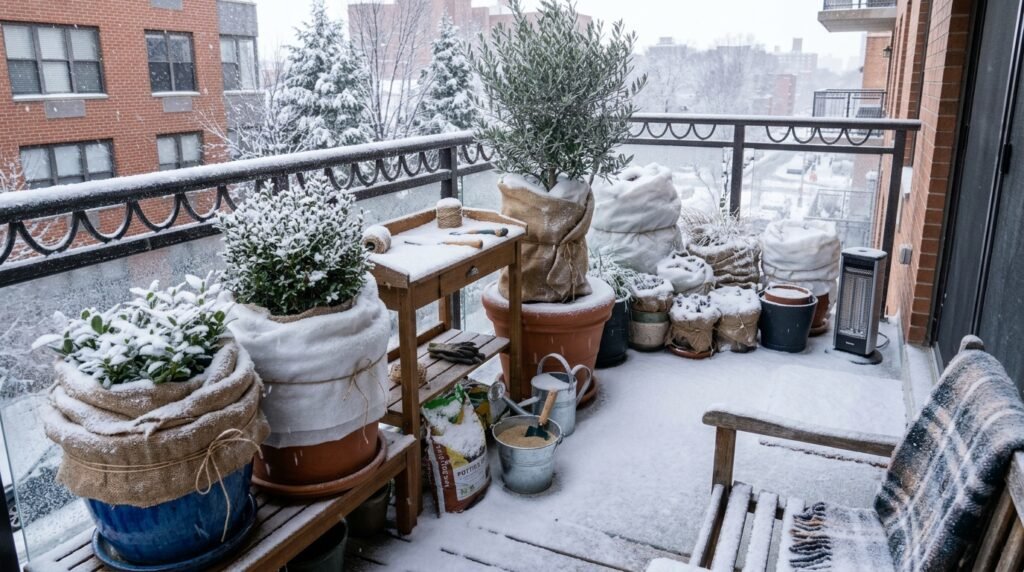
Practicing proper techniques to winterize balcony potted plants requires avoiding overwatering during cold dormant periods.
In cold weather, plant root activity slows down dramatically, meaning moisture stays in container soil much longer than in summer.
Always ensure pots feature clear bottom drainage holes and avoid leaving saucers filled with standing ice or freezing water.
Conclusion
Mastering how to winterize balcony potted plants empowers you to protect your container garden investments from harsh winter conditions with absolute confidence. By integrating root insulation, strategic pot placement, and moisture control, you can ensure your balcony flora rebounds with stunning spring growth.
Inspect your balcony garden today, apply these 7 amazing steps, and enjoy healthy, cold-resistant plants all season long!
Frequently Asked Questions
When should I start winterizing my balcony potted plants?
Begin preparing your plants in early autumn, bringing tropicals inside when nights drop to 50°F and wrapping outdoor pots before the first 32°F frost.
Can terracotta pots stay outside on a balcony during winter?
Terracotta is porous and absorbs moisture, which causes it to crack when frozen; always wrap them in bubble wrap or move them to sheltered areas.
How often do overwintering balcony plants need water?
Dormant outdoor balcony plants need very little water, typically requiring light irrigation only once every 3 to 4 weeks on warm, above-freezing days.


One Comment